
I almost gave away an ancient dining chair that had a cracked seat, until I sanded it, added a lumbar cushion, and realized it was the comfiest thing I owned for long Zoom afternoons. That tiny rescue is the through-line of these study room ideas, the ones that let you use what you have and make the room work for real life.
After trying this in three rentals, I designed these setups to be cheap or renter-friendly without looking temporary. Think budget pieces that read modern, easy weekend projects, and a couple of upgrades worth saving for. Most ideas assume small to medium rooms, basic DIY skills, and a tolerance for mixing thrifted finds with a few new staples.
1. Sunlit Floating Desk Nook
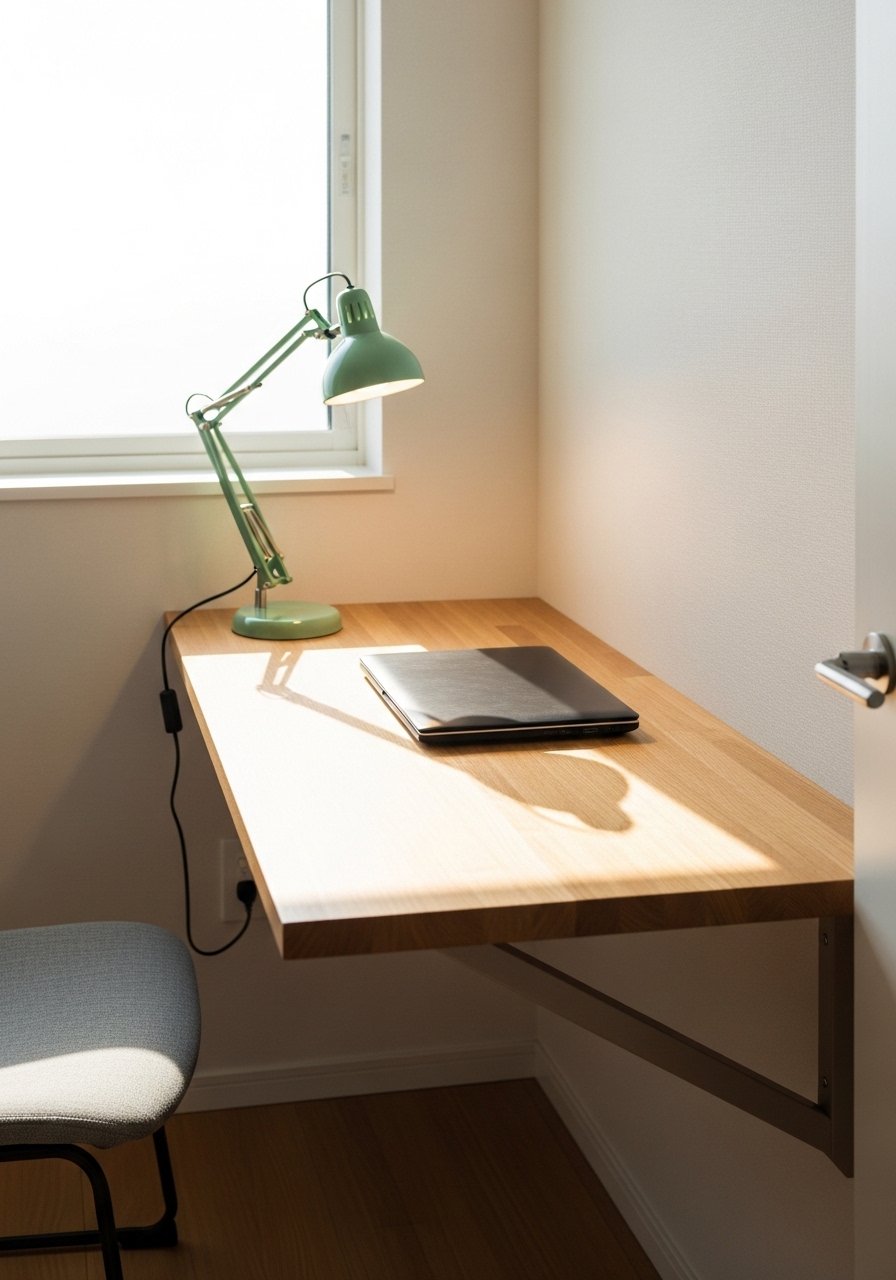
A floating desk saves floor space and looks tidy when the depth is kept to 20 to 24 inches, which fits most laptops and a lamp. It reads modern because the hardware is minimal and the surface floats at 30 inches high, the standard desk height. I like pairing a floating shelf 12 inches above the desk for a couple of books and a small planter, that keeps the wall from feeling bare and gives a place for speakers. For a simple install try an attractive wall-mounted option like an easy-mount floating desk. This setup feels bright and focused, and it is fast to remove for renters with small patching.
Mistake to Avoid: Picking a floating desk that is deeper than your walkway, so it becomes a stubby shelf you keep tripping into.
2. Banquette-Style Work Booth
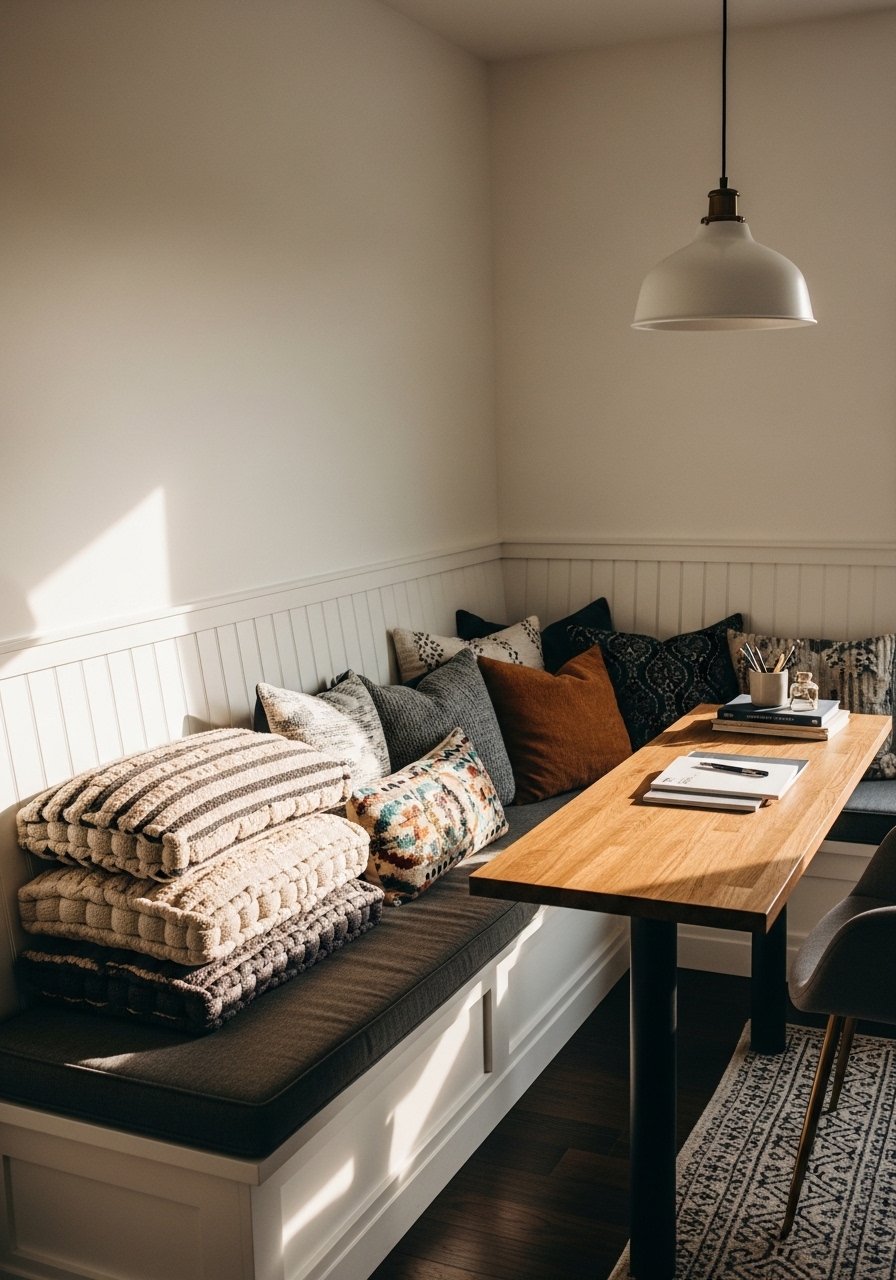
Turning a dining alcove or built-in bench into a study booth gives instant back support and a sense of separation. Use a table or desktop roughly 28 to 30 inches wide for a laptop and not much else, so the space reads intentional rather than cluttered. I added one oversized cushion and a lumbar pillow for posture and a low pendant at 3000K for warm task light. The 60-30-10 color rule works here with one dominant wall color, a secondary textile, and a small accent. If you want a quick cushion update try these bench cushions. It suits anyone who hates sitting in a straight-backed chair for hours, especially in narrow layouts.
Mistake to Avoid: Using a dining table that is too deep, which forces you to lean forward and wrecks your posture.
3. Compact Standing Desk by the Window
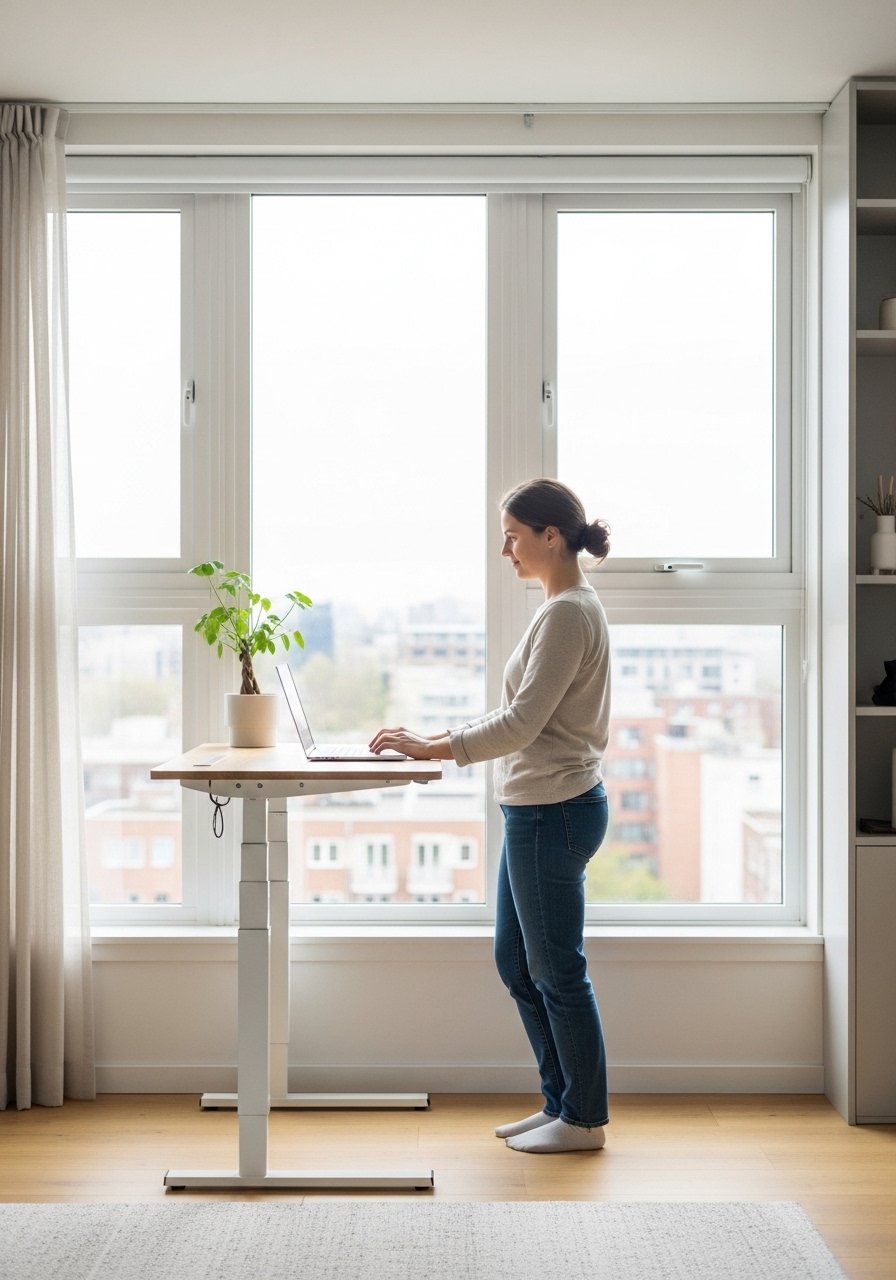
A small adjustable standing desk fixes mid-afternoon slump and keeps your spine happier if you alternate positions. Aim to set the monitor so the top of the screen is about 4 to 6 inches below eye level, and the keyboard sits two to three inches from the desk edge for proper wrist placement. Swap a glass desktop for a warm wood top to hide smudges and read more modern. I use an adjustable standing desk that fits a 30-inch window ledge. It works for anyone who needs to move during long sessions and it pairs well with a stool for quick seated work.
Mistake to Avoid: Raising the monitor and leaving the keyboard too low, which creates neck strain even when standing.
4. Acoustic Focus Panel Wall
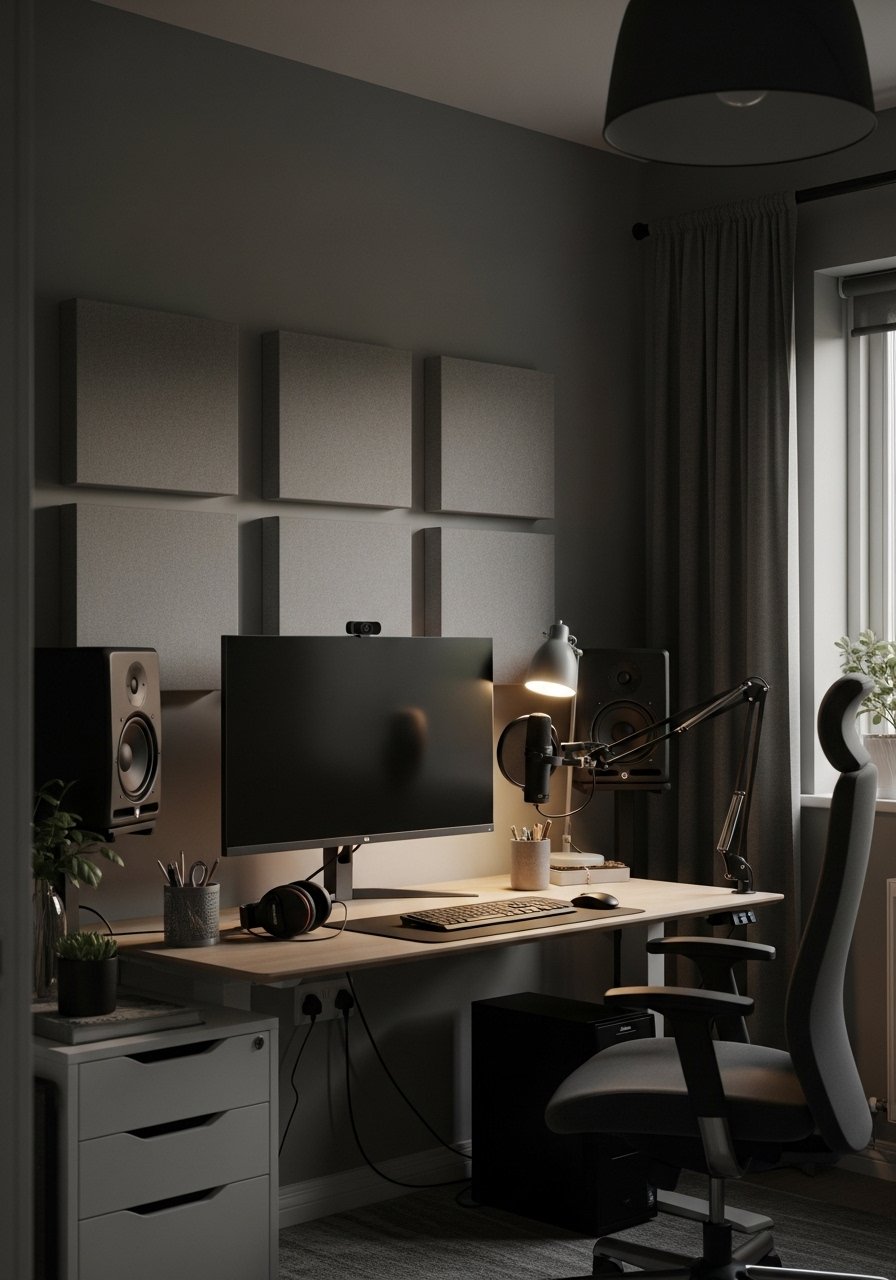
If you take calls or record, acoustic treatment is a huge gap most decor articles skip. Placing two panels at the first reflection points beside the monitor and one behind the desk cuts echo without covering the whole wall. Use removable adhesive strips for renter-friendly installation and choose a pebble or felt finish so it feels intentional. An affordable option is a set of acoustic wall panels. The result is calmer audio and fewer re-takes, and you do not need pro soundproofing to hear the difference.
Mistake to Avoid: Gluing panels edge-to-edge across a wall, which makes the room look like a studio instead of a lived-in study.
5. Vertical Grid Storage System
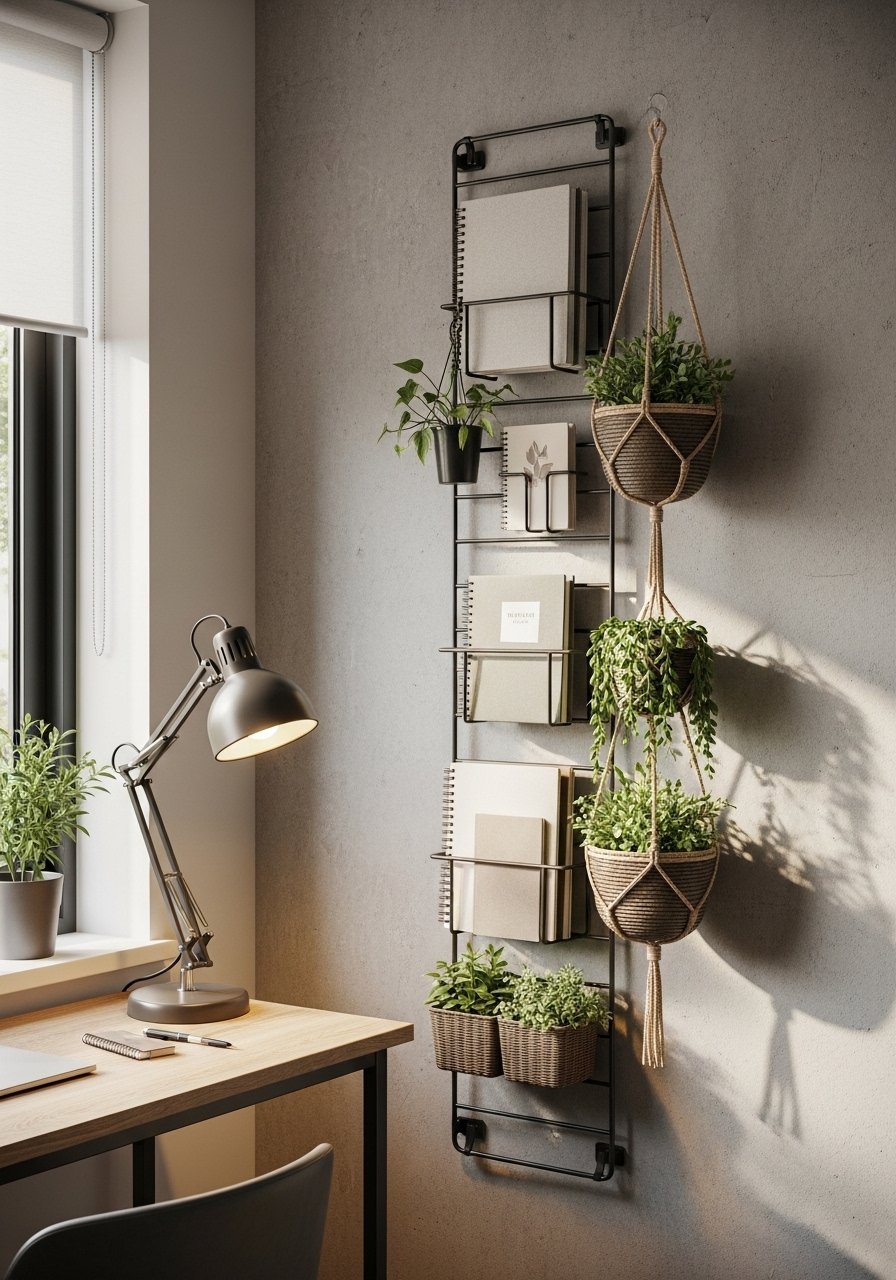
A vertical storage grid or pegboard uses height so small rooms stop getting buried. Keep shelf depths shallow, about 8 to 10 inches, and stagger baskets every 12 inches so the eye moves vertically. Pair a magnetic strip for pens and a slim shelf for a notebook. For a quick install try a metal wall grid. It feels organized and modern, and it helps solve the daily clutter problem without permanent built-ins.
Mistake to Avoid: Filling every hook and shelf with decor that looks pretty but has no function, which defeats the storage purpose.
6. Ladder Bookshelf for Narrow Walls
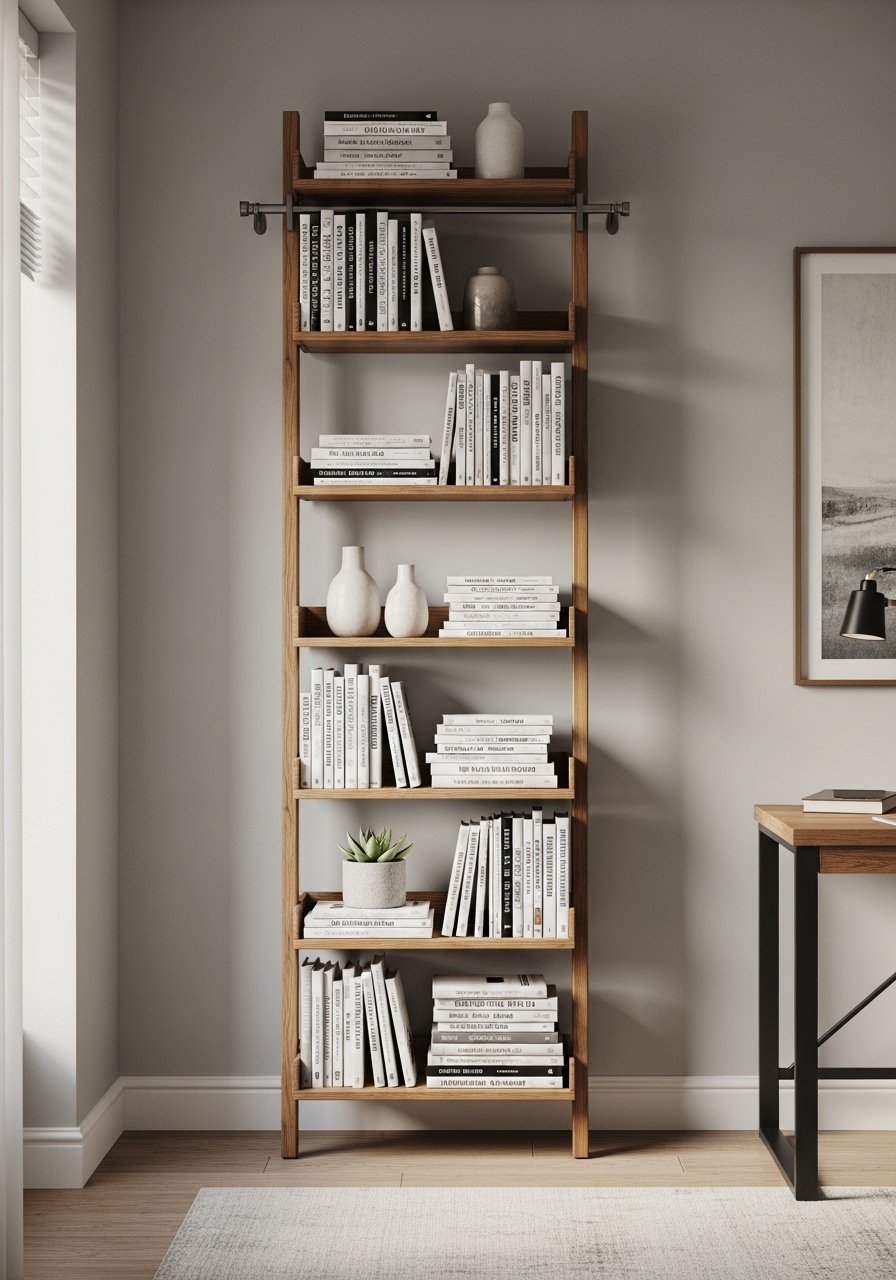
A leaning ladder bookshelf makes use of vertical real estate while staying light on the floor. Keep shelf spacing at around 12 inches for most books and a top shelf for decor. Choose a slim profile, 10 to 12 inches deep, so it never protrudes into the walking path. I like a ladder style because it reads modern without needing wall anchors. Try a leaning ladder shelf in a rental, and if you move it, it leaves no damage.
Mistake to Avoid: Buying a ladder shelf that is too deep for the walkway, making it feel like an obstacle.
7. Soft Lit Reading Alcove
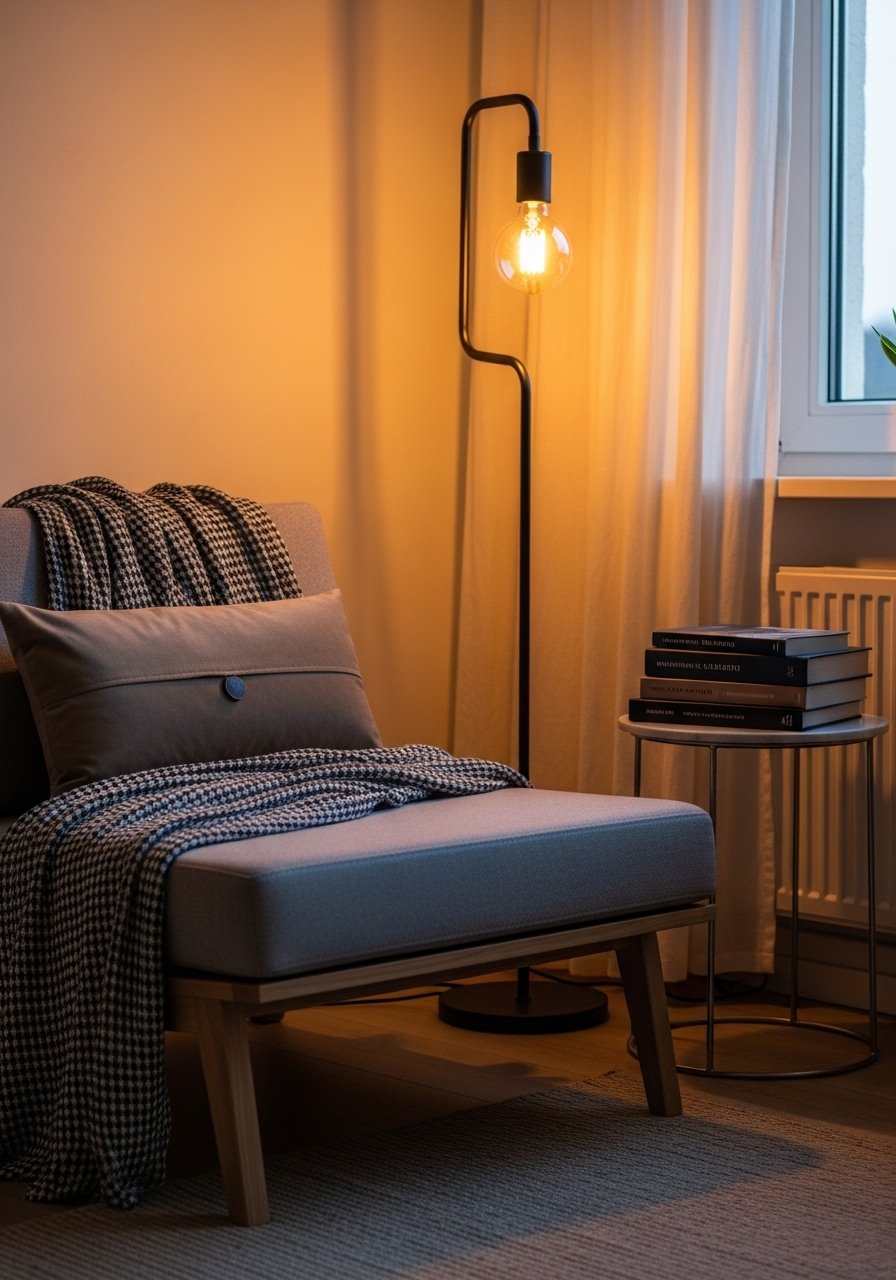
A dedicated reading alcove gives the study a relaxation zone separate from work. Aim for a lamp at about 60 to 66 inches tall and a bulb in the 2700K to 3000K range for warm, non-harsh light. One oversized cushion, a soft throw, and a slim side table are all you need. A dimmable floor lamp like this warm floor lamp creates a layer of light that keeps evenings calm. It is perfect for anyone who needs an obvious end-of-day ritual.
Mistake to Avoid: Relying only on overhead light, which makes reading uncomfortable and creates screen glare.
If any of these ideas have you ready to shop, here are the items I actually reach for when I set up a study room.
Practical Picks For Study Rooms
Furniture:
- adjustable standing desk (~$150-350). For alternating sit and stand sessions.
- leaning ladder shelf (~$70-160). Tall storage that does not anchor the wall.
Lighting & Acoustics:
- warm floor lamp (~$40-100). Dimmable for reading.
- acoustic wall panels (~$30-80). Removable and effective.
Organization & Comfort:
- wall-grid storage system (~$25-60). Hooks and baskets for small items.
- bench cushion (~$20-45). Softens any hard seat.
8. Hidden Charging Drawer and Cable Grommet
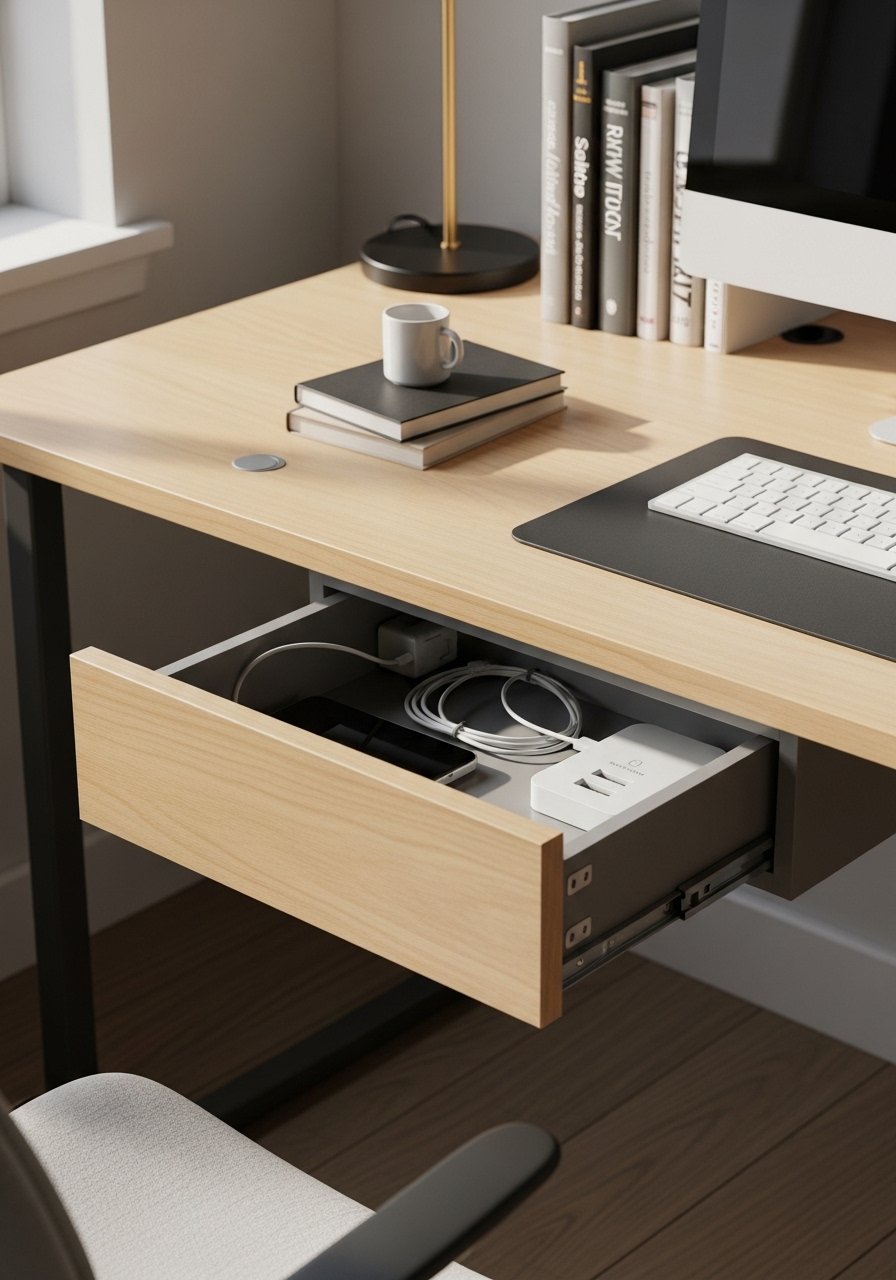
A pull-out drawer with a surge-protected strip keeps chargers and cables out of sight. Build the drawer depth to 12 to 14 inches so power bricks fit comfortably and add a cable grommet at the back for neat routing. A compact desktop charging hub inside the drawer reduces clutter and keeps devices charging overnight. This is renter-friendly if you add an adhesive strip to secure the power strip.
Mistake to Avoid: Running loose cables across the desk surface, which creates tangles and hidden hazards.
9. Curated Zoom Background Wall
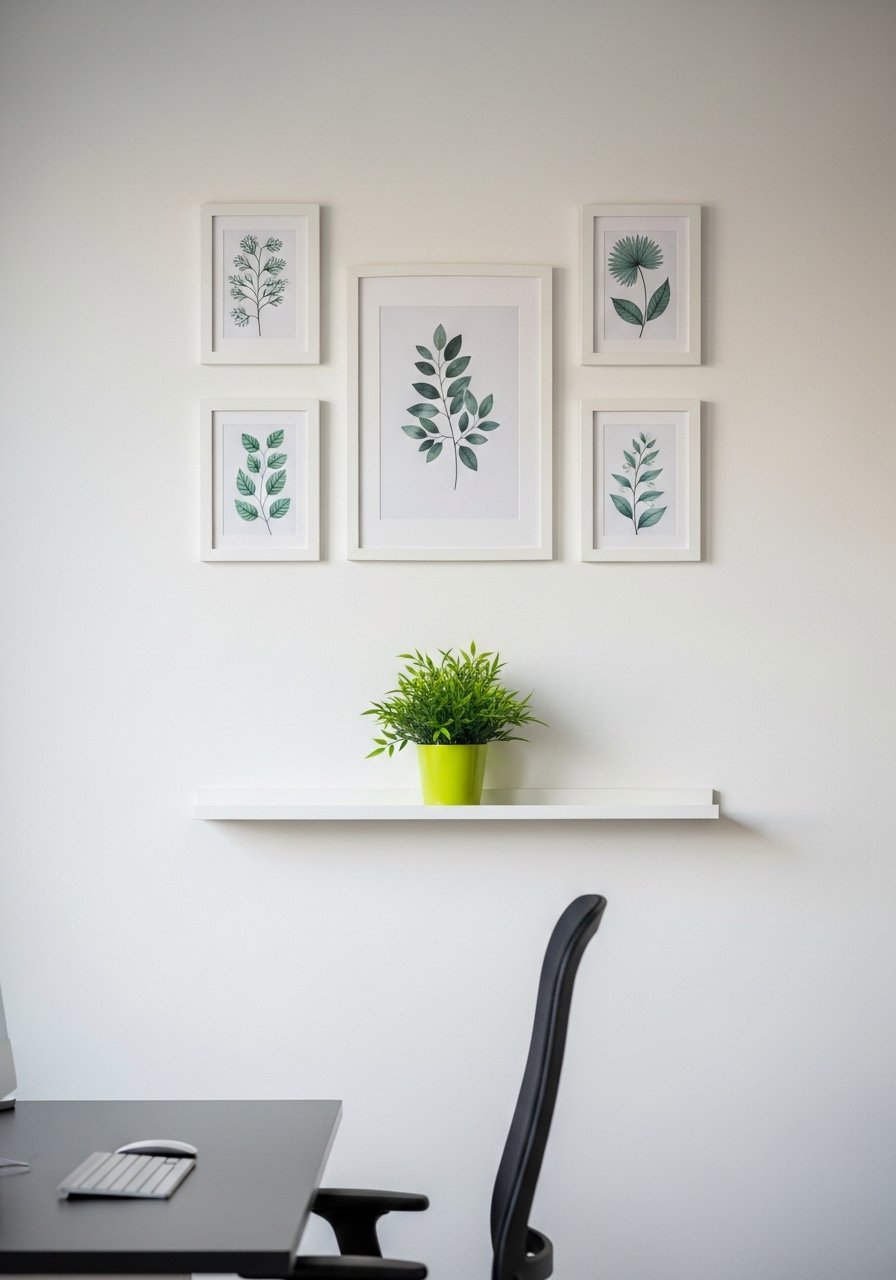
If you spend hours on video, a calm background matters more than a perfect room. Select three to five elements, keep them at eye level, and avoid busy patterns. Black frames in consistent sizes read modern and tidy. Try black picture frames that take standard prints. The goal is a balanced, nondistracting backdrop that still feels personal.
Mistake to Avoid: Overfilling the background with tiny objects that flash during movement and draw attention away from you.
10. Plant Shelf for Air and Focus
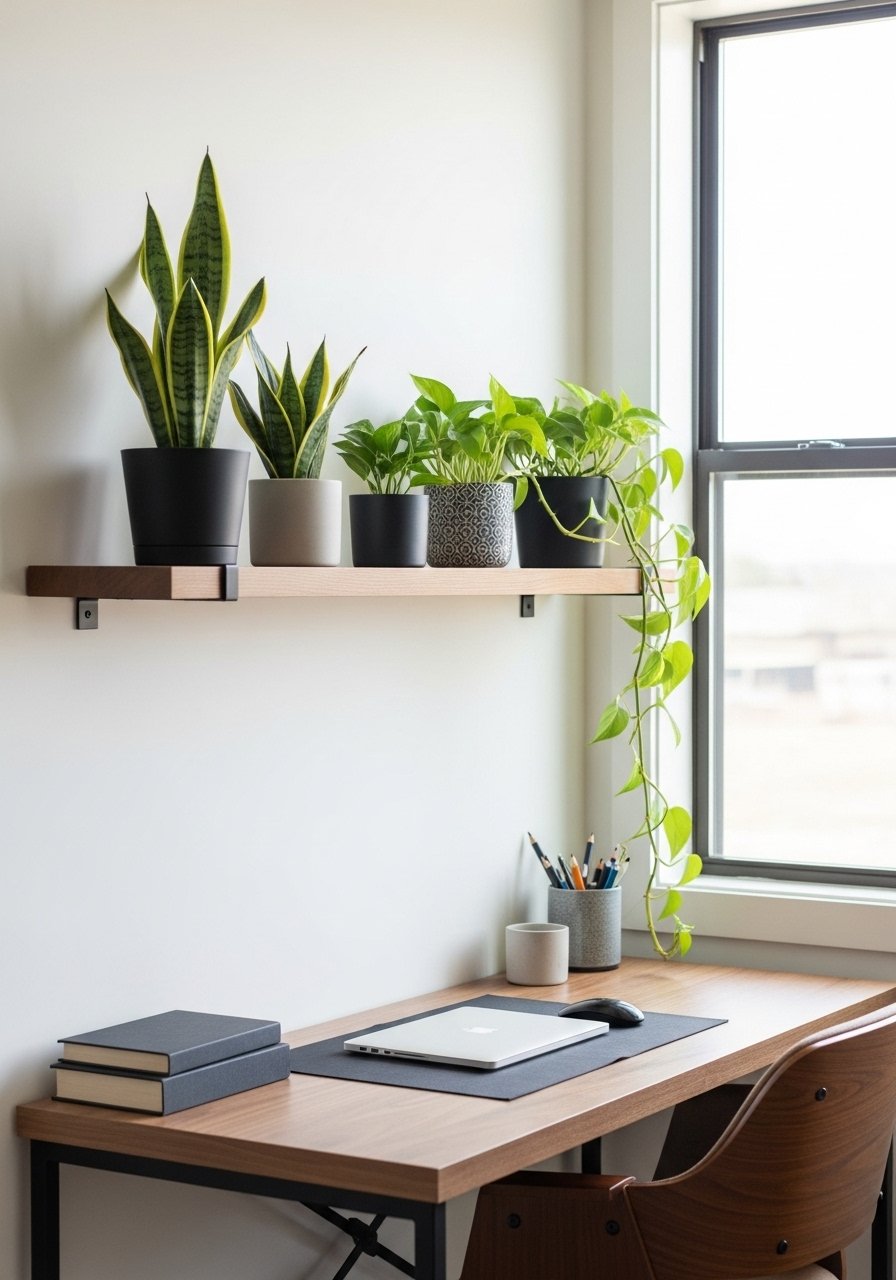
Adding plants improves air quality and gives the study a living element that calms the eye. Use low-maintenance choices such as snake plant, pothos, or ZZ plant if you travel. A shelf depth of 6 to 8 inches is enough for small pots and keeps things lightweight. I like a slim floating plant shelf that installs with removable hardware for renters. Keep plant placement where indirect light hits for best results.
Mistake to Avoid: Picking thirsty plants for a north-facing room, which creates constant fussing and eventual plant casualties.
11. Ergonomic Kit Under the Desk
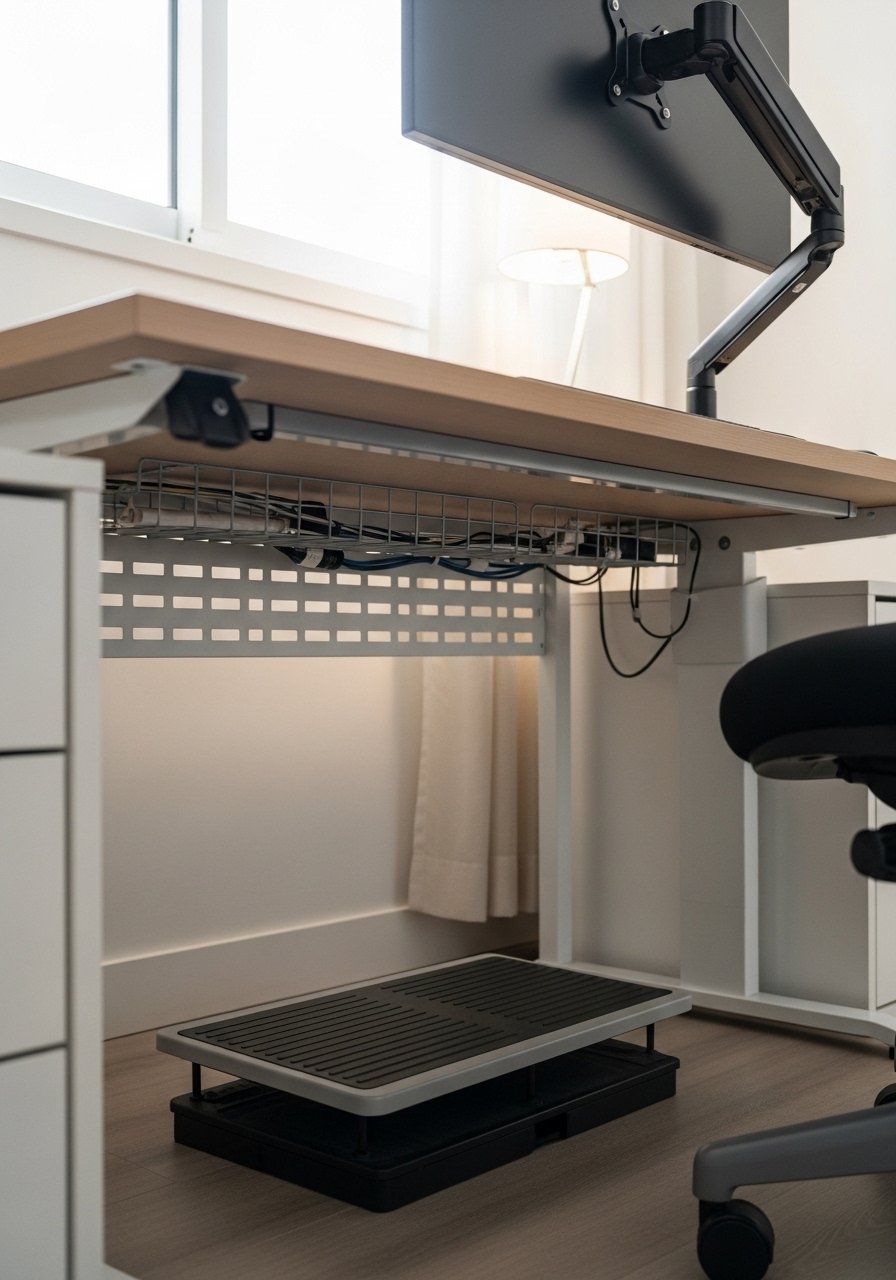
An ergonomic under-desk setup makes long work sessions bearable in small spaces. Use a monitor arm to lift the screen and free desk space, keep the keyboard 2 to 3 inches from the edge, and add an under-desk cable tray to hide power strips. A compact monitor arm and under-desk footrest are inexpensive but change how the whole room feels. These choices matter most when your desk is also your dining table.
Mistake to Avoid: Leaving the monitor on the desk surface with the keyboard pushed forward, which causes forward head posture.
Small Study Habits That Stick
Sit-stand habit, not marathon stands. Alternate 25 minutes seated with 10 minutes standing and use a timer. A simple desktop timer helps you actually switch.
Grab a desk mat to define workspace on a shared table. It protects the surface and gives a tactile boundary so work does not spill into dinner.
Most people make the room too matchy. Mix one warm wood piece with a cooler metal lamp for balance. A small wood tray organizes odds and ends and keeps the surface intentional.
Everyone piles papers into a drawer. Use a labeled file box and three folders for current, soon, archive. It reduces daily decision fatigue and makes cleaning five minutes, not an hour.