
I kept stacking more things on the counter, then moving them to the wall, then realizing the wall was a cluttered mess that still ate visual space. After a week of banging elbows and a small mug falling on my foot, I started mounting only pieces that solved a problem and read like art. That decision stopped the elbow-bumps and made the kitchen look bigger, not just busier.
I wrote these ideas after trying them in three rentals, so they lean renter-friendly and budget conscious. Each suggestion includes a small measurement or spacing note so you do not guess and cram things too tight. Expect simple hardware and one to two hours for most installs. If you have kids or pets, I call out the easy swaps that keep fragile things out of reach.
1. Magnetic Spice Bar With Clear Jars
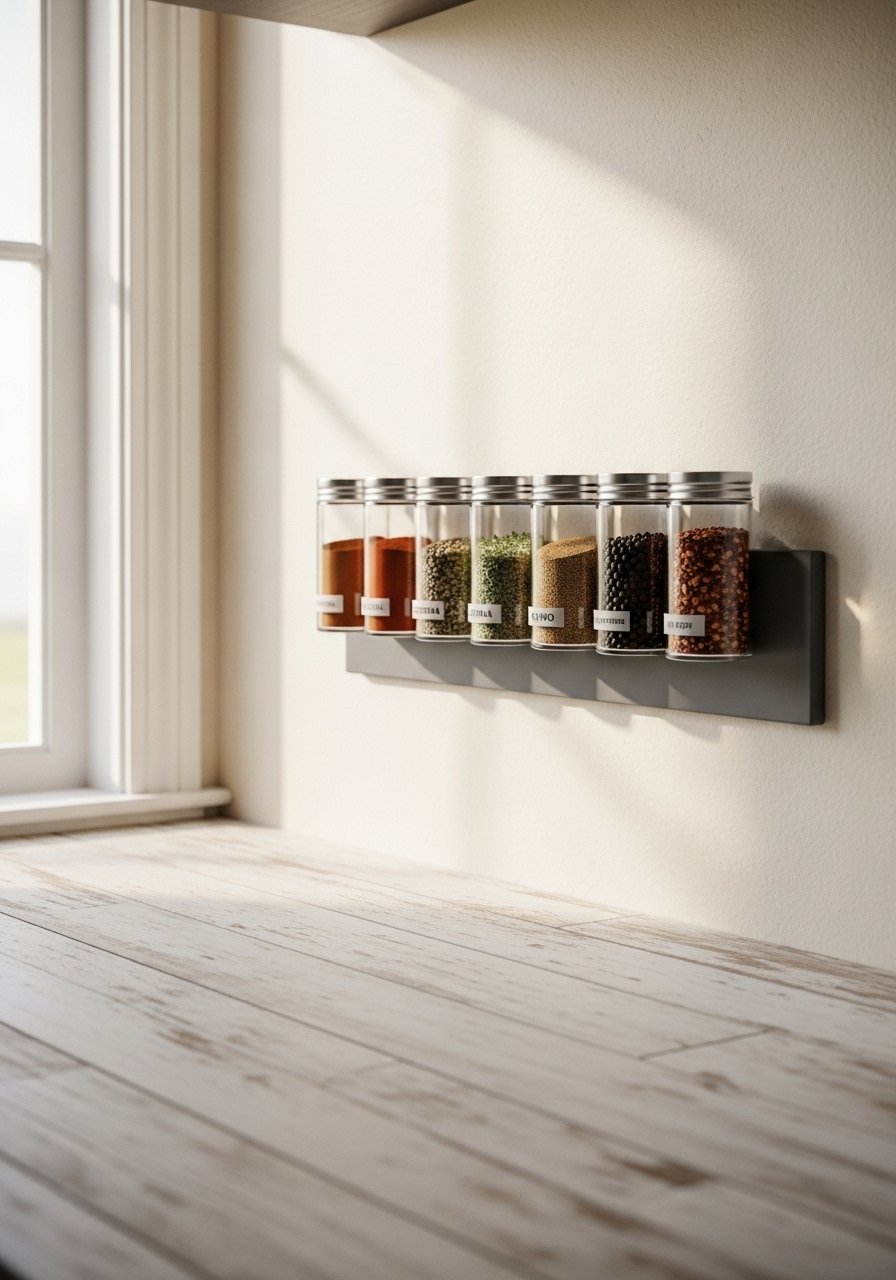
A magnetic strip plus uniform glass jars frees precious counter and cabinet shelf space while keeping everyday spices visible and easy to grab. I space six 2-ounce jars about 1.5 inches apart on a 12-inch strip so labels read at a glance and the row does not look crowded. The look reads curated, and the function beats rifling through a crowded cabinet. This works for small kitchens, renters, and anyone who cooks often. Try a magnetic knife strip and a set of clear glass spice jars for a matched finish.
Mistake to Avoid: Mounting the strip too high so you have to reach above shoulder level, which ruins the convenience.
2. Six-Inch Deep Floating Shelf for Mugs and Hooks
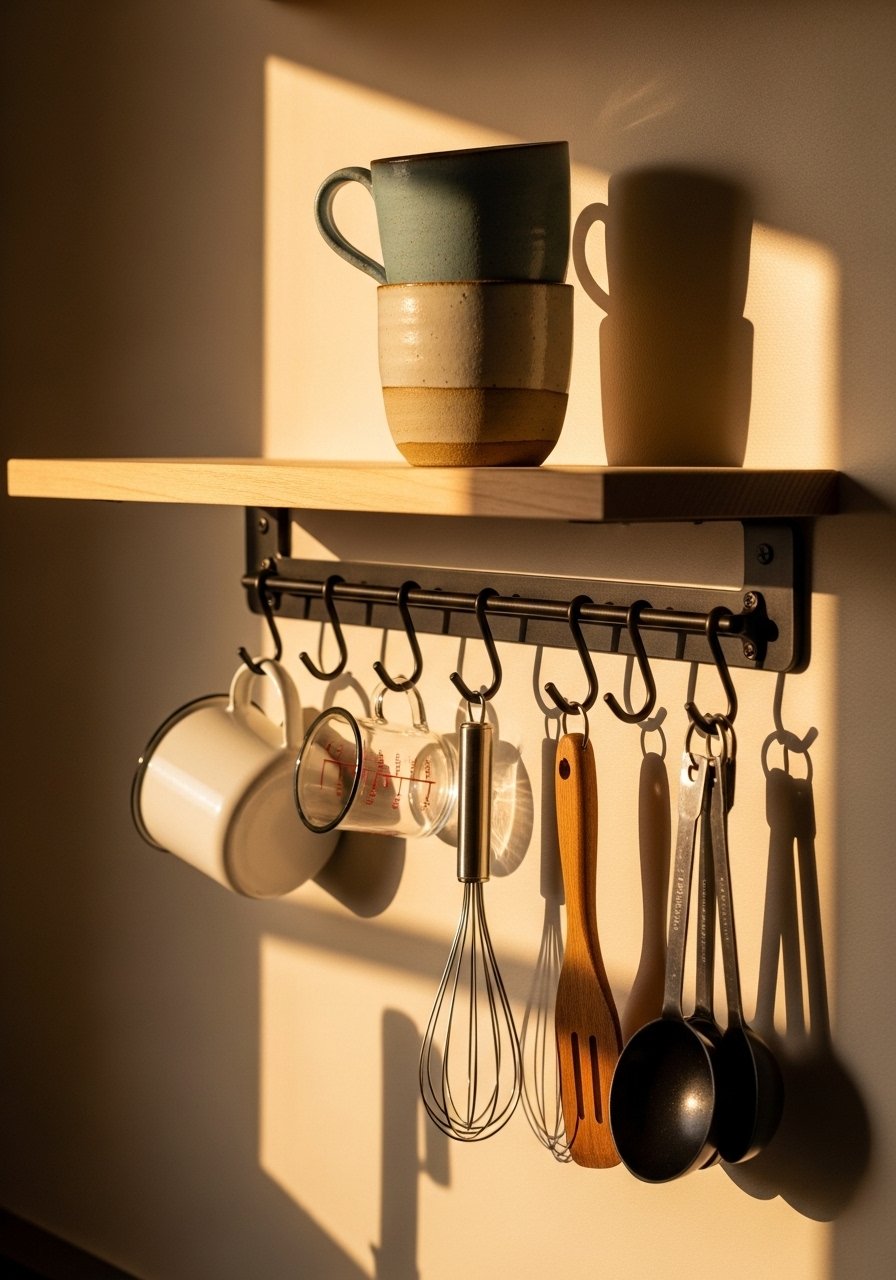
A 6-inch deep floating shelf reads slim but holds coffee mugs and a small row of hooks beneath for cups or measuring spoons. The shallow depth keeps sightlines open while giving you a usable surface for a French press or olive oil. I screw the shelf into studs where possible and space hooks about 4 inches apart so mugs do not clink. The visual result is tidy, and the shelf doubles as a tiny display ledge. For renters, use heavy-duty wall anchors or pick a rail that clamps to cabinets. Pair a floating shelf kit with cup hooks.
Mistake to Avoid: Using a deep, protruding shelf that makes the kitchen feel boxed in and blocks cabinet doors.
3. Vertical Pegboard Gallery for Utensils and Plants
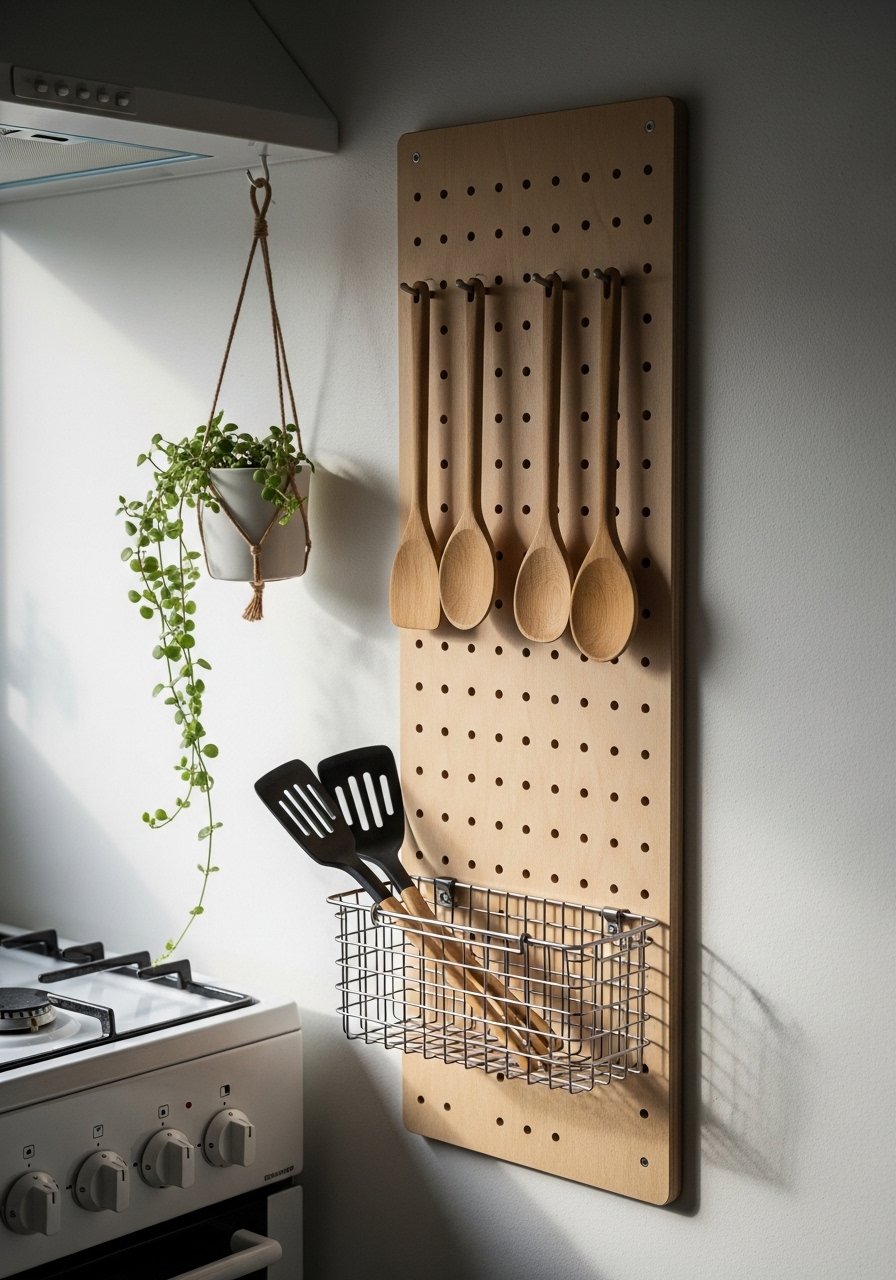
A narrow 12-by-24 pegboard turns an awkward strip of wall into a layered storage display. Use pegs and small baskets to hold utensils, a small pot for frequently used wooden spoons, and a tiny hanging planter to soften the look. I leave pegs spaced about 2 inches apart vertically to allow reconfiguration. The pegboard reads purposeful rather than messy when you keep a consistent color palette for hooks and containers. This is low-skill to install and fully renter-friendly if you use removable mounting strips. Grab a pegboard kit and a set of pegboard baskets.
Mistake to Avoid: Tossing mismatched baskets and pegs on the board, which makes it look cluttered instead of curated.
4. Fold-Down Wall Table for Prep or Coffee
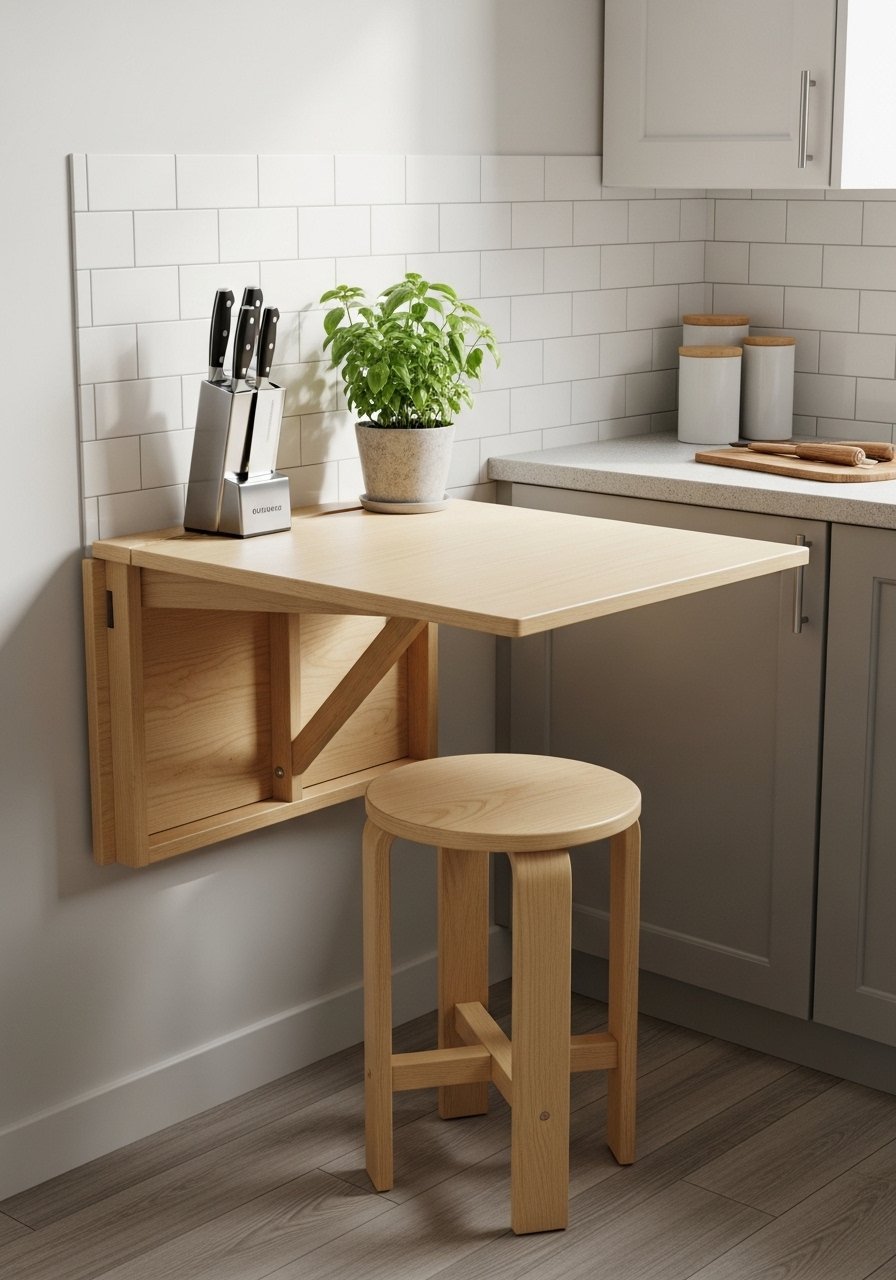
A wall-mounted drop-leaf table gives you a 24-inch wide surface that folds flat when not in use. I aim for about a 10 to 12-inch depth when folded to avoid blocking walkways. This becomes an instant coffee station, extra prep area, or a laptop spot without sacrificing circulation. Mount it at standard counter height or 34 inches if you prefer stool seating. For renters, choose a bracket system that spreads load across studs or uses a French cleat so removal is easier. Look at a drop-leaf wall table and folding brackets.
Mistake to Avoid: Mounting the table too low so stools hit the toe kick of base cabinets, which stops you from tucking seating away.
5. Horizontal Rail for Pans, Lids, and Cutting Boards
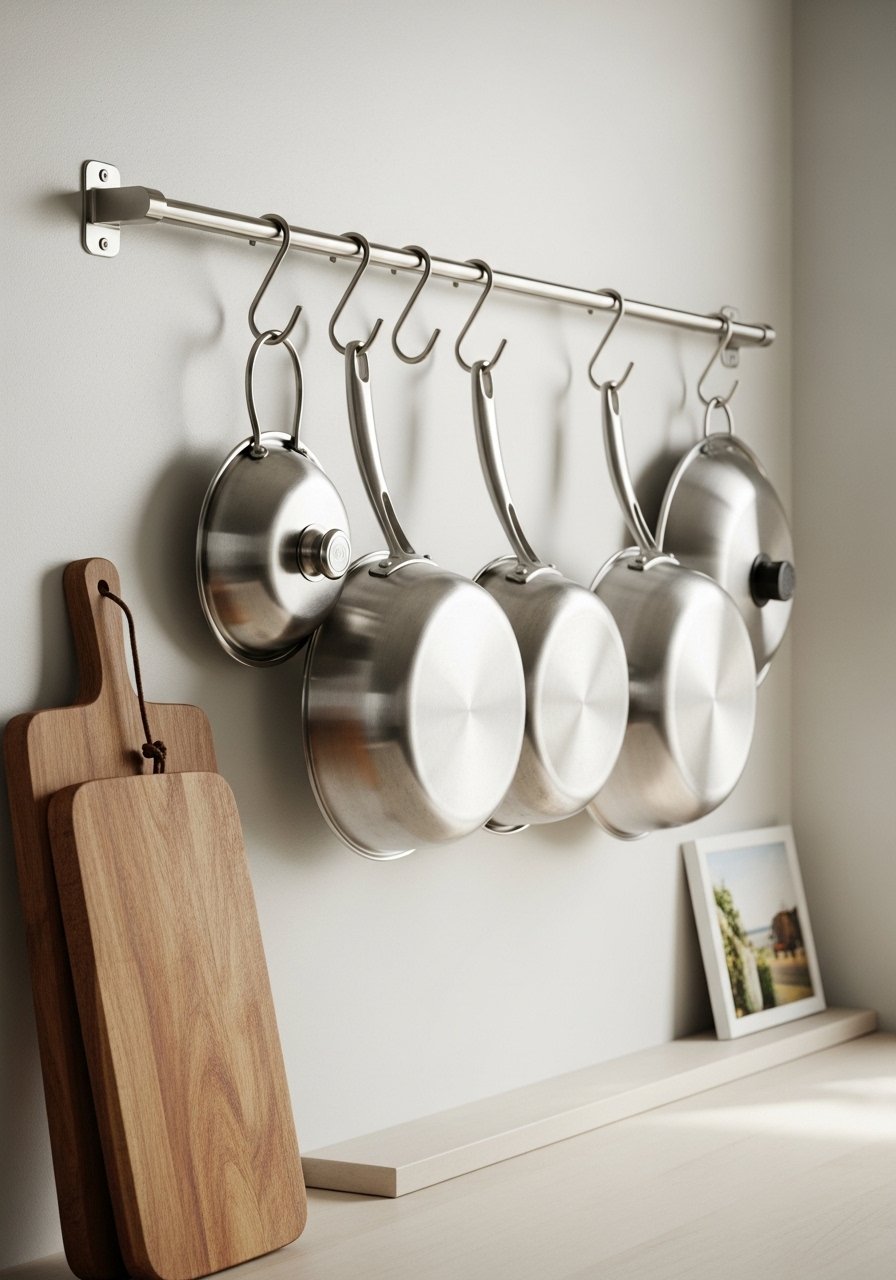
A horizontal rail with S-hooks stores frequently used pans and lid sets while turning hardware into wall decor. Space hooks about 3 inches apart to avoid overlapping handles. For lids, I use smaller S-hooks and hang them by their handles so they form a neat row. This system keeps heavy items off counters and makes them easy to see. It works best above open counter stretches and away from high traffic. Pair a kitchen rail with a pack of S-hooks.
Mistake to Avoid: Overloading one short rail with too many heavy pans so everything bends and looks sloppy.
6. Knife Strip That Doubles as a Mini Ledge
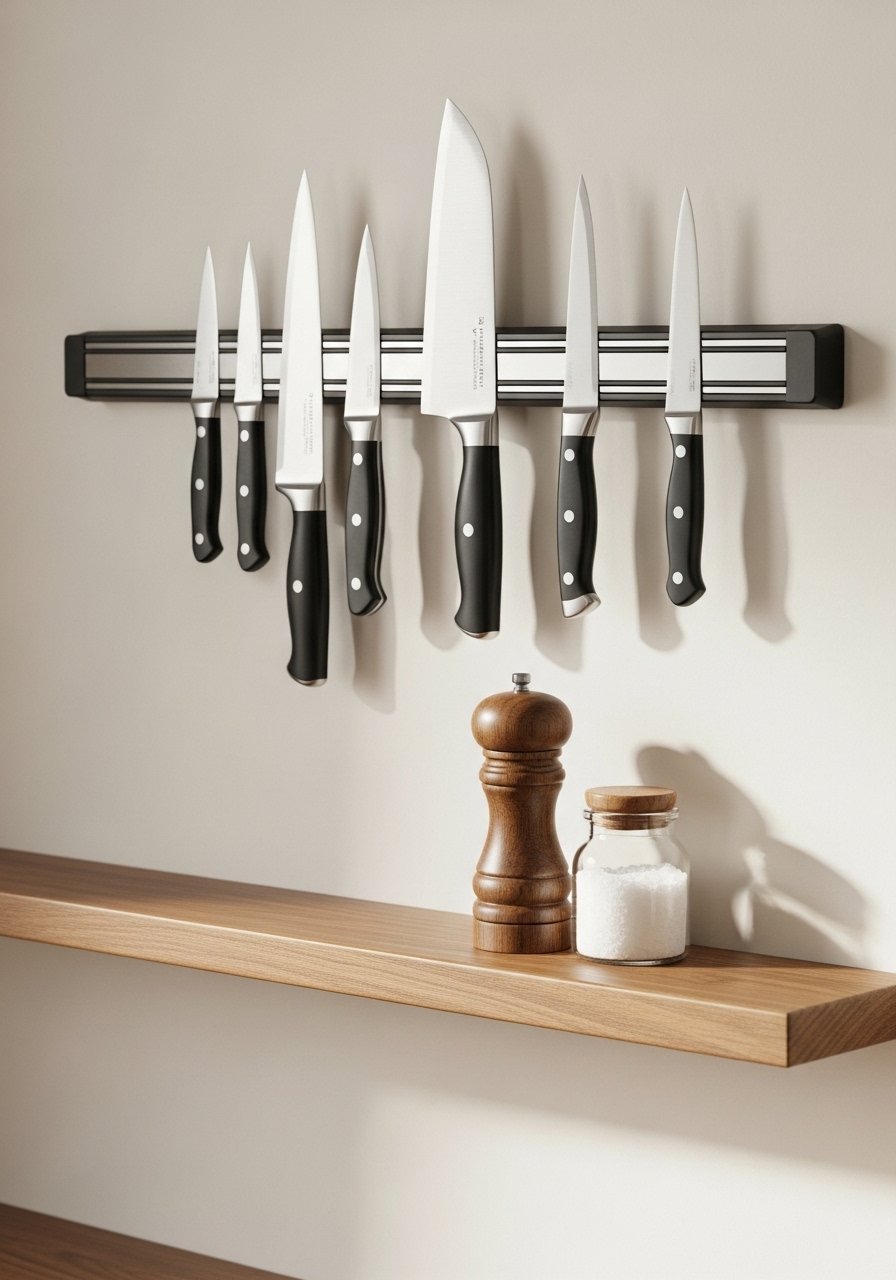
A magnetic knife strip that extends a few inches can act as a mini ledge for small items like grinders or a salt cellar. I leave a 3-inch clearance in front so small jars sit safely without knocking into knife handles. This doubles function and reduces the number of wall fixtures. Use lower-profile knives if you have curious children and secure the strip into studs. The visual is modern and clean, especially with matching wood or matte metal finishes. Try a wide magnetic strip and a small grinder set.
Mistake to Avoid: Placing the strip above a high-traffic area where jars can be knocked off when grabbing a knife.
7. Narrow Cutting Board Gallery Rail
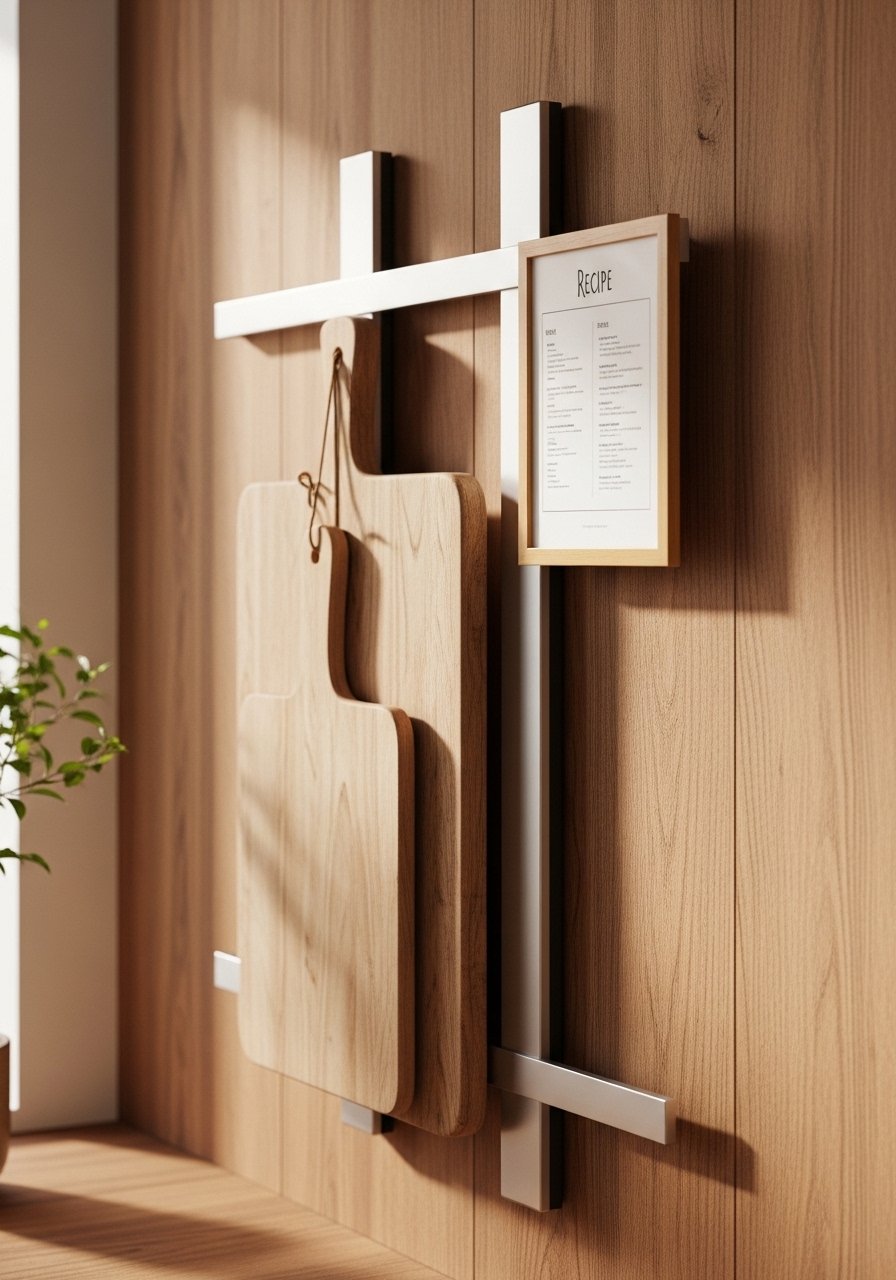
Hanging cutting boards on a narrow rail turns useful objects into vertical art. I mount a 1-inch-deep ledge and lean boards with about a 1-inch gap so they do not rub and scratch each other. Alternate wood tones and a single framed recipe to break repetition. It keeps counters clear, and the boards are easy to grab for chopping. This is especially good in tiny kitchens that need to show texture instead of more color. Use a picture ledge and a pair of wood cutting boards.
Mistake to Avoid: Hanging too many boards tightly together so the display looks like a stack instead of intentional decor.
If any of these ideas have you ready to shop, here are the specific things I reach for when installing small kitchen wall storage.
Space-Saving Wall Picks
Rails & Hardware:
- kitchen rail (~$15-35). Good for pans, utensils, or hooks.
- folding-table-brackets (~$20-40). For sturdy drop-leaf tables.
Shelves & Boards:
- floating-shelf-kit (~$25-60). Choose 6-inch depth for small kitchens.
- picture-ledge (~$12-30). Slim rails for cutting boards and small frames.
Storage Bins & Accessories:
- pegboard-kit (~$20-50). Use vertical 12×24 boards for narrow walls.
- glass-spice-jars (~$12-25). Uniform jars keep the spice bar tidy.
Wall Hanging Habits That Save Space
Thin trays beat thick bowls for entry shelves. A narrow utility tray at 6 inches deep collects keys and mail without claiming the entire shelf.
Grab clear adhesive hooks for renter-friendly hanging. They hold lightweight items and peel off cleanly when you move.
Most people hang art too high. Try starting your lowest hook at 54 inches from the floor, not higher. A measuring tape keeps spacing consistent and avoids a crooked row.
If you have pets or small children, mount fragile displays above eye level and anchor heavy rails into studs. A set of heavy-duty wall anchors is cheap insurance.