
The first time I tried to recreate a cozy living room from a Pinterest board I learned two things. The photo had hidden staging, and my tiny apartment needed scaled-down moves, not miniature versions of grand rooms. I stopped copying whole looks and started stealing one idea at a time, which is how I finally made three rentals feel like home without losing my deposit.
These ideas are low fuss, renter friendly in most cases, and meant for people who want comfort that looks intentional, not styled-for-a-magazine. I tested many of these after trying this in three rentals, so when I say something takes 20 minutes or under, that is honest. Expect budget picks mixed with one or two splurge items, and alternatives for small spaces and pet households.
1. Anchor the Room With One Oversized Rug
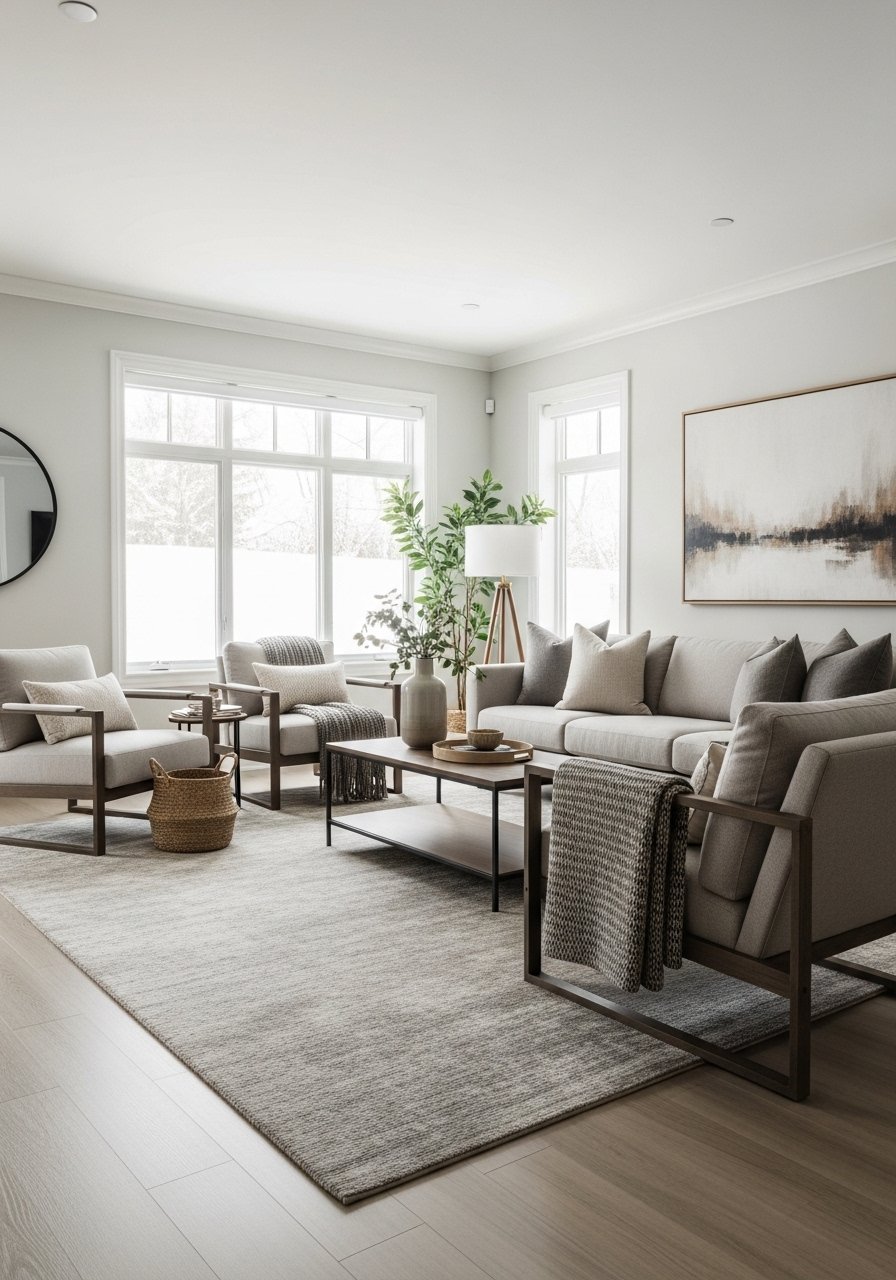
The rug matters more than the coffee table. I used a rug that allowed the front legs of the sofa and chairs to sit on it, leaving about 8 to 12 inches of rug showing around the cluster. That slight overlap makes furniture read as one set and visually expands the space. For high-traffic rooms pick a low-pile wool blend or a stain-resistant synthetic like the natural fiber options I link to. Add a 5:1 cushion-to-throw ratio on the sofa for balance, one larger lumbar and a pair of smaller squares. Rug pads that are 1/4 inch thick keep everything from shifting on hardwood.
Mistake to Avoid: Picking a rug that is too small so furniture floats awkwardly off it.
2. Layer Lighting in Three Easy Steps
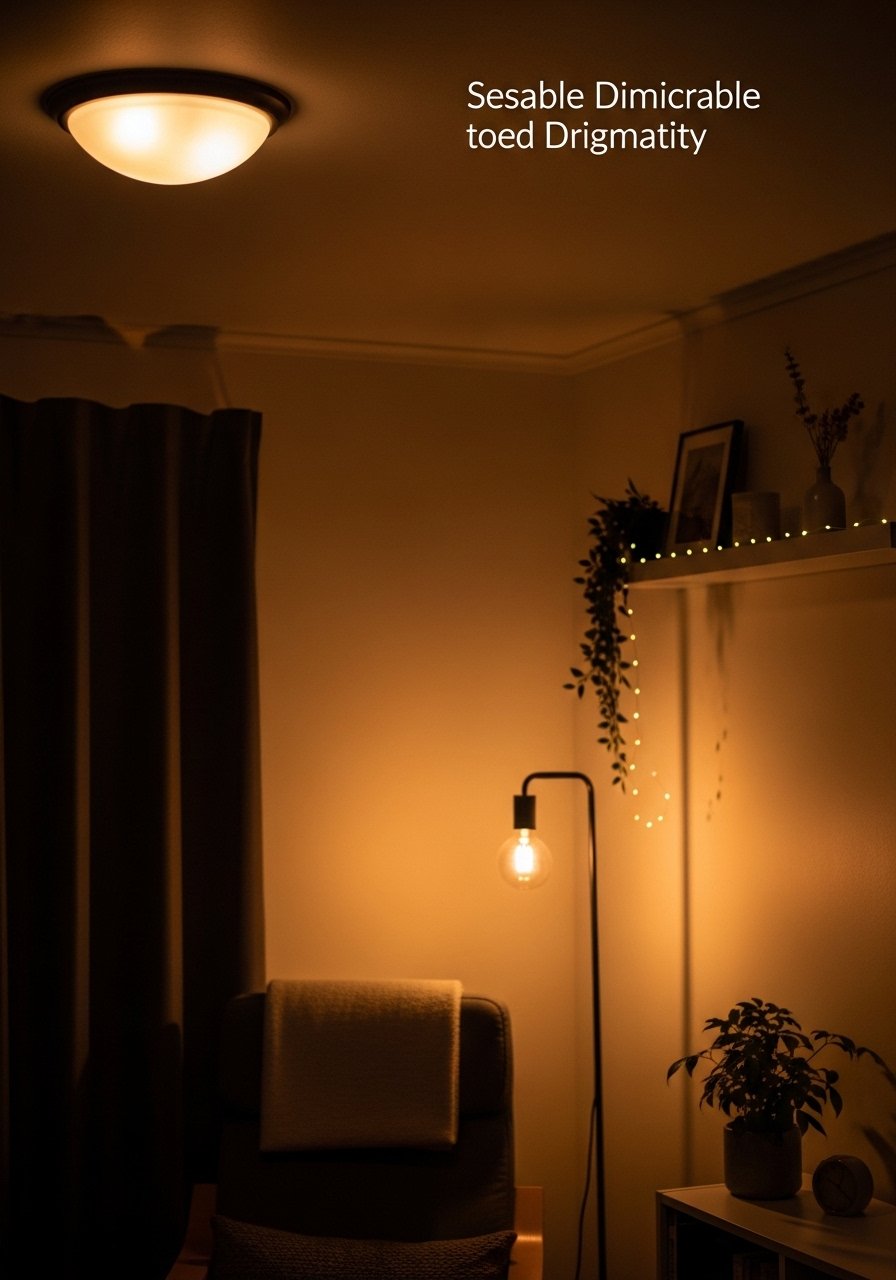
Good lighting creates coziness more than one expensive piece. Aim for three layers, ambient, task, and accent, and keep the split roughly two ambient sources to one task source. Swap out cool bulbs for 2700K warm bulbs across the room to get that soft glow. Use a plug-in table lamp rather than hardwiring when you rent. I keep a smart plug on my floor lamp so I can dim without an electrician. If you want a single splurge, a dimmable overhead fixture that accepts LED bulbs makes the biggest visual difference.
Mistake to Avoid: Relying only on overhead lighting, which flattens textures and makes rooms feel clinical.
3. Create a Cozy Nook With an Oversized Seat

A single oversized seat, like a low lounge chair or a floor cushion, transforms an empty corner into a usable nook. I recommend a seat depth of at least 28 inches for lounging. Anchor it with a small side table and a reading lamp at eye level. For apartments, choose a lightweight frame or a foldable lounge option to avoid moving headaches. Adding a washable slipcover or a soft throw keeps the spot pet friendly and practical.
Mistake to Avoid: Choosing a seat that visually competes with the sofa instead of complementing it.
4. Warm Walls With Peel-and-Stick Texture
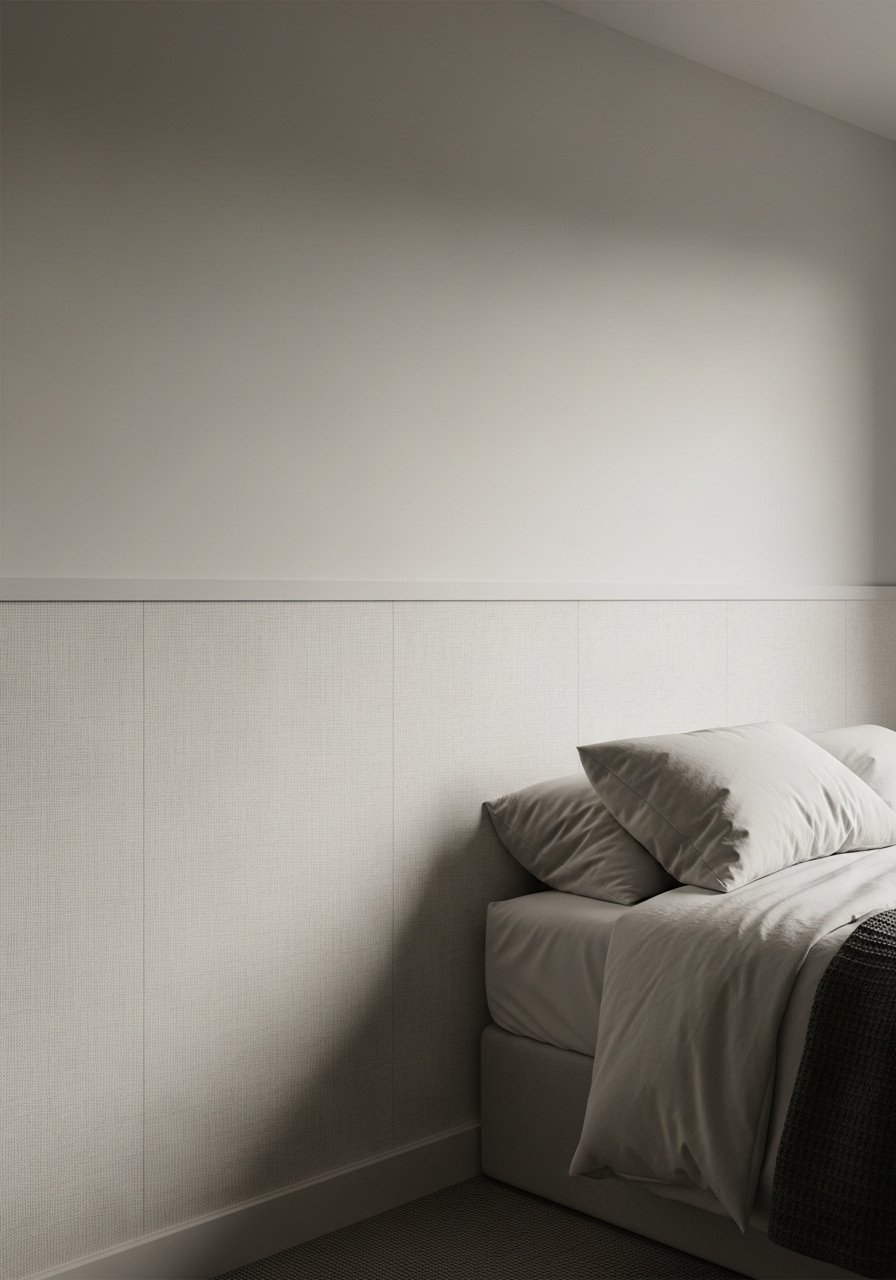
If you are not allowed paint, peel-and-stick textured panels give warmth without damage. Apply them to the lower third of the wall or as a horizontal band behind the bed to avoid overwhelming a small room. I cut panels so the seams align with existing trim for a built-in look. Use a feathering technique when trimming to avoid harsh edges. This approach costs a fraction of re-plaster and comes off cleanly when you move. Pair the texture with 2 to 3 framed prints above for depth.
Mistake to Avoid: Covering an entire wall with heavy texture, which can make a room feel boxed in.
5. Mix Hard and Soft Materials for Balance
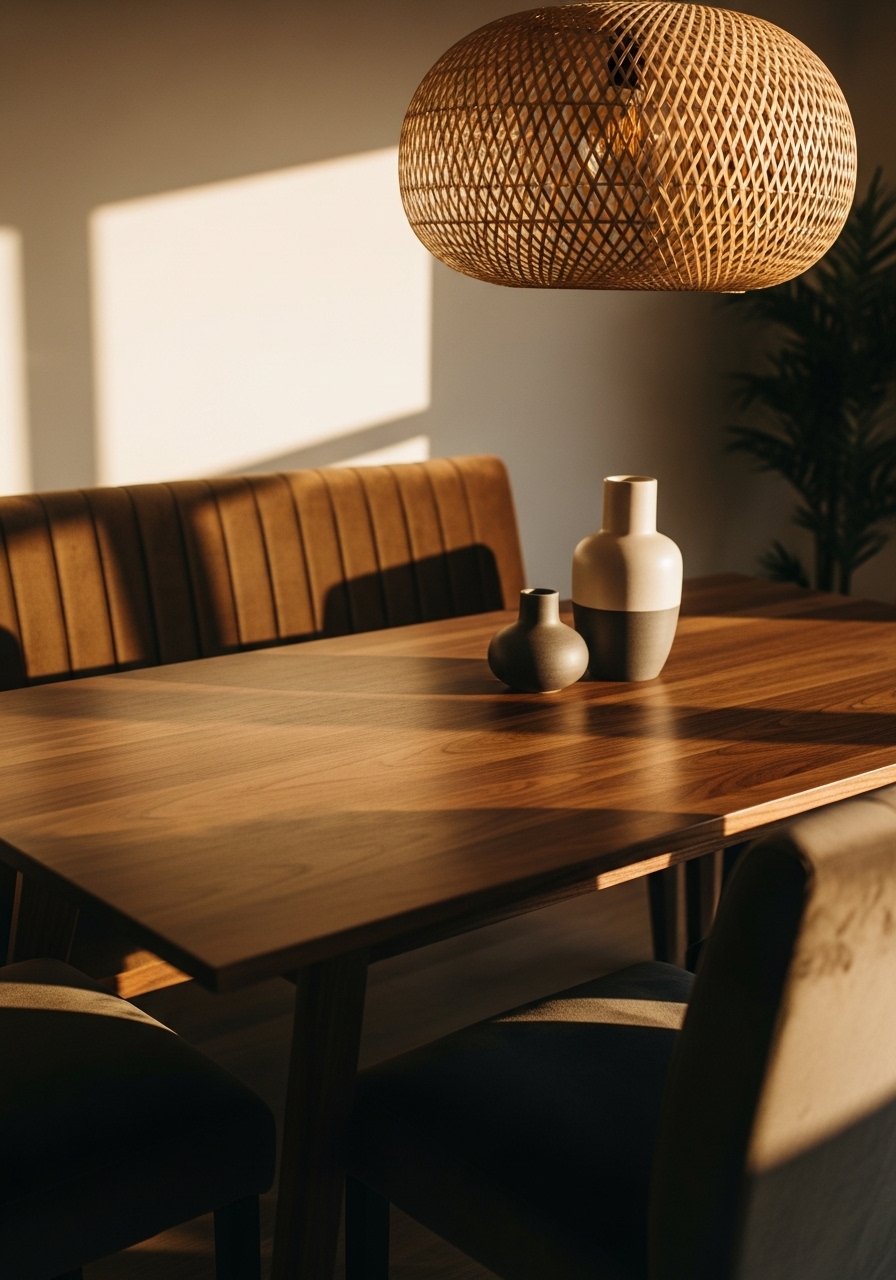
Rooms that feel cozy usually balance a soft fabric with one hard surface. Pair velvet or linen seating with a wood or stone table and add a ceramic or metal centerpiece for contrast. I use a 60:40 split favoring soft pieces in sitting areas so the room reads warm but not muddled. Swap a glossy coffee table for a matte wood or stone option to reduce reflections and make the space calmer. For budget alternatives try secondhand markets and refinishable pieces.
Mistake to Avoid: Buying every piece in the same finish so the room lacks visual layers.
6. Make a Gallery Wall That Reads Like One Object
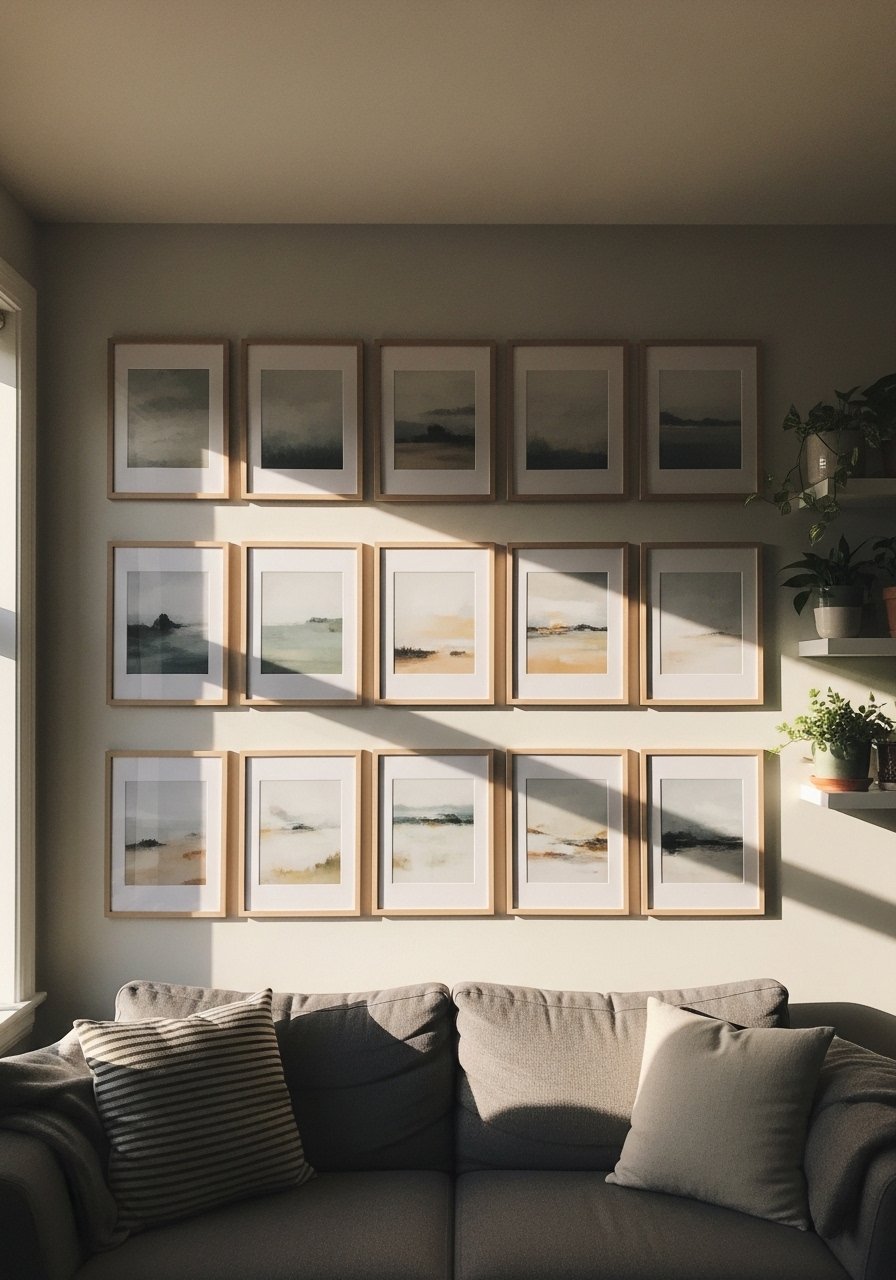
Instead of random frames scattered, plan your gallery as a single composition. Lay artwork on the floor to test spacing, then keep vertical gaps at 2 to 3 inches. Use identical mats or frames for cohesion. A simple rehearsal with tracing paper at scale saves trips to the hardware store. For renters use removable picture hangers rated for the weight. I usually pick one large anchor piece and build around it in thirds to keep the eye moving.
Mistake to Avoid: Hanging each frame randomly without testing how they read together from the main seating spot.
7. Scent Zone for Each Room
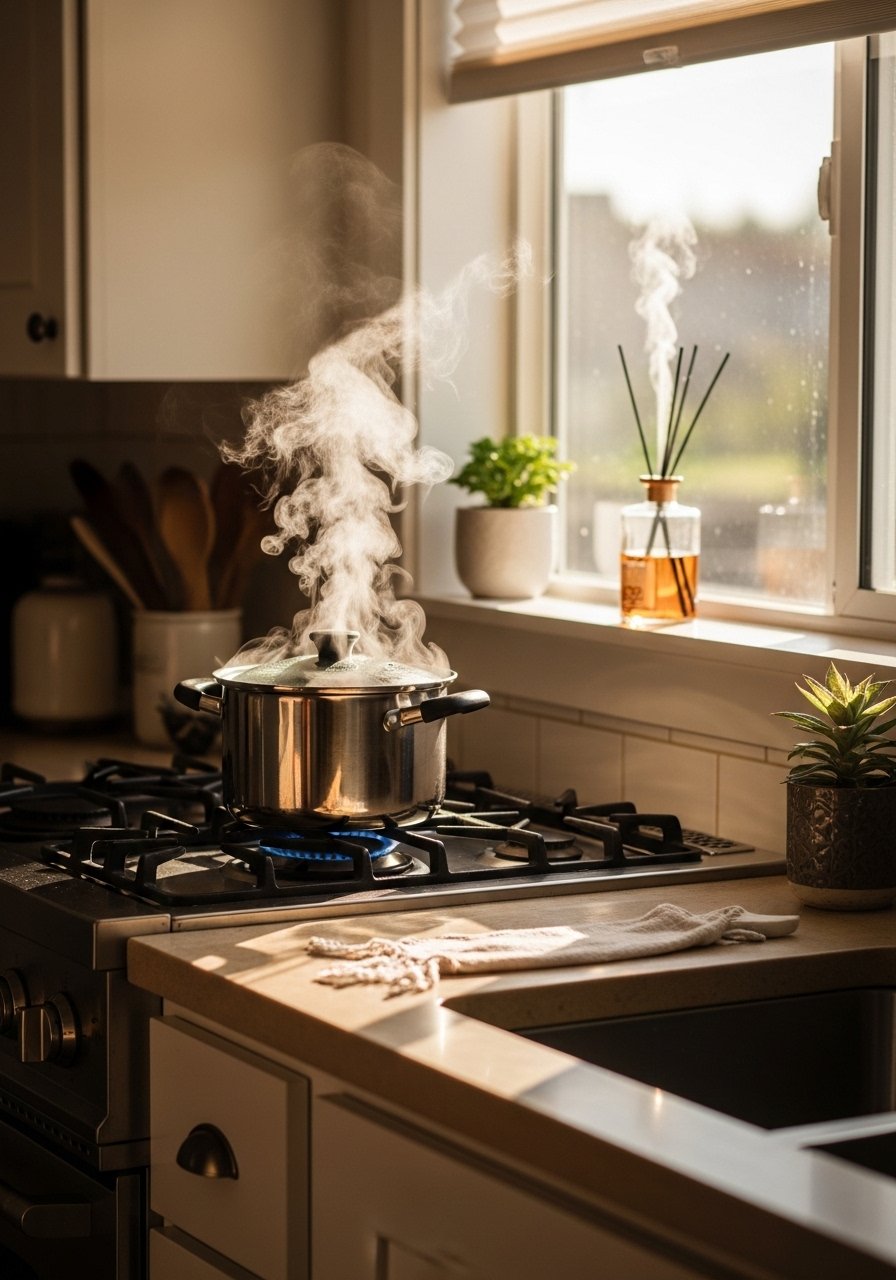
Scent changes how a space feels instantly, but layering scents is the trick most people miss. Use citrus or herbal notes in kitchens, floral or linen notes in living rooms, and woody or amber blends in bedrooms. Place a small diffuser in each zone and rotate blends seasonally so scents do not compete. I keep scent intensity low, aiming for subtle background notes rather than perfume-level impact. A simmer pot of citrus peels and rosemary works on slow mornings and doubles as a humidifier alternative in dry months.
Mistake to Avoid: Over-scenting the whole apartment so every room smells the same.
If any of these ideas have you ready to shop for the essentials, here are the items I actually use across these setups.
Cozy Room Starter Finds
Textiles & Soft Goods:
- Soft throw blanket (~$25). Lightweight, machine washable, and great for layering.
- Velvet lumbar pillow cover (~$18). Adds instant softness and can be swapped seasonally.
- Oversized floor cushion (~$45). Anchors a reading nook without bulky furniture.
Lighting & Hardware:
- Dimmable LED bulbs 2700K (~$15 for a 4-pack). Warm, energy efficient, and renter friendly.
- Plug-in table lamp (~$35). Easy to position and style.
Wall & Floor:
- Removable textured wall panels (~$60). A renter-safe way to add depth.
- Anti-slip rug pad (~$20). Keeps rugs in place and cushions underfoot.
Scent & Smallwares:
- Reed diffuser set (~$22). Low-maintenance scent for living areas.
- Matte ceramic vase (~$30). A simple centerpiece that grounds a table.
8. Nighttime Layering for Bedroom Calm
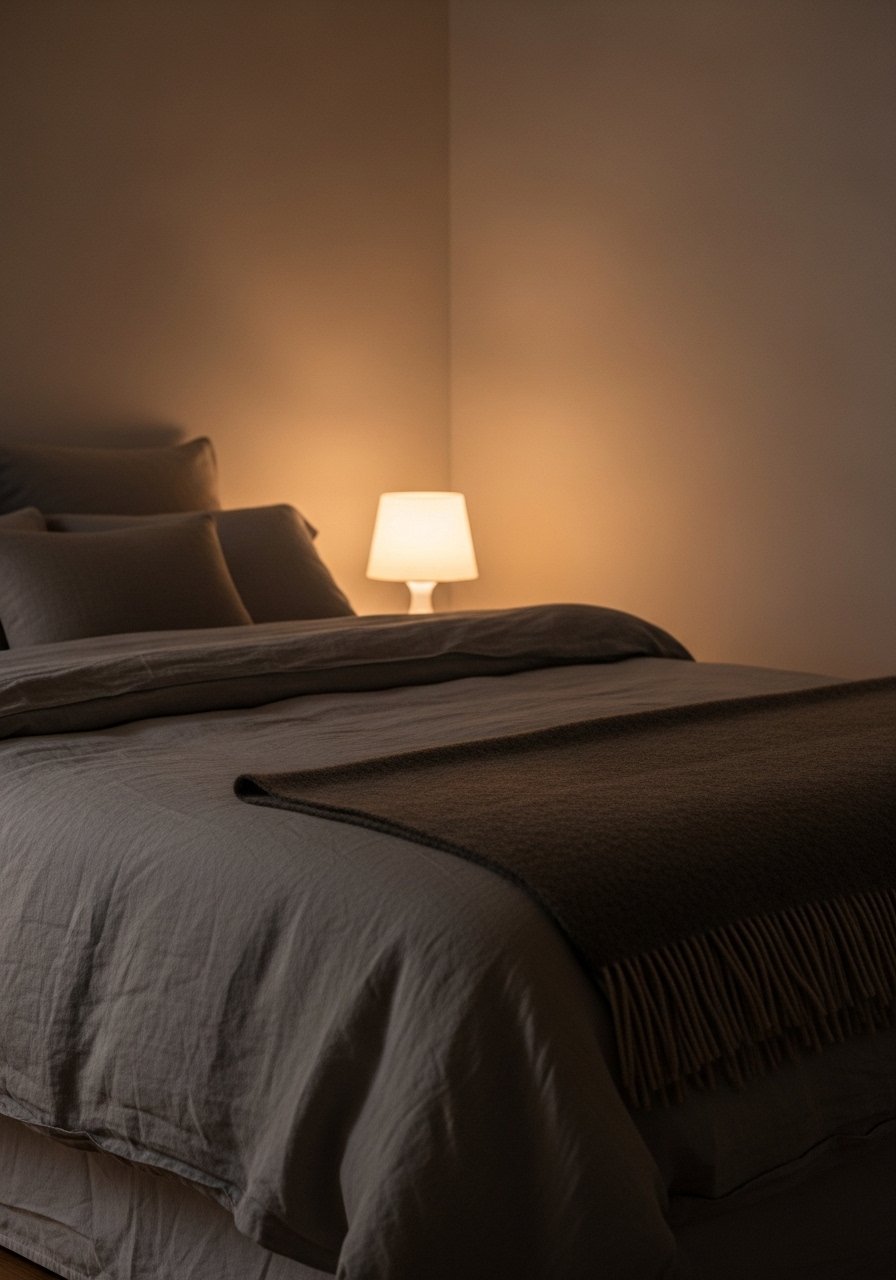
Bedrooms need a bedtime ritual that starts with the room. Layer bedding with a breathable base like cotton or linen, then a mid-weight wool or cotton blanket, and a light throw for last-minute warmth. I sleep better when the visible layers are in warm neutrals that reduce visual noise. Swap heavy bedroom drapes for linen panels that filter light while keeping airflow. A bedside lamp with a 2700K bulb and a low-sill nightlight gives enough navigation light without waking you fully.
Mistake to Avoid: Using too many competing patterns, which visually stimulates instead of calming.
9. Functional Entry With Clear Drop Zones
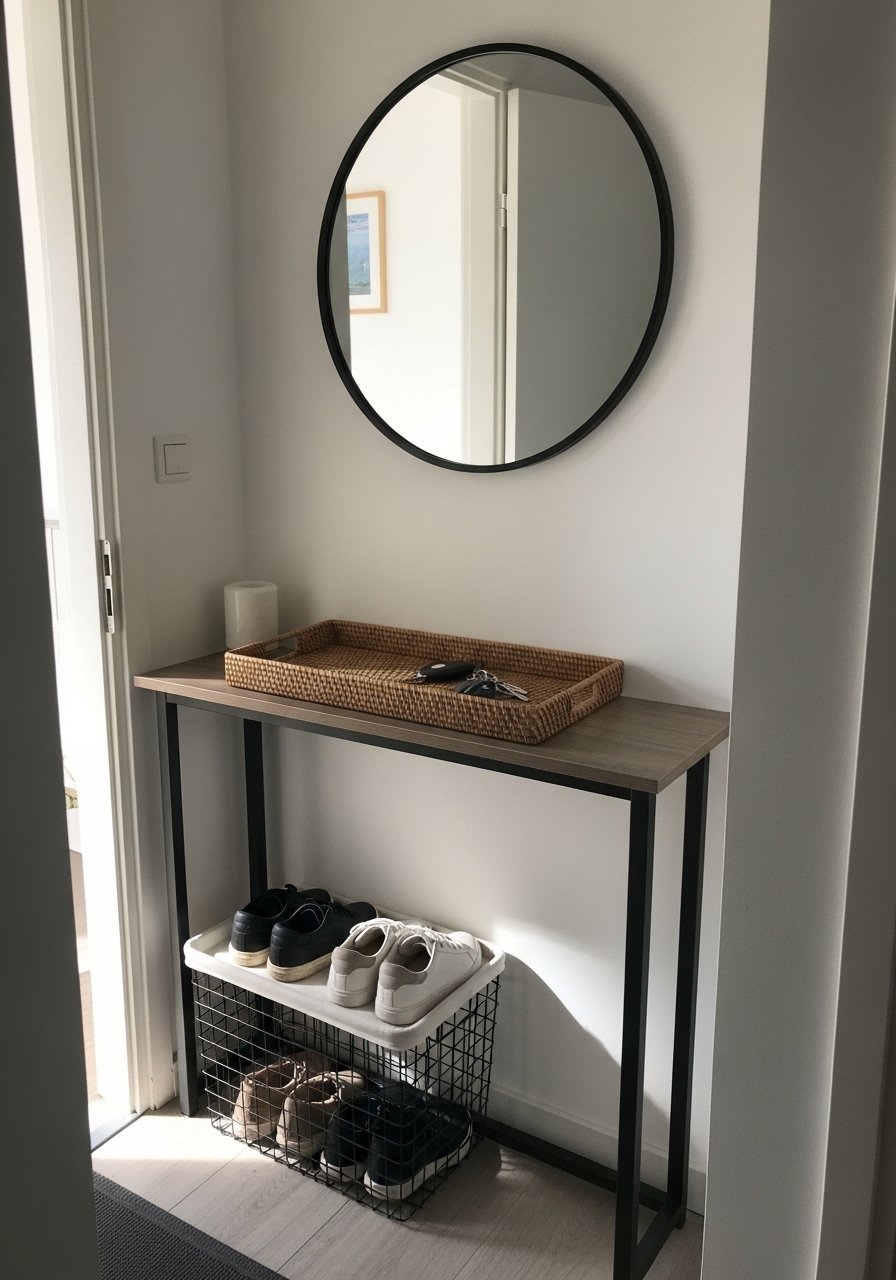
Small entries feel cluttered fast. Create a drop zone with a narrow console table, a basket for shoes, and a single tray for daily essentials. A round mirror above the table bounces light and makes the space feel deeper. I label a key hook and keep one charging station for phones so cords do not migrate through the house. If you lack floor space use wall-mounted shelves for mail and a slim bench that doubles as shoe storage.
Mistake to Avoid: Allowing mail and shoes to pile up on the floor, which instantly ruins a tidy aesthetic.
10. Kitchen Styling That Lets You Cook
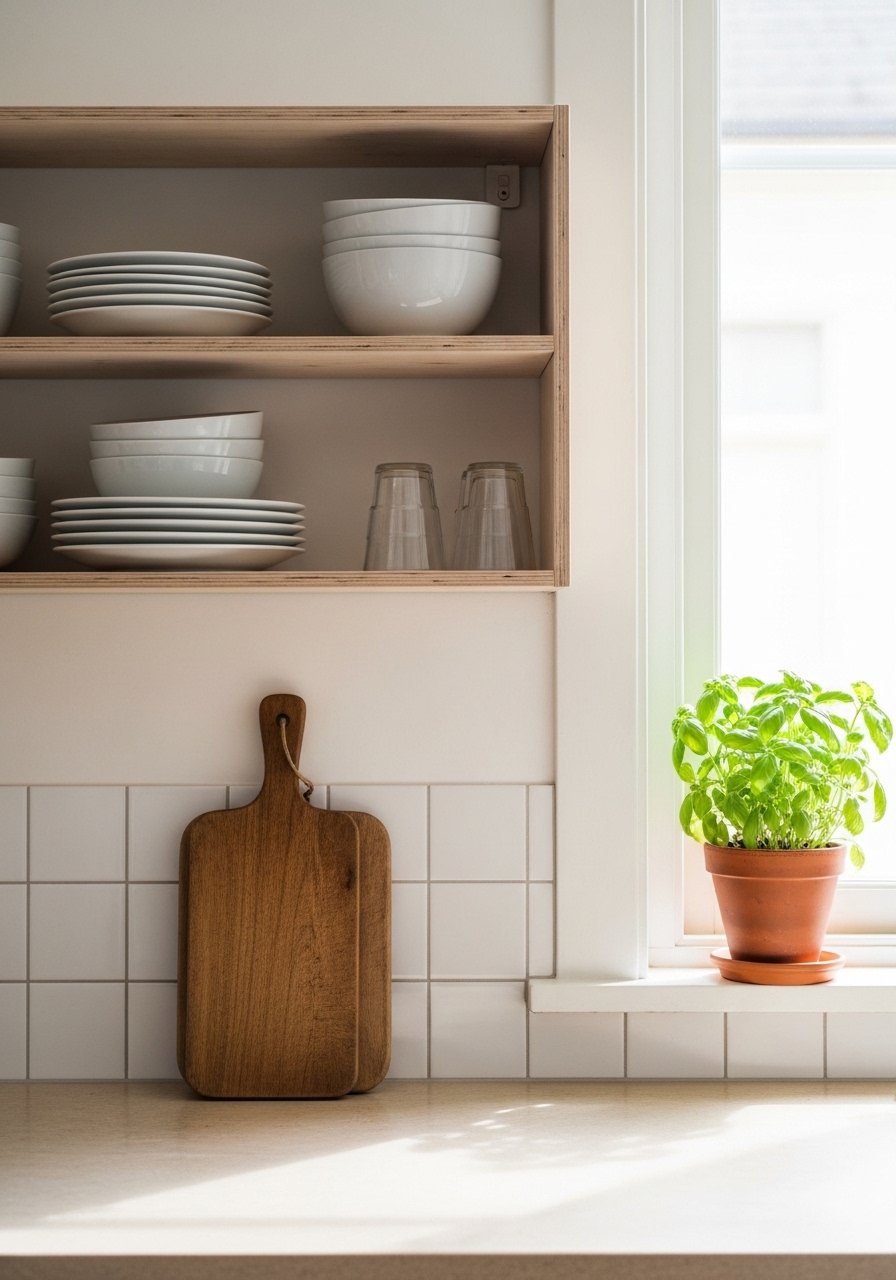
Kitchen style should never impede function. Keep everyday dishes on a single open shelf for quick access and hide specialty items. Use one large wooden cutting board as a counter accessory and a trivet to add texture. I keep counter clutter to a single station: coffee or tea set, and one butcher block for prep. Magnetic strips for knives free up drawer space. If you cook nightly, store frequently used tools within an arm's reach triangle to shave minutes off prep time.
Mistake to Avoid: Styling every countertop with decorative pieces that make cooking awkward.
11. Window Treatments That Soften Light
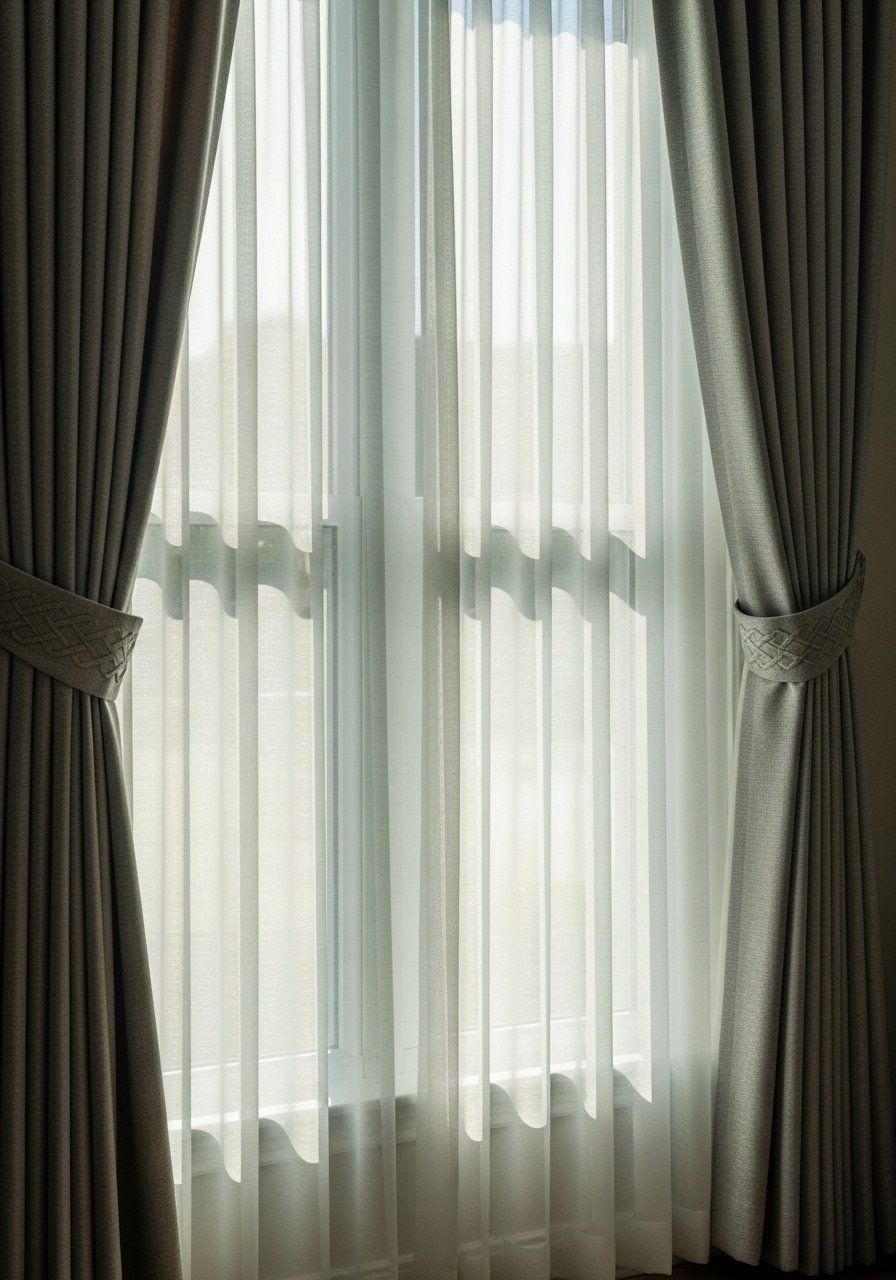
Sheers plus drapery panels give you control without a lot of hardware work. Hang the rod 4 to 6 inches above the frame and extend it 6 to 10 inches past the sides so the curtains read wider than the window. Sheers diffuse harsh midday light and heavier panels add privacy at night. Linen blends give a lived-in texture that photographs well. For renters use tension rods for smaller windows and clip-on panels for easy removal.
Mistake to Avoid: Installing curtains that stop at the window frame so the window appears smaller.
12. Small-Space Storage That Actually Looks Good
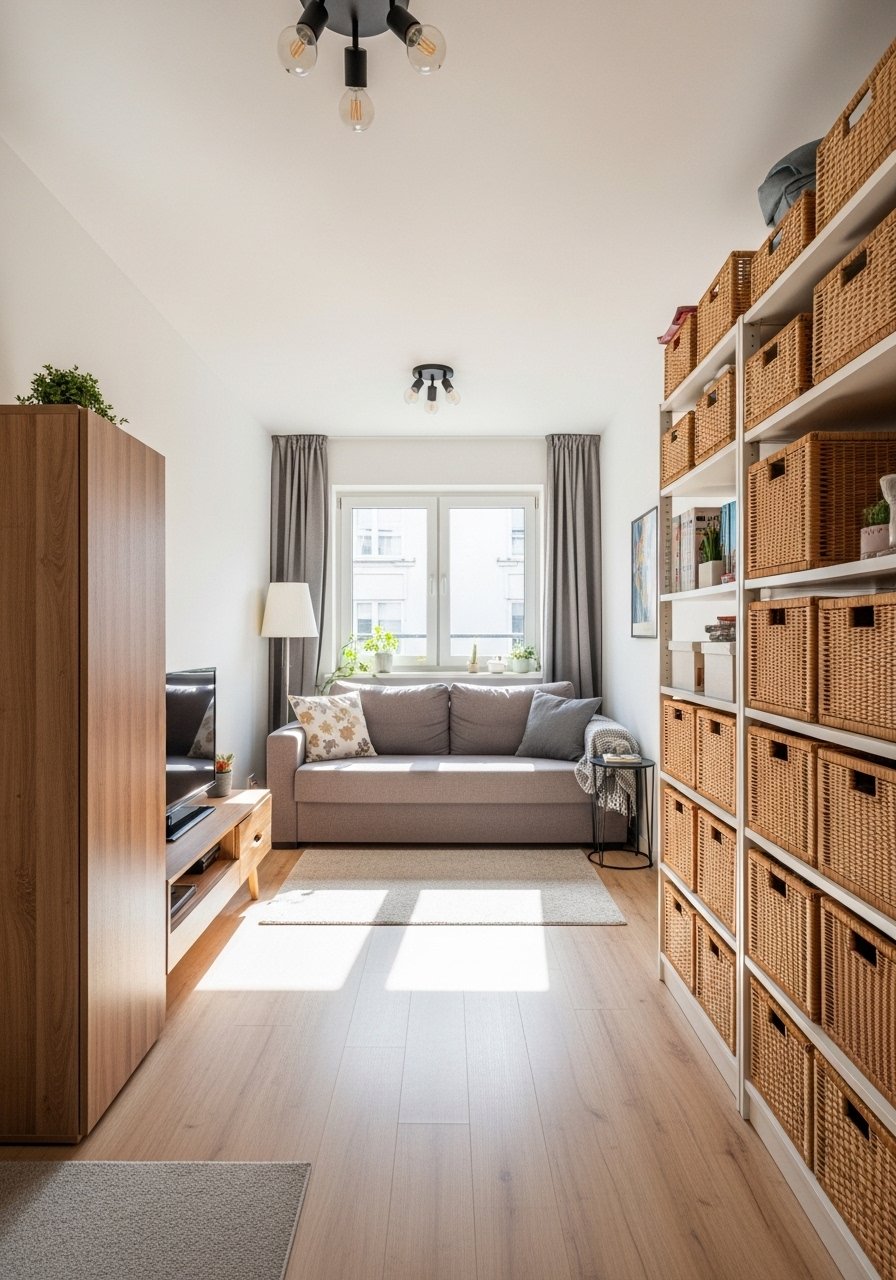
Vertical storage is the secret for cozy small spaces. Think tall shelves with woven baskets and closed cabinets at lower levels for messy items. Keep frequently used items at eye level and seasonal or rarely used items on top shelves. I use a 3:2 visible-to-hidden storage ratio so shelves feel curated, not overstuffed. Choose baskets in 2 to 3 complementary textures rather than a single match for visual interest. This system works in rentals and moves easily with minimal tools.
Mistake to Avoid: Using only open shelving, which makes clutter unavoidable.
13. Outdoor Corner That Extends Living Space
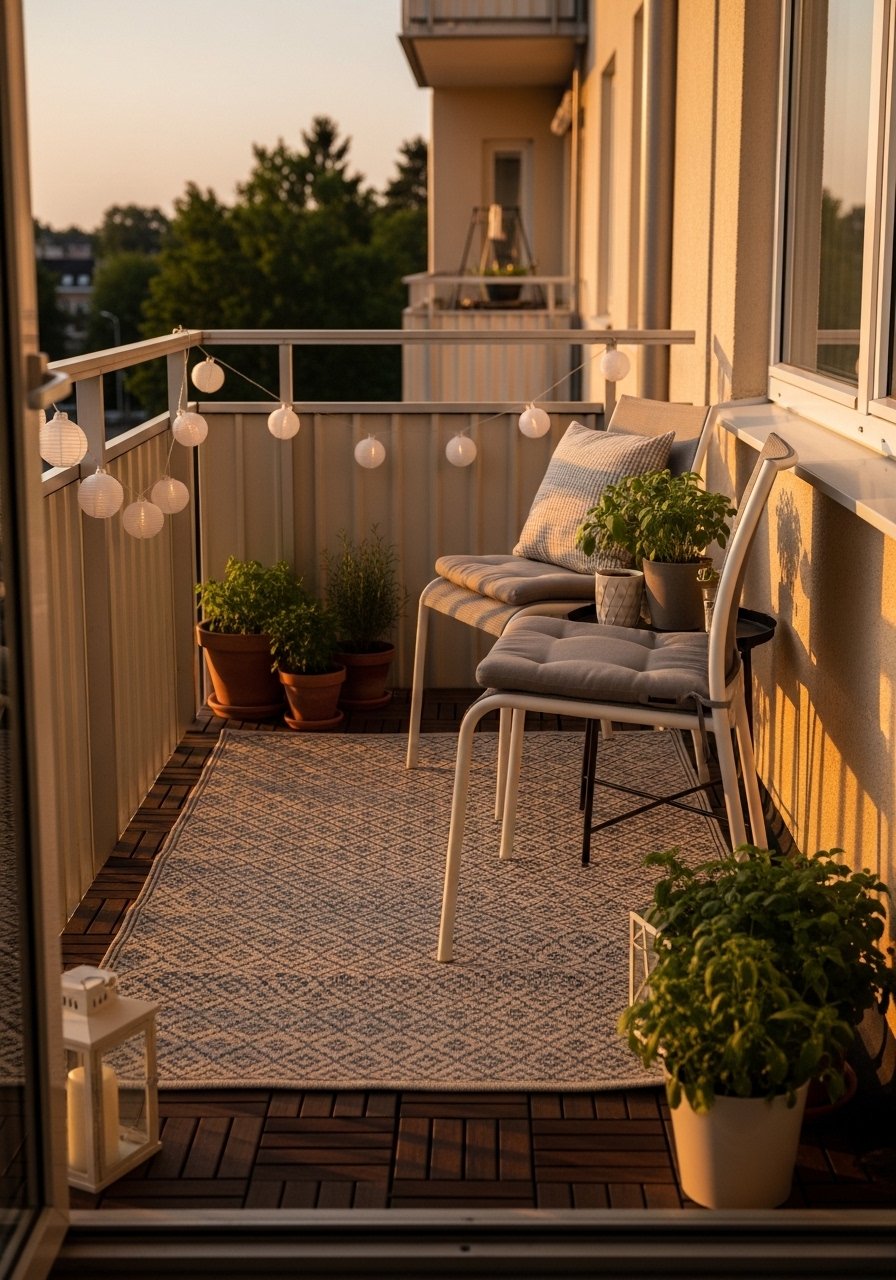
Even a tiny balcony becomes usable with the right layout. Use an outdoor rug sized to leave a 6-inch border, two compact chairs or a small bench, and a narrow plant shelf to add height. Solar string lights and a weatherproof throw make evenings feel like an extension of your living room. Choose impact-resistant planters if you have pets. Foldable furniture keeps the area multi-use for airflow or drying clothes when needed.
Mistake to Avoid: Filling the balcony with mismatched small items so the space loses cohesion.
Small Cozy Habits
Soft insight first: Swap 60 watt equivalents for 2700K LED bulbs room by room. A warm bulb color makes the whole apartment feel calmer without changing furniture. Grab a pack of 2700K bulbs and replace the overheads you use most.
Grab removable picture hangers for about $10. They save paint and let you experiment with gallery layouts without holes.
Observation: An entry tray and a single basket cut daily chaos. Pick a woven entry basket that fits your console for shoes and umbrellas.
Start with one scented reed diffuser per floor of your home rather than whole-home scents. The reed diffuser set gives low maintenance scent that feels intentional.
What most people do wrong is layering too many patterns at once. Limit the pattern count to two, then anchor with solids. A neutral throw blanket is the easiest swap to calm a busy sofa.