I kept asking for "ancient art" tattoos and walking out with vague symbols that read like decorative filler. The moment it clicked was when an artist sketched a single glyph at the right scale, and the whole sleeve finally felt intentional. After a few painful touchups and one very stubborn scab, I learned how scale, placement, and cultural context change a motif from costume to something that actually sits on your skin.
These ideas are for people who want tattoos that read like heirlooms not trends, and for artists who value fidelity over decoration. Expect a mix of small pieces and multi-session sleeves, modest budgets for proper linework, and designs that are coverable for work when needed. I am pulling these from sketches and conversations across five shops I have visited, so the notes are practical and shop-tested.
1. Tiny Hieroglyphic Phrase, Wrist Wrap
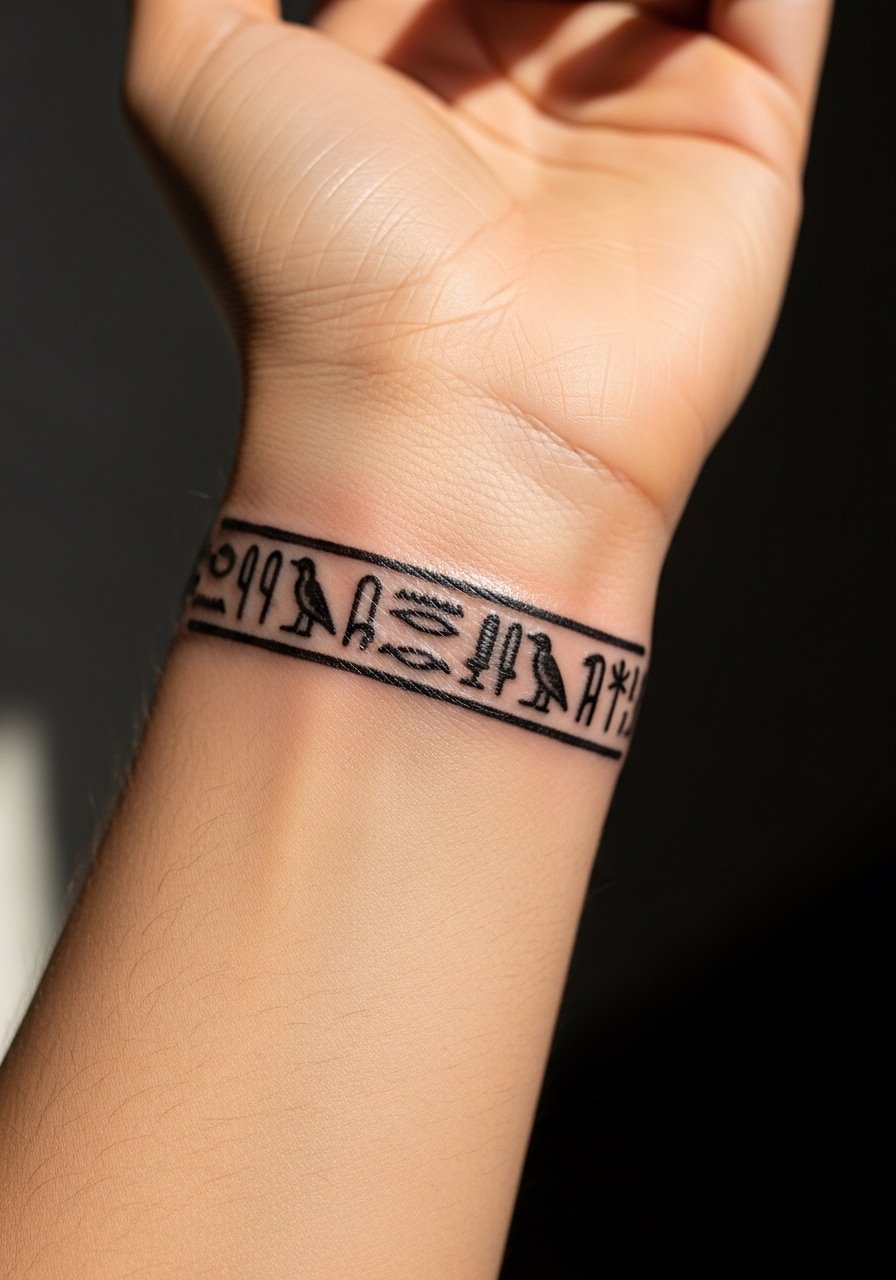
A tight row of three to six true hieroglyphic signs works because the negative space makes each symbol readable at small sizes. Visually this reads like a band, it feels like a sentence around the wrist, and it suits someone who wants visible but subtle meaning. Plan for single-needle fine lines around 0.25 to 0.35 millimeters and expect a 30 to 45 minute session. I layered the wrist wrap over a thin script once, and the contrast made the ancient signs read cleaner. Use a gentle aftercare balm like fragrance-free tattoo aftercare balm to keep lines crisp during healing.
Mistake to Avoid: Asking for "Egyptian symbols" without providing the exact glyphs, which leads to incorrect or decorative substitutes.
2. Minoan Spiral Band, Upper Arm
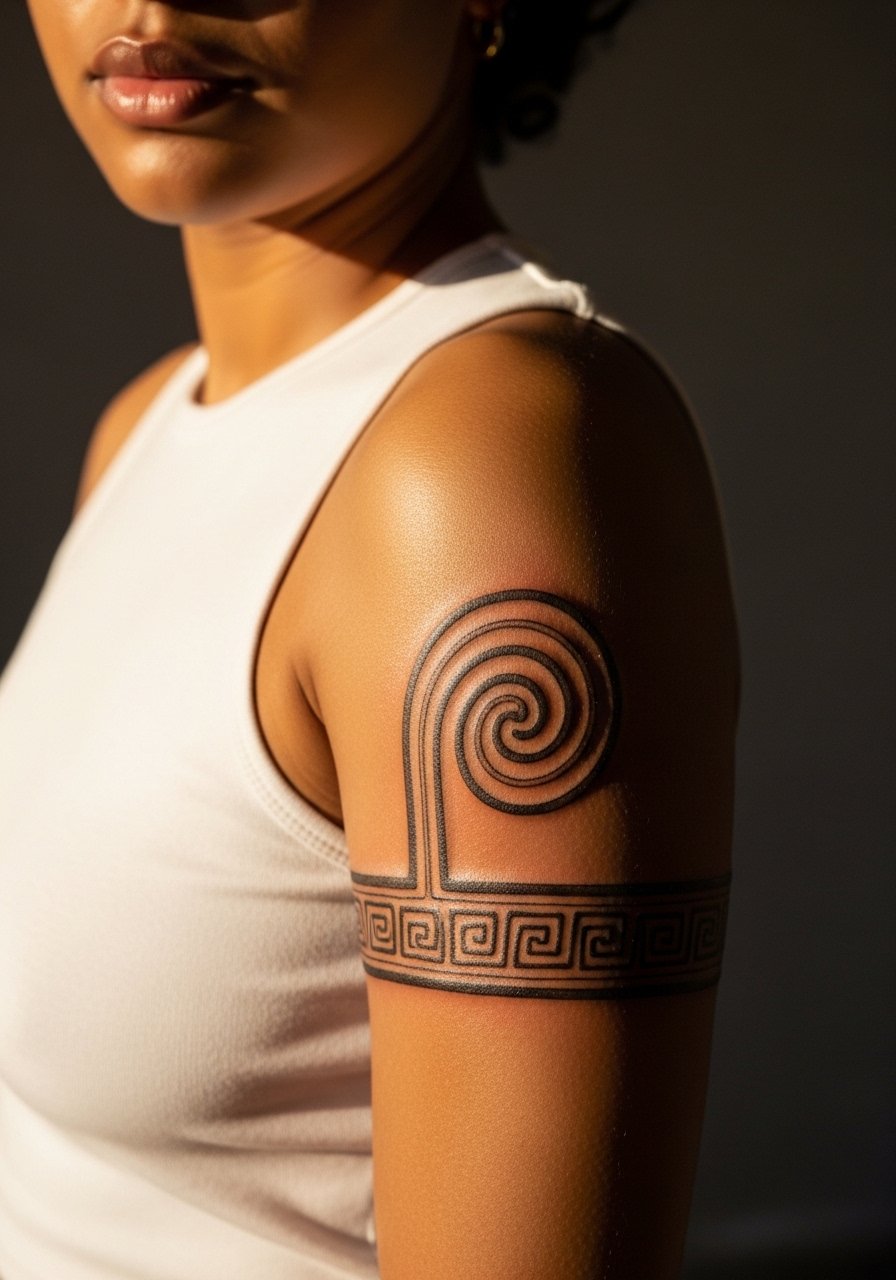
A continuous spiral band borrows from Aegean vase motifs and reads as motion on the arm. It works visually because the spiral density follows muscle flow, so place the core motif where the arm narrows. Style is fine-line geometric, best for someone who likes lived-in jewelry that ages well. Expect two short sessions, each 45 to 60 minutes, and ask for line spacing at 3 to 4 millimeters to avoid blowout on softer skin. Pair with a lightweight sunblock after healing, like mineral sunscreen stick, to protect fine lines. Budget-wise this is mid-range in time and cost.
Mistake to Avoid: Packing the spirals too tightly, which blurs lines as the tattoo heals and ages.
3. Akkadian Cylinder Motif, Rib Detail
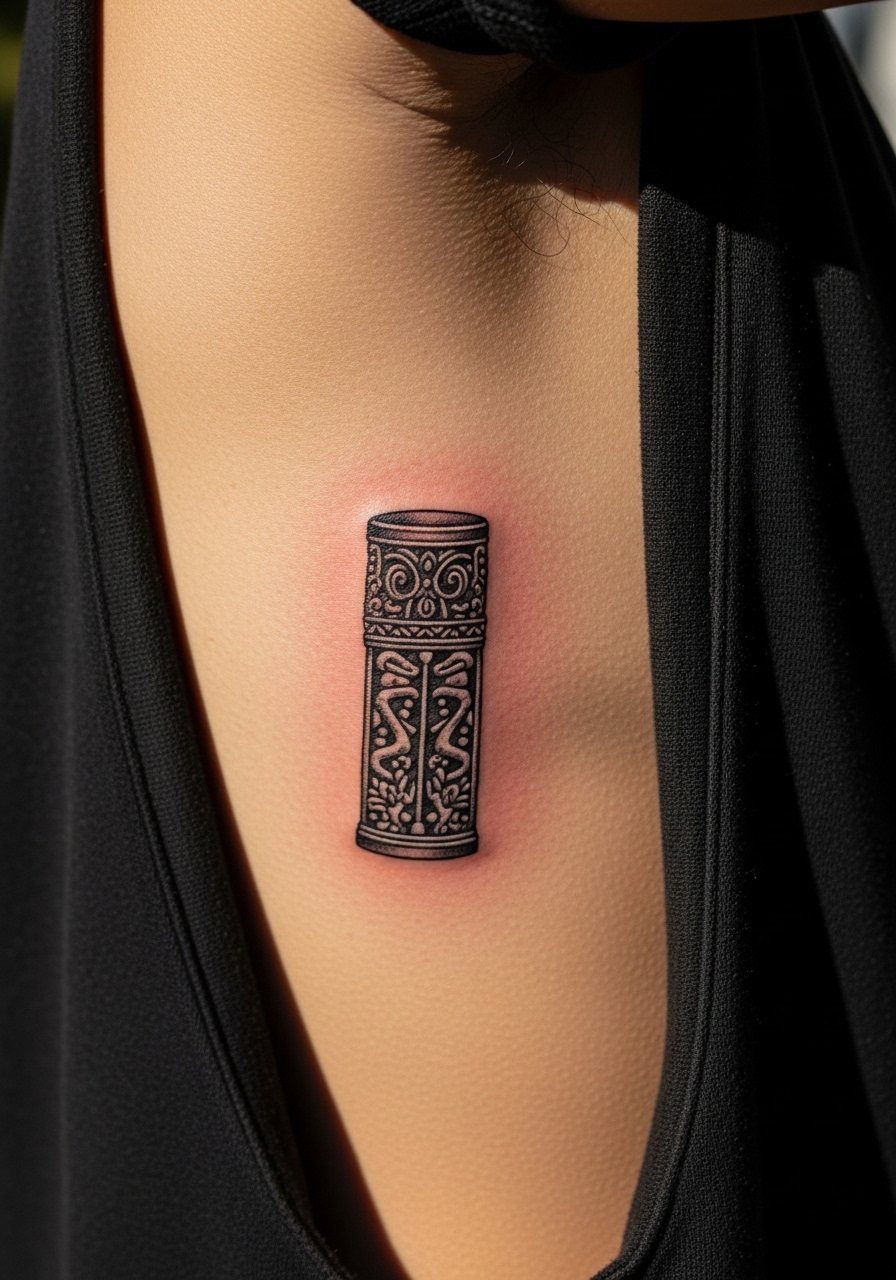
An Akkadian cylinder-style panel reads like a story when placed on the ribs because the body gives it length without distortion. The look is narrative and dense, so favor thin positive space and a 2 to 1 negative to positive ratio so each figure breathes. Pain is higher on ribs, plan for numbing options if needed, and expect 1.5 to 3 hours depending on detail. For at-home prep use a clean razor such as a single-blade dermaplane razor to avoid irritation. This idea suits someone who wants coverable art with clear iconography.
Mistake to Avoid: Asking for a full scene at elbow-sized scale, which turns scenes into an indecipherable cluster.
4. Indigenous Petroglyph Silhouette, Calf Placement
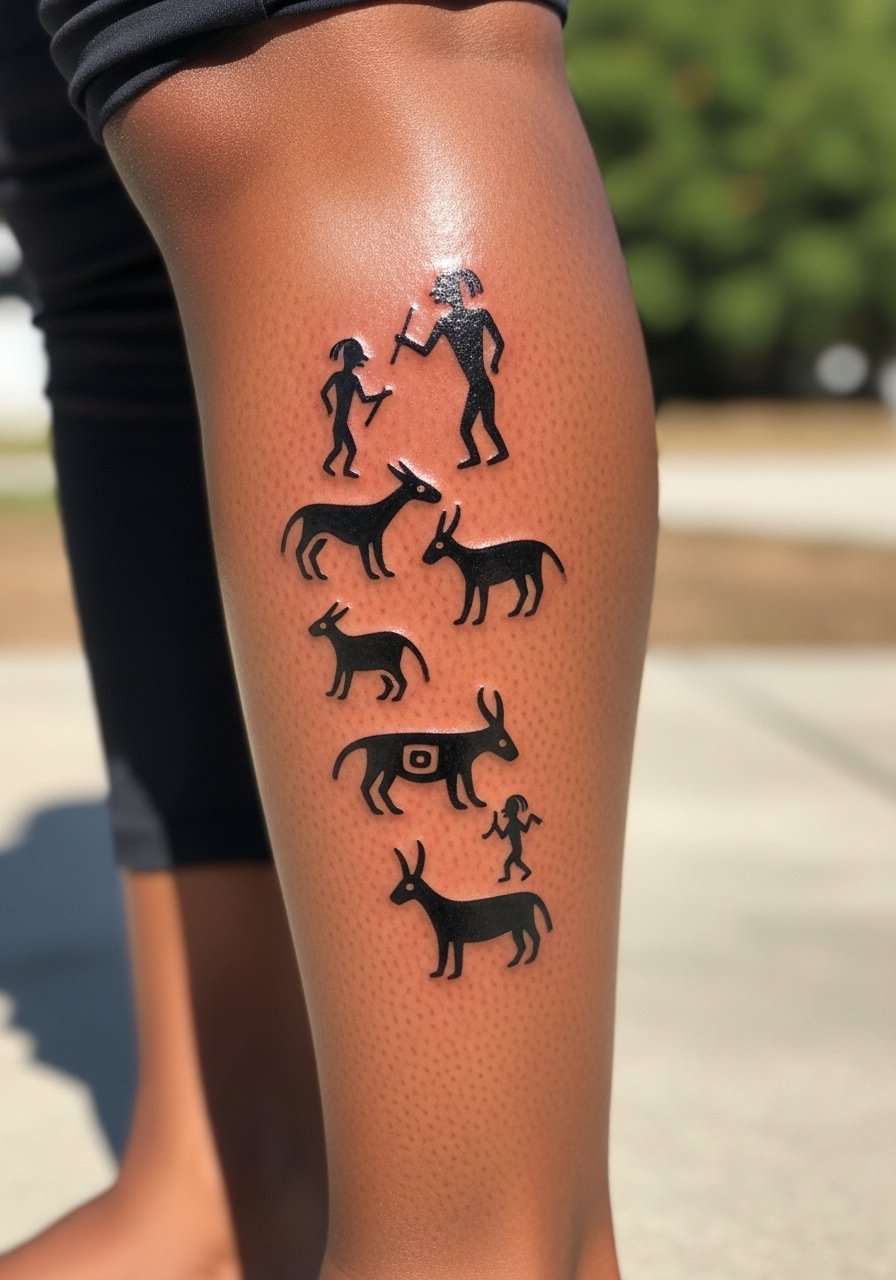
A silhouette approach honors raw petroglyph marks without copying sacred ceremonial patterns. Visually the stark black shapes read as found imagery and age well. This fits active bodies and looks good with athletics or boots. Keep figures between 2 and 4 centimeters tall for readability. Because cultural sensitivity matters, ask about provenance and avoid copying restricted ceremonial motifs. I tested a four-figure band across three sessions and found 2 to 3 cm spacing keeps the read consistent. Aftercare with sterile bandages during the first 48 hours helps maintain silhouette edges. Try a breathable sterile dressing like tattoo healing bandage for the initial phase.
Mistake to Avoid: Directly tracing sacred ritual imagery without permission or context, which flattens meaning and can be offensive.
5. Bronze Age Geometric Sleeve Accent, Forearm
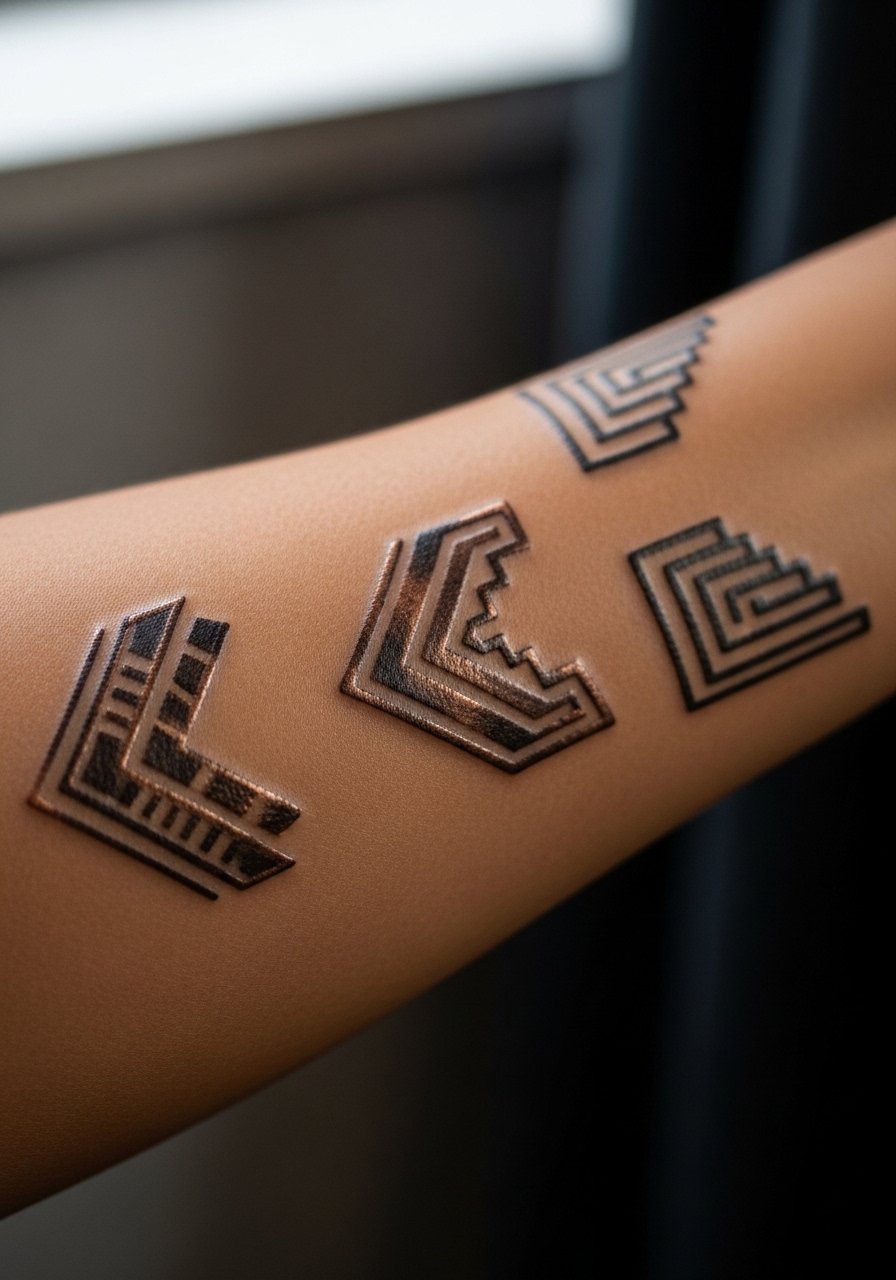
A forearm panel of repeating chevrons and steps is a durable choice because geometric repetition disguises small imperfections. The visual result is rhythmic and modern while clearly ancient in reference. This is good for medium to long forearms and works across skin tones. Ask for line weight variation, from one fine 0.3 millimeter outline to slightly bolder infill at 0.6 millimeter, to create depth without shading. For budget, expect a couple of short sessions. I found pairing this with a thin script band at the wrist ties it into other pieces. Use a gentle fragrance-free soap and nitrile gloves for touchups if you plan to keep the area pristine during healing.
Mistake to Avoid: Using identical line width throughout, which flattens the pattern as skin texture shows.
6. Olmec Jaguar Face, Chest Centerpiece
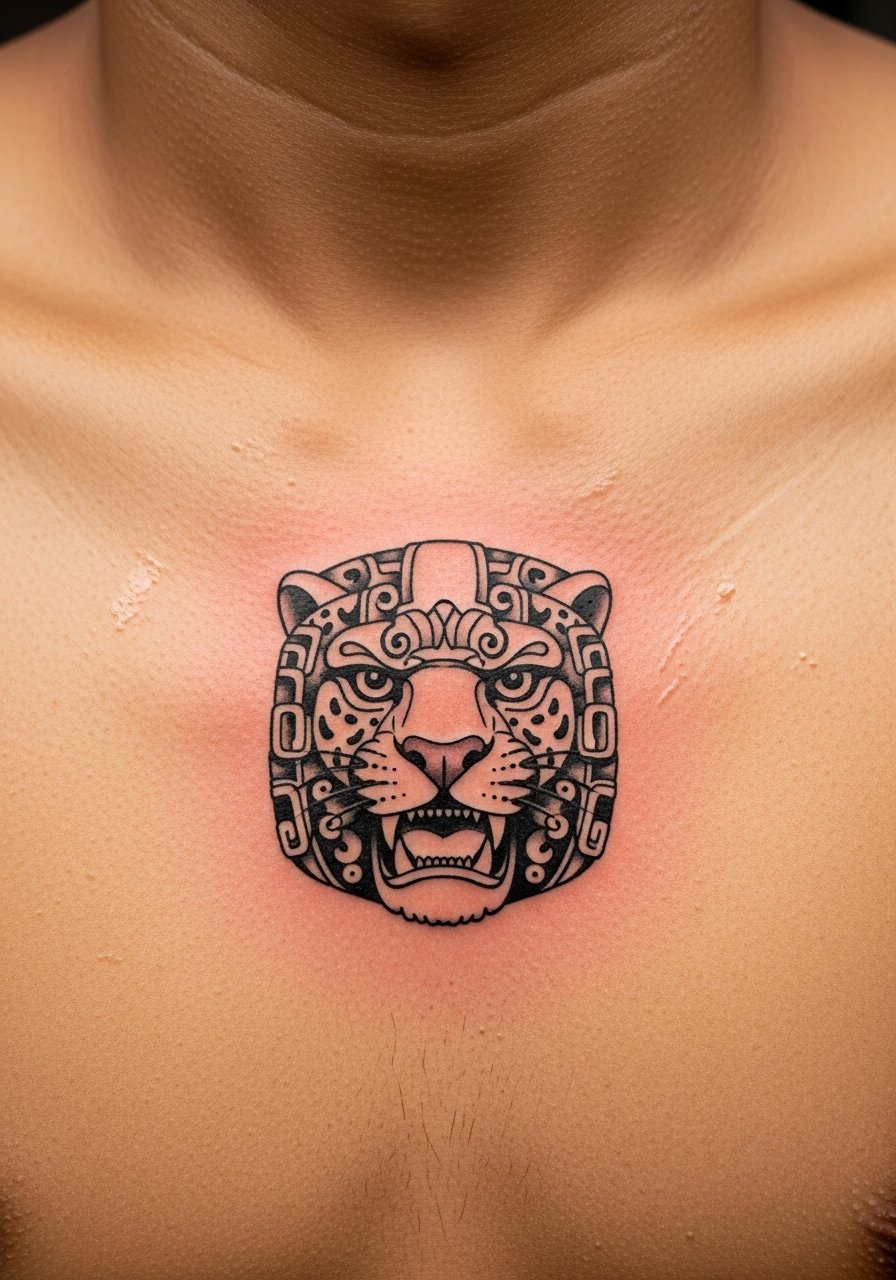
A bold Olmec jaguar face as a center-chest piece reads like an amulet and holds up visually over time. The key is selective simplification of facial features and heavier black for contrast. This fits someone comfortable with frontal visibility and chest pain levels. Expect a 2 to 4 hour session depending on shading. For design longevity ask for 60 to 70 percent silhouette coverage with 30 to 40 percent fine detail so dark areas age predictably. I learned across three sessions that leaving more negative space around the jaw keeps the face legible. Bring a recovery-grade antibacterial ointment such as antibacterial healing ointment for the first 48 hours.
Mistake to Avoid: Overworking small facial details in one sitting, which risks scarring and mudding.
7. Greek Meander Armband, Inner Bicep
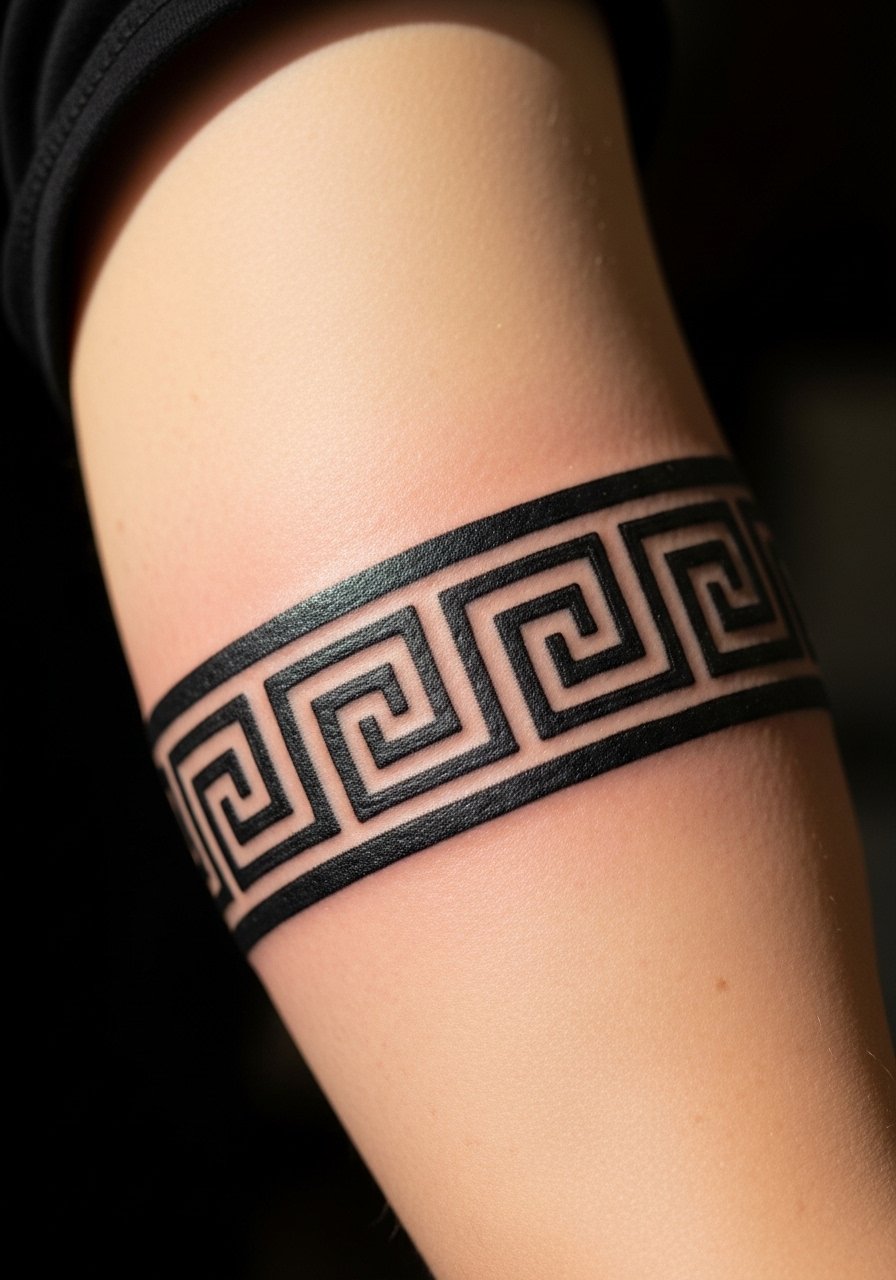
The Greek key or meander is a smart way to wrap a bicep because the repeat complements muscle curve, making the band look intentional even when you move. The visual result is architectural and wearable for everyday looks. Aim for a 4 to 6 millimeter line thickness in the main band, with 2 millimeter separations to avoid merging over time. This is beginner-friendly and quick to tattoo in one 45 to 90 minute session. I usually ask artists to map the band with a 1 to 2 centimeter margin so placement can be adjusted for muscle tension. Protect with a lightweight sunblock after healing like broad-spectrum SPF stick.
Mistake to Avoid: Centering the band across a muscle crease without checking movement, which makes the pattern look crooked when you flex.
If any of these tools feel necessary before the rest, this is what I actually reach for when planning ancient-motif work.
Tools For Ancient Motif Tattoos
Prep & Hygiene:
- Single-blade dermaplane razor (~$8-15), use once before your session for smooth stenciling.
- Nitrile gloves (~$12-20), sterile-feeling and thin for touchups.
Aftercare & Protection:
- Fragrance-free tattoo aftercare balm (~$10-20), keeps fine lines defined.
- Breathable tattoo healing bandage (~$12-18), for first two days.
- Broad-spectrum SPF stick (~$8-15), for long-term protection of thin linework.
Reference & Research:
- Sketchbook for tattoo ideas (~$10-20), keep visual references and provenance notes.
8. Neo-Classic Relief Panel, Shoulder Blade
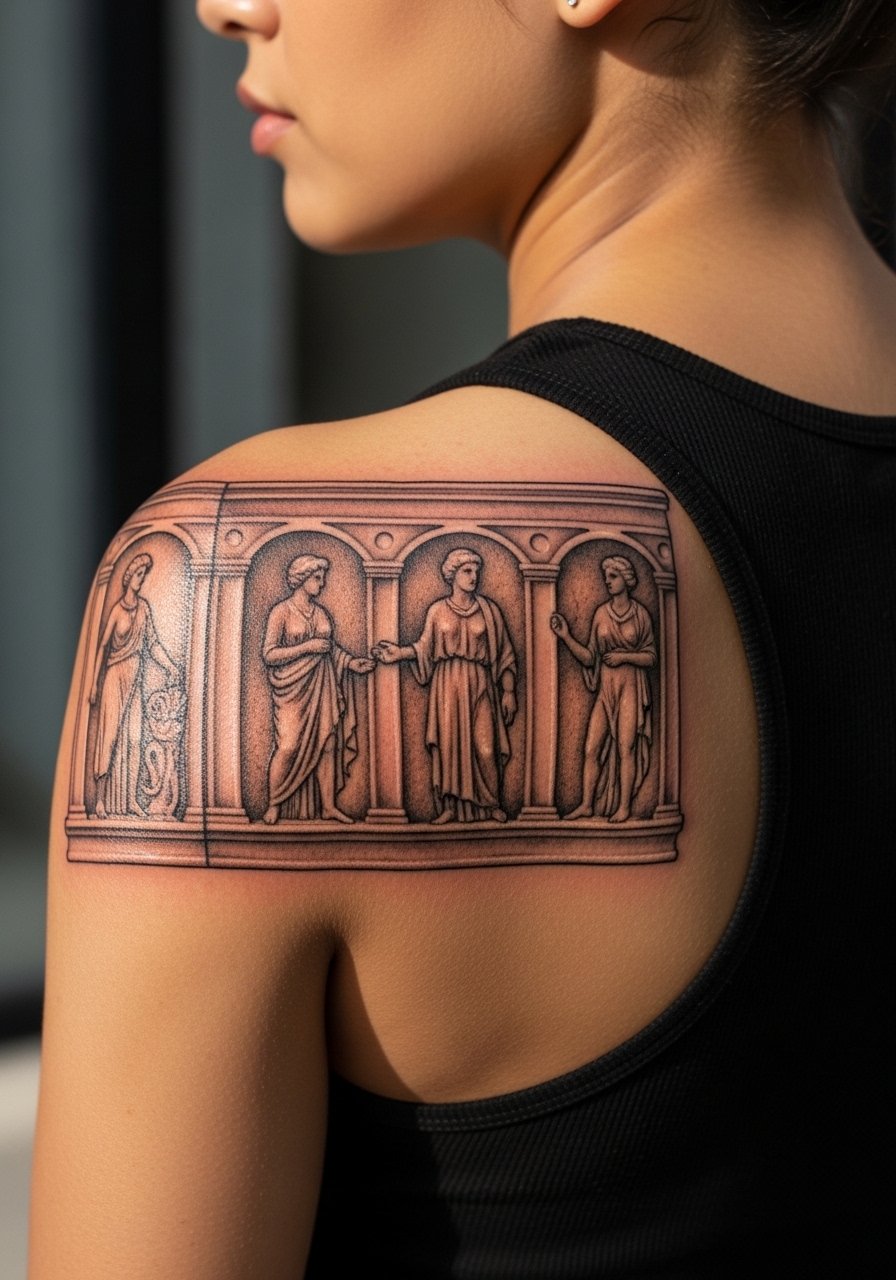
A relief-style panel uses soft stippling and controlled negative space to mimic carved stone. Visually this reads as high contrast from a distance and detailed up close. This approach suits someone who wants a serious piece that does not scream trend. Ask for stipple dot density of roughly 4 to 6 dots per centimeter to preserve texture through healing. Sessions are moderate in length, plan for 2 to 3 hours for a shoulder blade panel. I advise bringing reference photos that show strong light and shadow because that guides punch placement. Keep a gentle barrier cream like petroleum-free healing ointment on hand for dry climates.
Mistake to Avoid: Requesting micro-shading without enough contrast, which fades into gray smudges over time.
9. Indus Valley Motif, Ankle Token
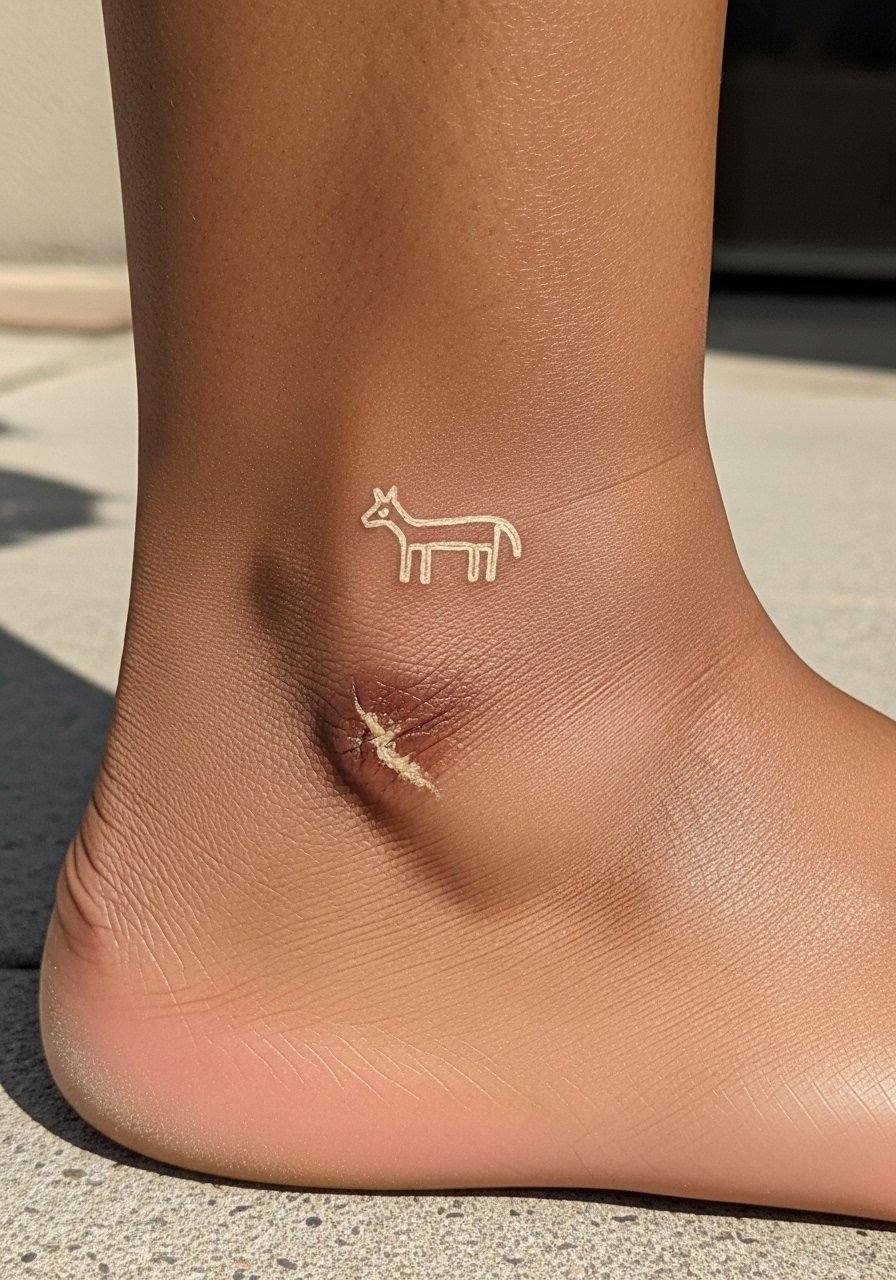
Ankle tokens are low-commitment ways to wear ancient iconography. A compact Indus motif reads like jewelry and travels well with shoes and socks. Keep the design under 4 centimeters and ask for a clean outline with minimal dotwork. Pain is manageable in this spot, and a single 30 to 60 minute session usually does it. For longevity request a 1 to 1.5 millimeter outline and avoid tiny internal details. I once reduced a four-line pattern to two lines and it stayed crisp through months of walking. Use a breathable dressing at night, such as silicone gel sheet, to prevent scab sticking.
Mistake to Avoid: Putting intricate micro-detail on the ankle, where friction and footwear blur work quickly.
10. Celtic Knot With Negative-Work, Nape
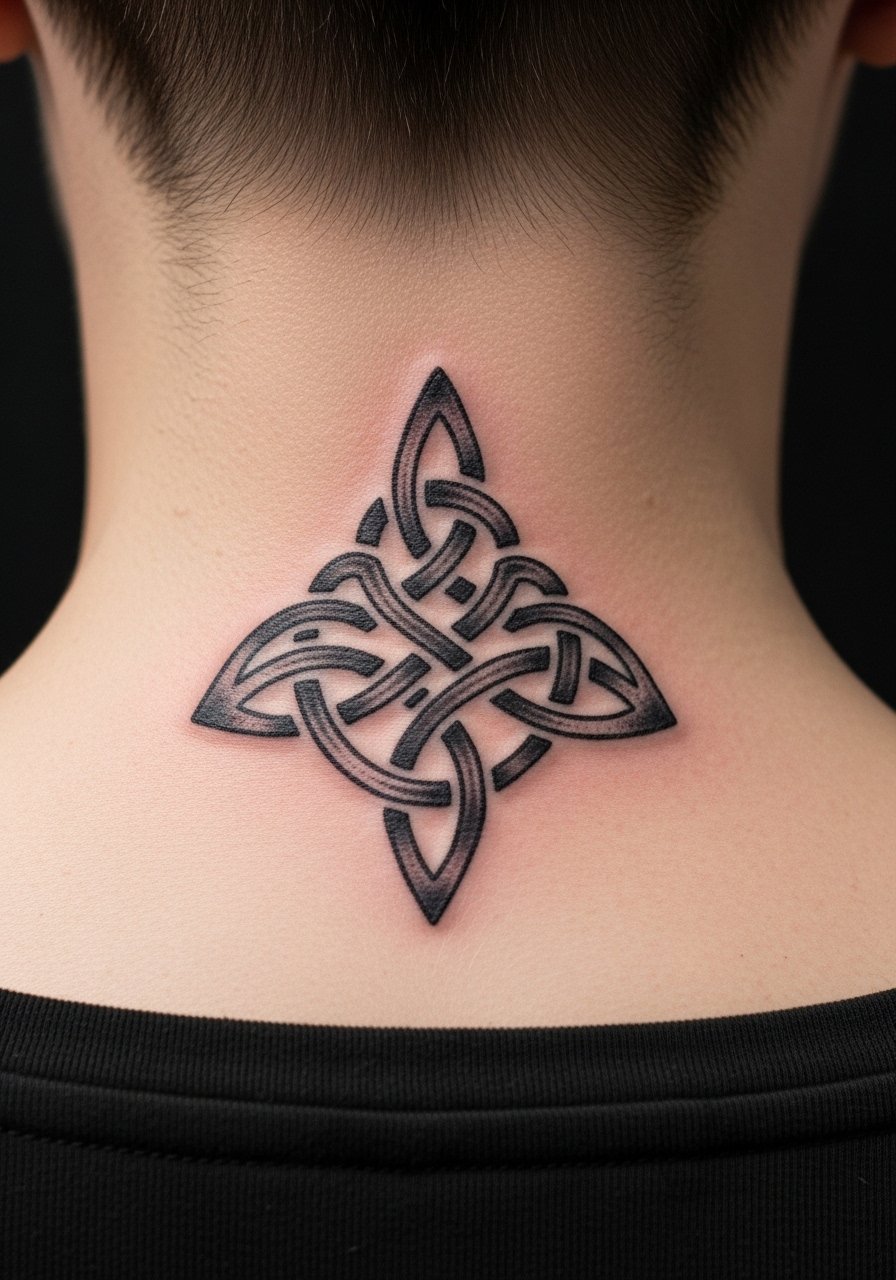
A nape knot that uses negative space rather than heavy black has a modern quietness. Visually the knot reads elegant and is easy to hide under hair when needed. Ask for slightly bolder outer lines, around 0.6 to 0.8 millimeter, and internal negative cuts at about 2 to 3 millimeters so the pattern breathes. This is ideal for someone who wants the option to show or conceal. Session time is short, around 45 to 75 minutes. For aftercare avoid tight collars for the first week and use a soft healing balm like unscented skin ointment to reduce rubbing.
Mistake to Avoid: Compressing the knot too small, which reads like a blob once hair and motion are considered.
11. Southeast Asian Temple Symbol, Thigh Panel
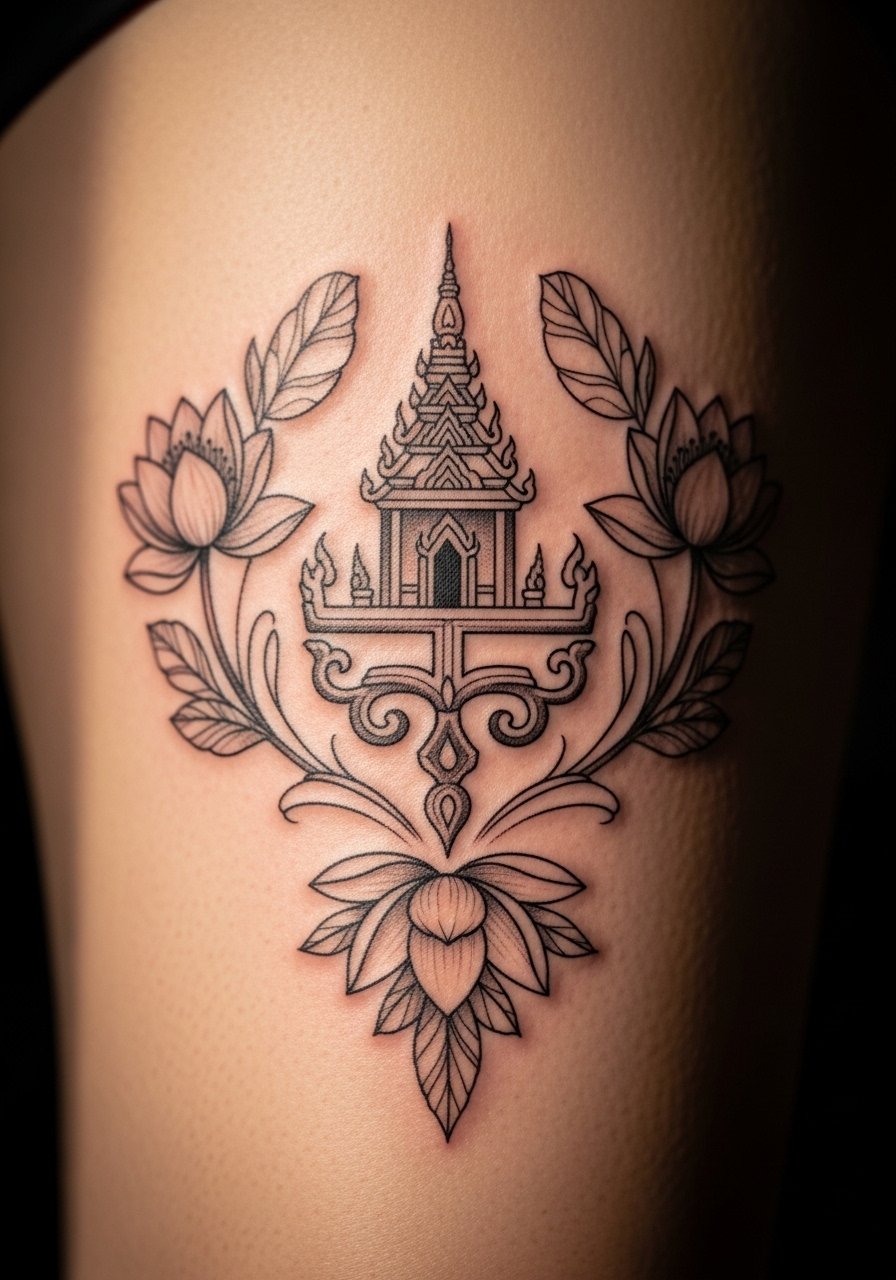
A thigh panel allows for scale and ornament, which suits temple motifs that include floral framing. The result is ceremonial without being literal if you choose motifs that are publicly sharable. Expect a 1.5 to 3 hour session depending on ornamentation and plan for 3 to 5 millimeter spacing on repeating motifs so lines do not merge as the thigh shifts. For cultural sensitivity, research motifs and avoid things tied to active ritual use. I tested a lotus frame across two sessions and found a softer edge looked more natural with body movement. Pack a soft recovery garment and consider a breathable compression short for the first nights.
Mistake to Avoid: Using ritual iconography that is restricted in its original context without asking about meaning.
Tattoo Healing Habits I Use
Thin layers of ointment work best. Smear a pea-sized amount of fragrance-free tattoo aftercare balm over the area twice a day. Too much product traps moisture and causes scabbing.
Grab a soft compression short or wrap when sleeping. Breathable compression shorts keep fresh thigh or rib work from rubbing and reduce night-time pulling.
Most people pick at scabs. Wear a clean bandage overnight for the first two nights if you are a picker. A pack of breathable healing bandages helps break the habit and speeds recovery.
When your artist suggests sun protection for fine-line areas, follow it. A broad-spectrum SPF stick is easy to keep in a pocket and reapply after outings.