
The Pinterest photo had a pale sofa perfectly centered, a rug that seemed to fill the room, and three identical pillows arranged like a showroom. My living room looked like a staged set and stayed that way until I learned to stop matching everything and start arranging for how we actually live. That moment of swapping one oversized pillow for a single floor cushion changed the whole feel.
These ideas are for people who want spaces that read intentional without being fragile, budget-minded folks and renters included. I developed most of them after trying this in three rentals, so many tweaks are renter-friendly or small-space friendly. You will see quick fixes, what needs a bit more time, and exactly where to splurge so the room feels balanced but usable.
1. Layered Neutral Rug Grounding
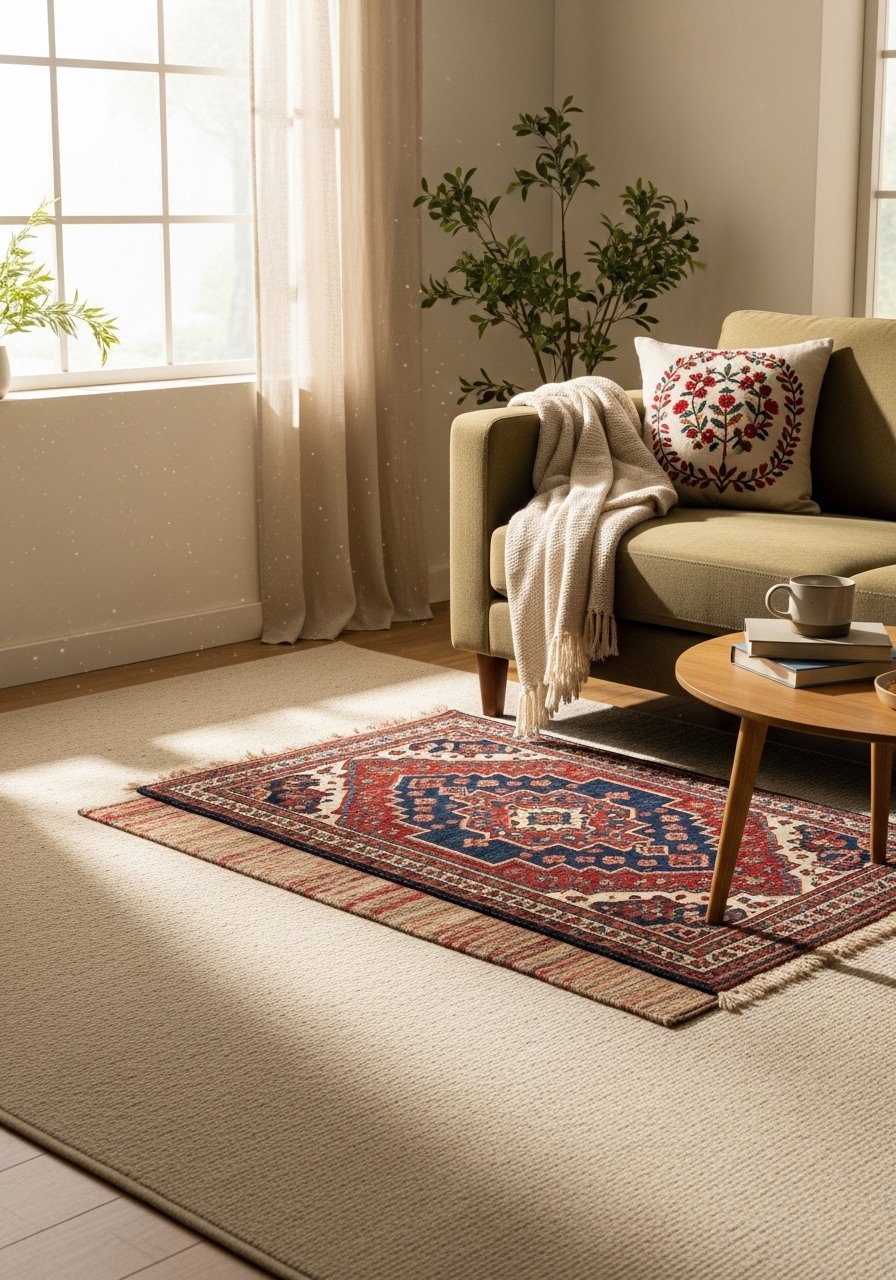
Layering rugs makes a room feel edited, not empty. Place a larger neutral rug as the anchor, then add a smaller textured rug so the sofa's front legs sit on the top rug. I aim for the top rug to cover about 60 to 75 percent of the seating area so the floor reads continuous but not crowded. This works in minimalist and boho rooms, and in rentals you can use rugs instead of painting or redoing floors. Try a low-pile neutral rug under a patterned wool accent rug.
Mistake to Avoid: Buying a rug that is too small for the seating group so the furniture looks disconnected.
2. Cozy Reading Nook With Floor Lamp
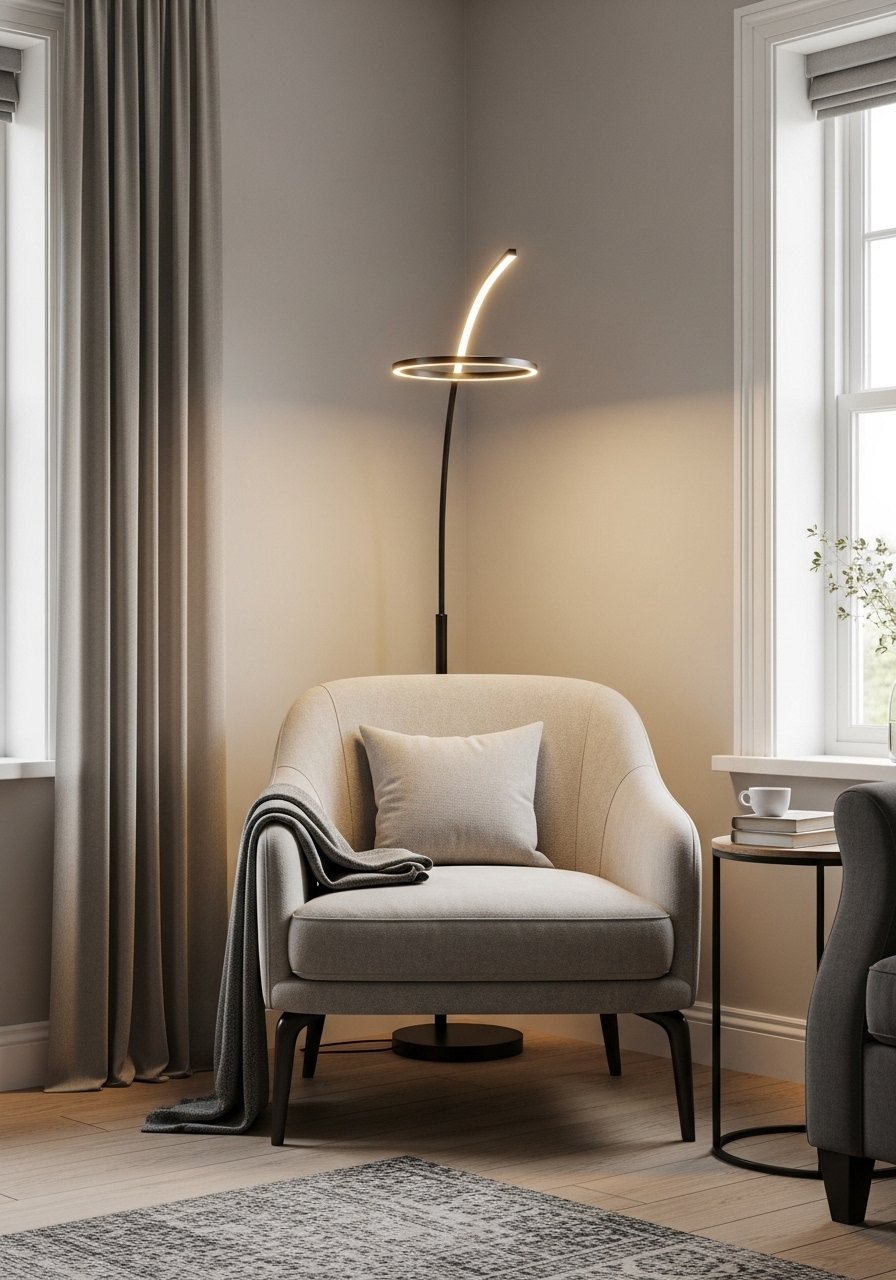
A dedicated reading corner makes the room feel lived-in. I place the chair at a 30 to 40 degree angle to the sofa and keep the lamp behind the chair to avoid glare. For tight spaces, swap a full armchair for a lounge chair with a slim profile. A dimmable arched floor lamp adds warmth without harsh overhead light. Pair with a compact side table that sits 2 to 4 inches above the armrest for easy reach.
Mistake to Avoid: Choosing only overhead lighting and expecting it to make a nook feel warm.
3. Art Ledge Gallery For Rotating Pieces
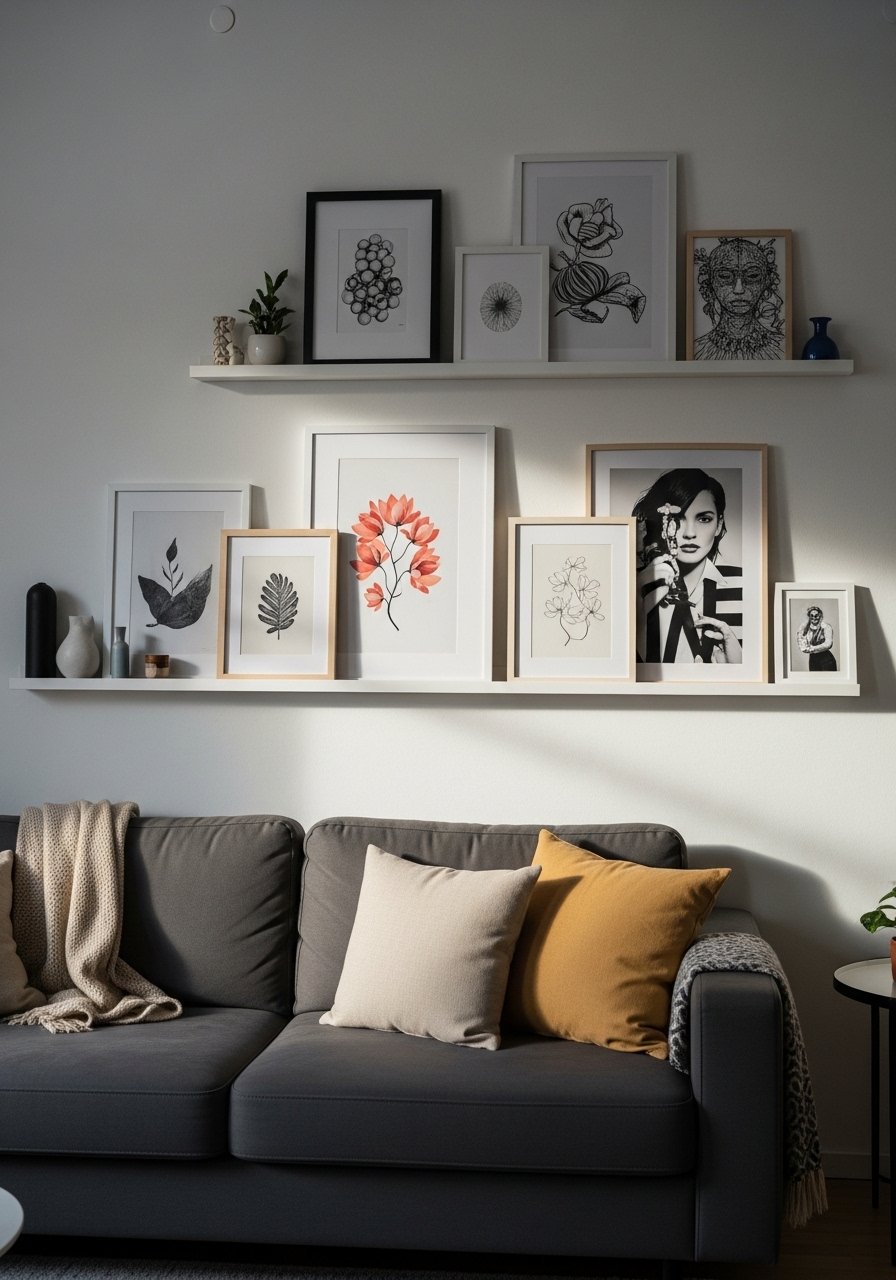
Swap a crowded gallery wall for a single art ledge you can switch out without patching walls. Mount the ledge at roughly 57 inches from the floor to the center of framed pieces so sightlines stay calm. This is ideal for renters and people who collect prints. Use different frame sizes and one larger anchor piece, and rotate every season. I like pairing black picture frames with a leaning art shelf for flexible styling.
Mistake to Avoid: Hanging everything at the same height, which flattens the composition.
4. Textured Throw Play With Mix And Match
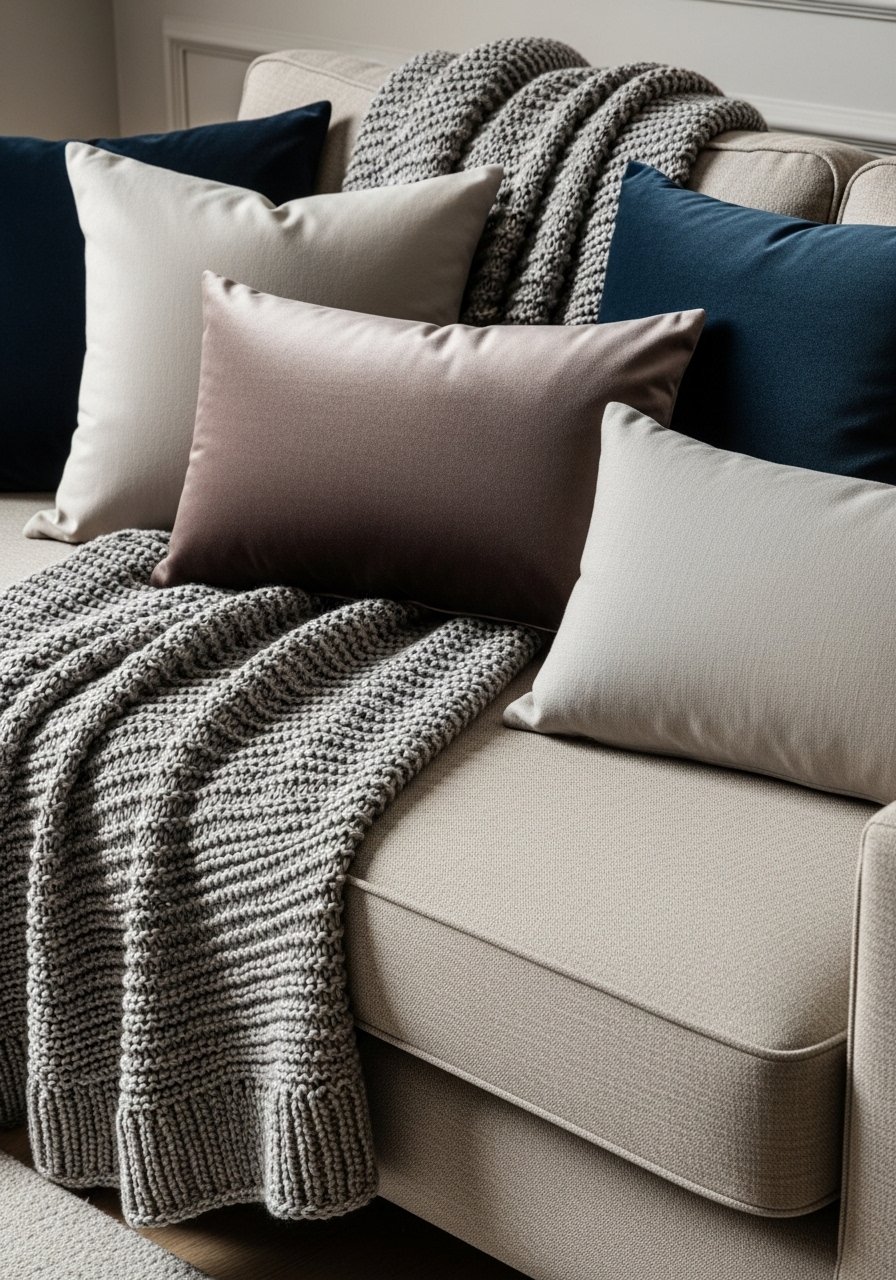
Texture is what makes a simple palette feel rich. I mix two velvet pillows, one linen, and a chunky knit throw in a 3:1 size ratio, so one larger pillow anchors two smaller ones. Swap pillow sizes seasonally and keep at least 20 percent negative space on the sofa to avoid a boxed-in look. Use velvet pillow covers and a chunky knit throw to get the layered effect cheaply.
Mistake to Avoid: Buying five identical pillows because matching is easier than mixing.
5. Low-Profile Sofa For Clean Lines
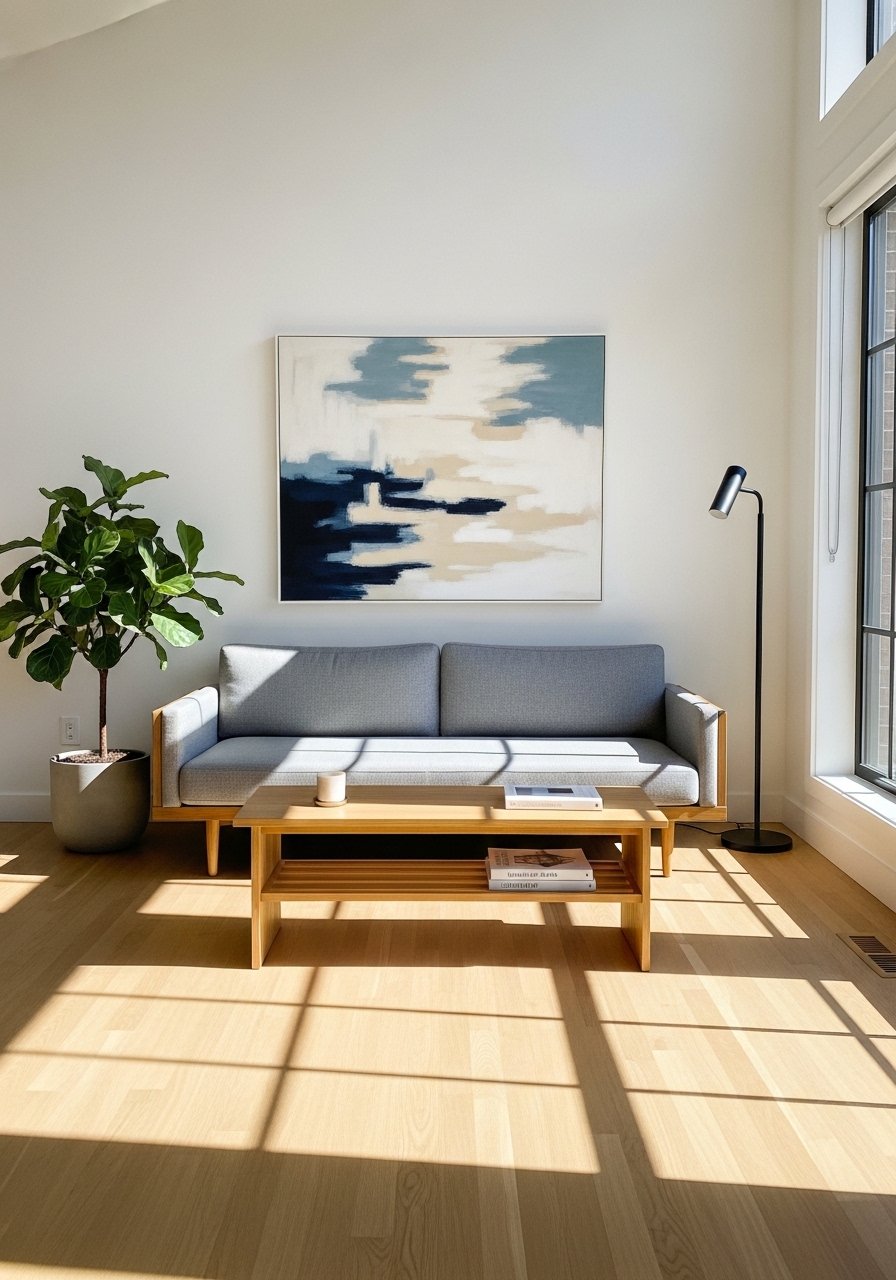
A low-profile sofa keeps sightlines open, making smaller rooms feel larger. Aim for a seat height of 16 to 18 inches so the coffee table and sofa read as a unit. This is a good spot to spend a bit more if you want longevity. For renters choose a neutral slipcover-friendly design. I swapped a bulky couch for a low, lean one and the room felt immediately airier. Try a slipcover-ready sofa if you expect to move.
Mistake to Avoid: Picking a deep, high-backed sofa that overwhelms a compact living room.
6. Statement Plant Corner With Varied Pots
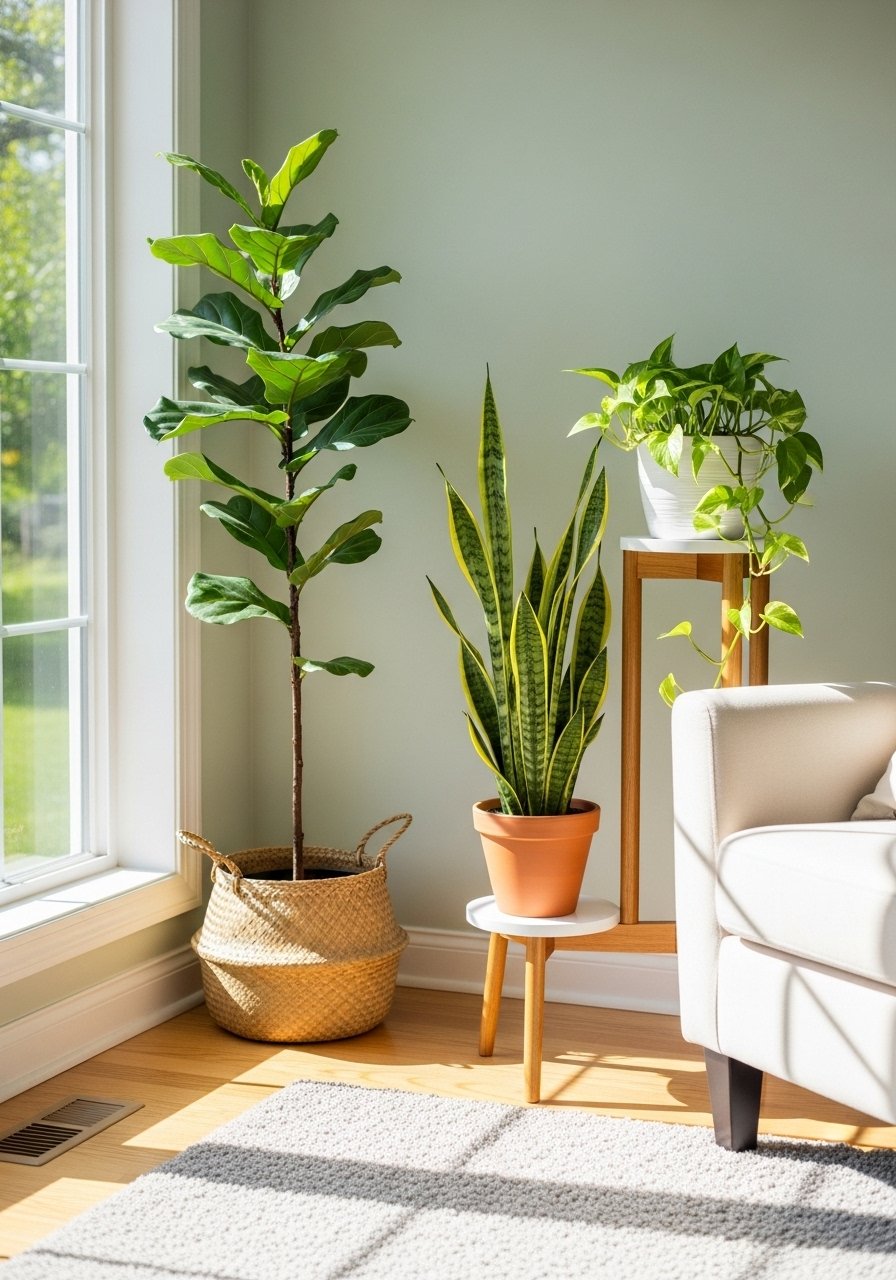
Plants add life and scale. Group three sizes to create a layered look, tall in back, medium and small in front. Use a mix of ceramic and woven pots to give visual texture. If you have pets choose non-toxic plants like Boston ferns and place them on stands to keep curious paws away. For small rooms, use hanging planters to save floor space. I rely on a ceramic planter set and a plant stand.
Mistake to Avoid: Scattering single plants around the room so none of them register as an intentional grouping.
7. Unexpected Metallic Accent Pieces
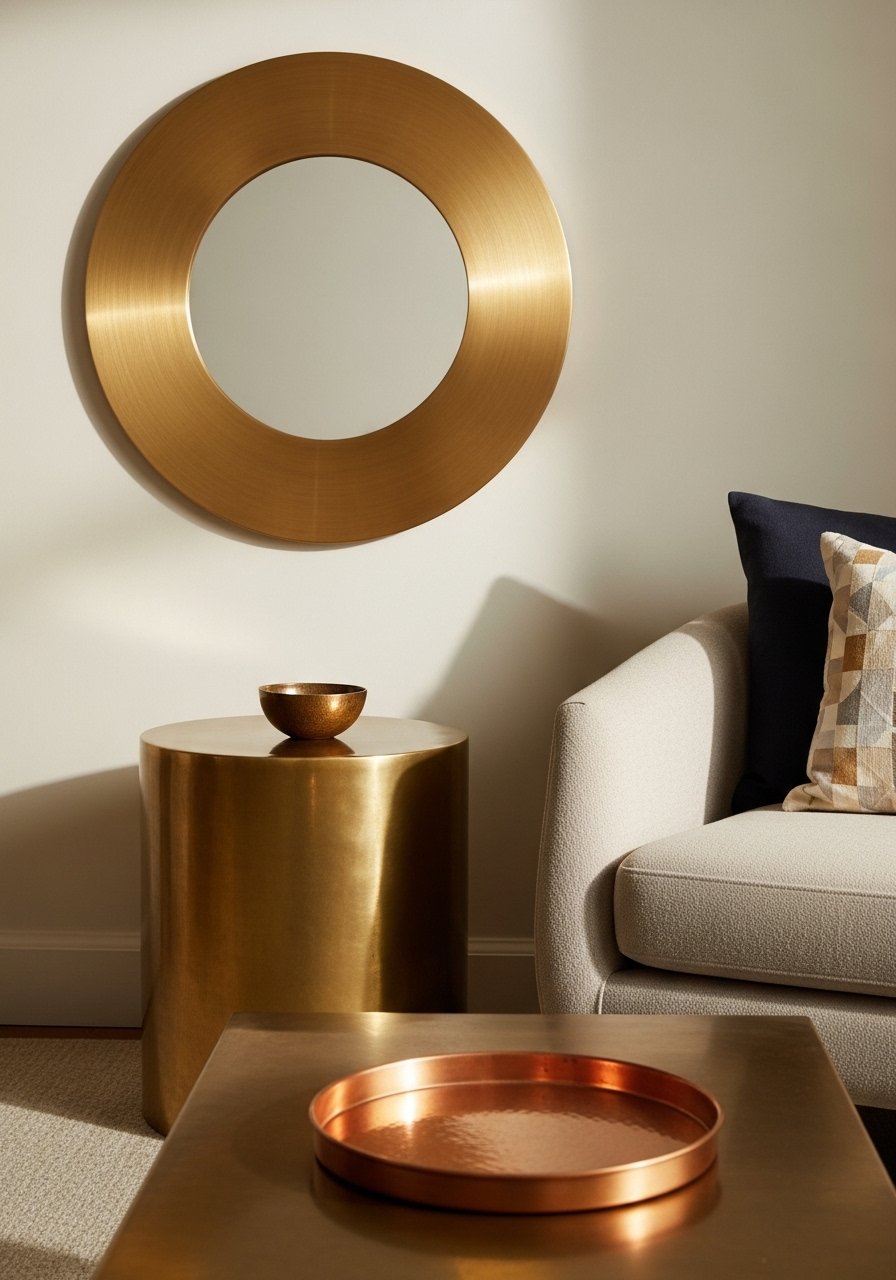
A small metallic piece reads luxurious without being flashy. I add one brass side table or a gold-trim mirror to give contrast against textiles. Use warm metals in rooms with warm wood tones, and cooler metals when the palette skews gray. For a renter, choose freestanding mirrors or tables rather than built-ins. A brass side table and a gold-trim mirror make the edit feel intentional.
Mistake to Avoid: Mixing random metal finishes without a unifying tone so the room looks mismatched.
If you are ready to shop for the pieces that keep coming up in these ideas, here are the items I reach for most.
Baselines For A Lived-In Look
Textiles & Soft Goods:
- Velvet pillow covers (~$12 each), swap seasonally for instant refresh.
- Chunky knit throw (~$35), softens a modern sofa.
- Low-pile neutral rug (~$120-250), use as base layer.
Lighting & Small Furniture:
- Arched floor lamp dimmable (~$80-150), great for nooks.
- Brass side table (~$60-120), adds a metallic pop.
- Compact side table (~$30-70), for reading corners.
Storage & Display:
- Art ledge shelf (~$25-50), rotate prints without patching walls.
- Basket storage set (~$40-80), hides throws and toys.
- Plant stand wood (~$25-50), lifts greenery off the floor.
- Black picture frames (~$20-50), for a cohesive gallery.
8. Warm Ambient Lighting With Dimmer
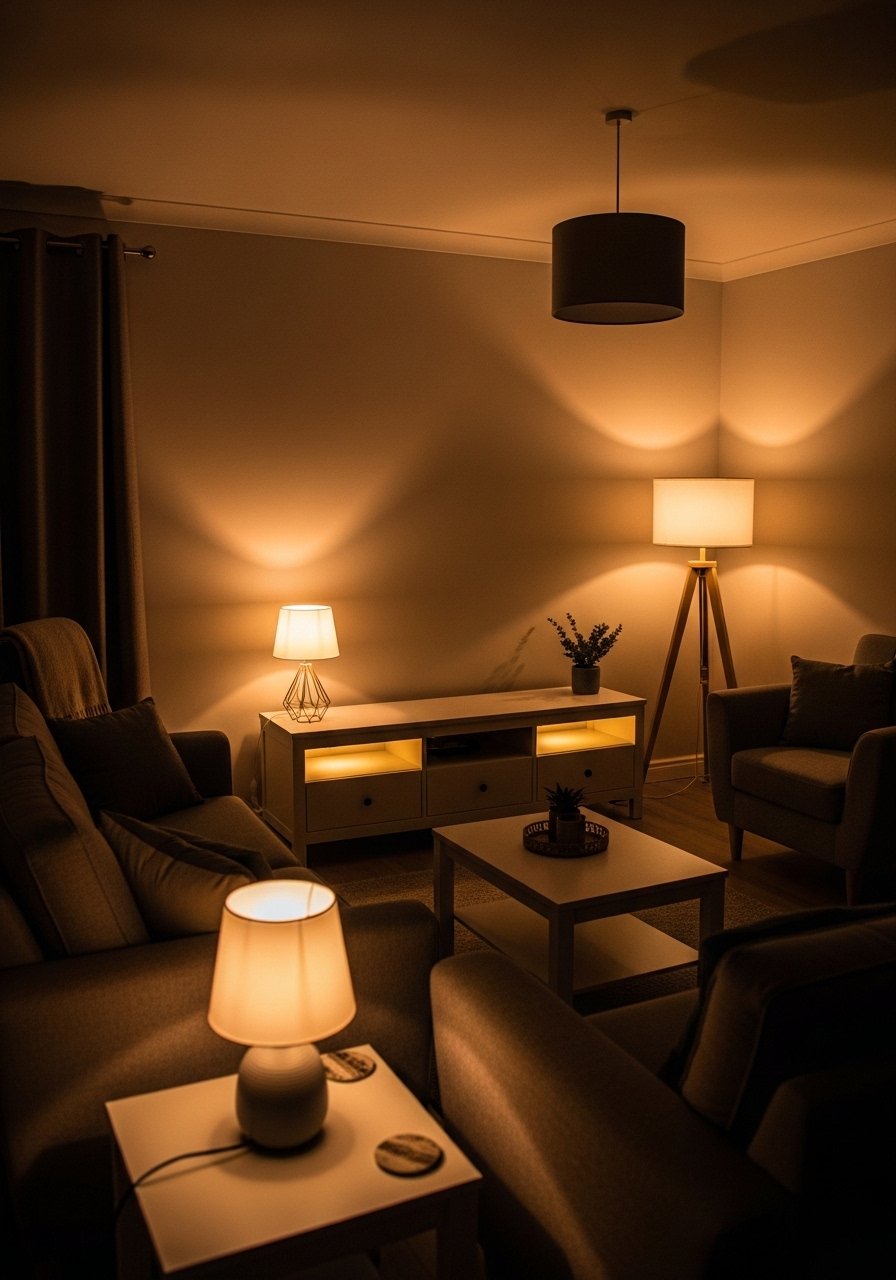
Layers of light are what make a place feel intimate. Use table lamps, a floor lamp, and behind-shelf LED strips to get depth. Install a dimmer on the main light so evening settings drop to 30 to 40 percent brightness. LEDs with 2700K color temperature read warm without going orange. I swapped an old overhead fixture for three lower sources and the room felt calmer. Try warm LED strips and a dimmable plug-in lamp.
Mistake to Avoid: Relying on a single bright overhead light that flattens the room.
9. Coffee Table Trio For Balanced Clutter
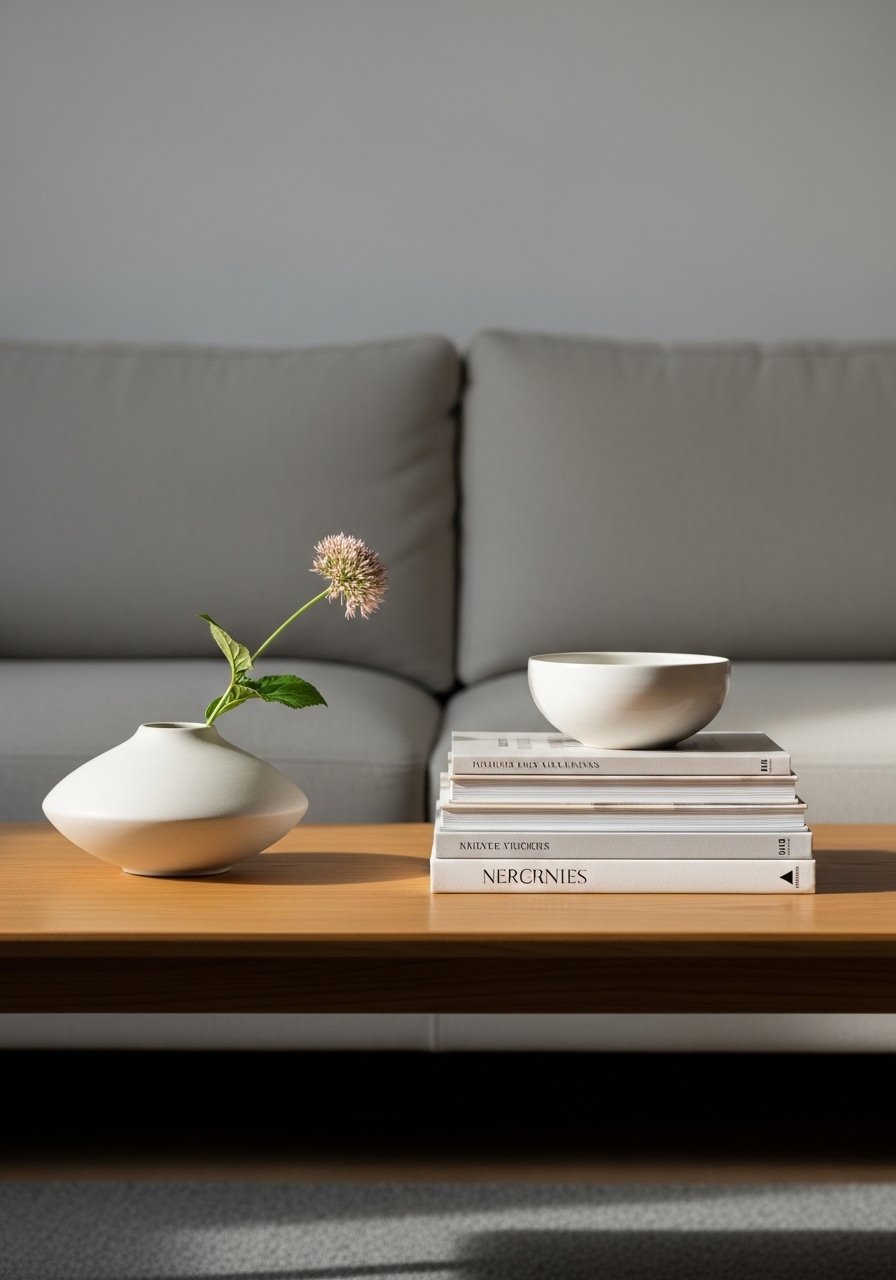
Three objects of different heights create a composed look. I use a large book as the base, a medium ceramic tray, and a low vase for plants or seasonal stems. Keep one surface intentionally clear, and rotate items once a month. For small tables, trade the tray for a round tray that takes up at least one third of the surface area to feel deliberate. A ceramic bowl and coffee table tray are the two quick buys I recommend.
Mistake to Avoid: Filling the table with many small things so nothing reads as intentional.
10. Built-In-Look Shelving With Baskets
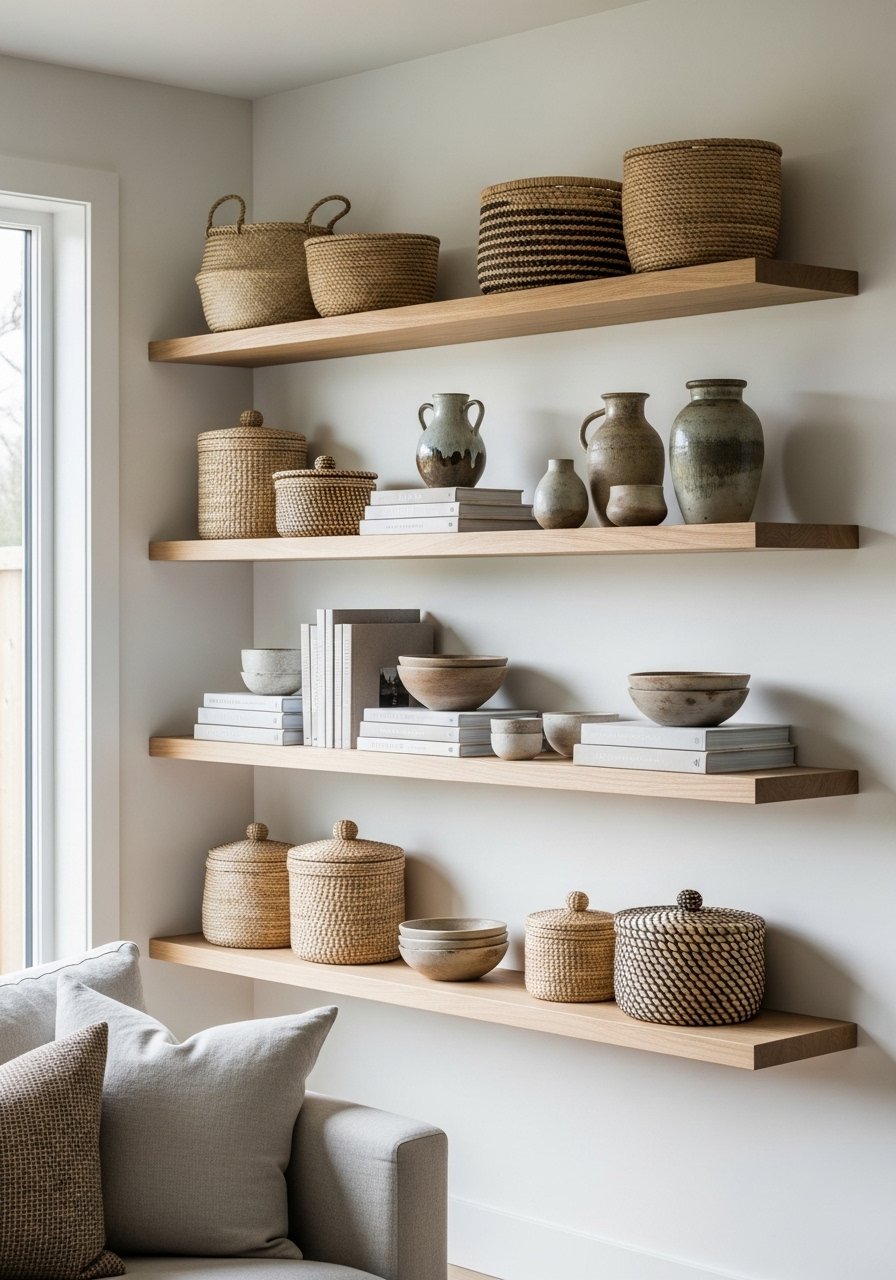
Open shelving can look built in when spacing is uniform. Keep 10 to 12 inch gaps between shelf stacks for a balanced rhythm. Use uniform baskets on lower shelves to hide cables and kid clutter, and display ceramics and low stacks on higher shelves. In rentals use tall freestanding units anchored to the wall with straps to mimic custom shelving. I often recommend a basket storage set and a floating shelf kit.
Mistake to Avoid: Overloading shelves top to bottom so the display tips visually heavy.
11. Window Seat Buy-In For Small Rooms
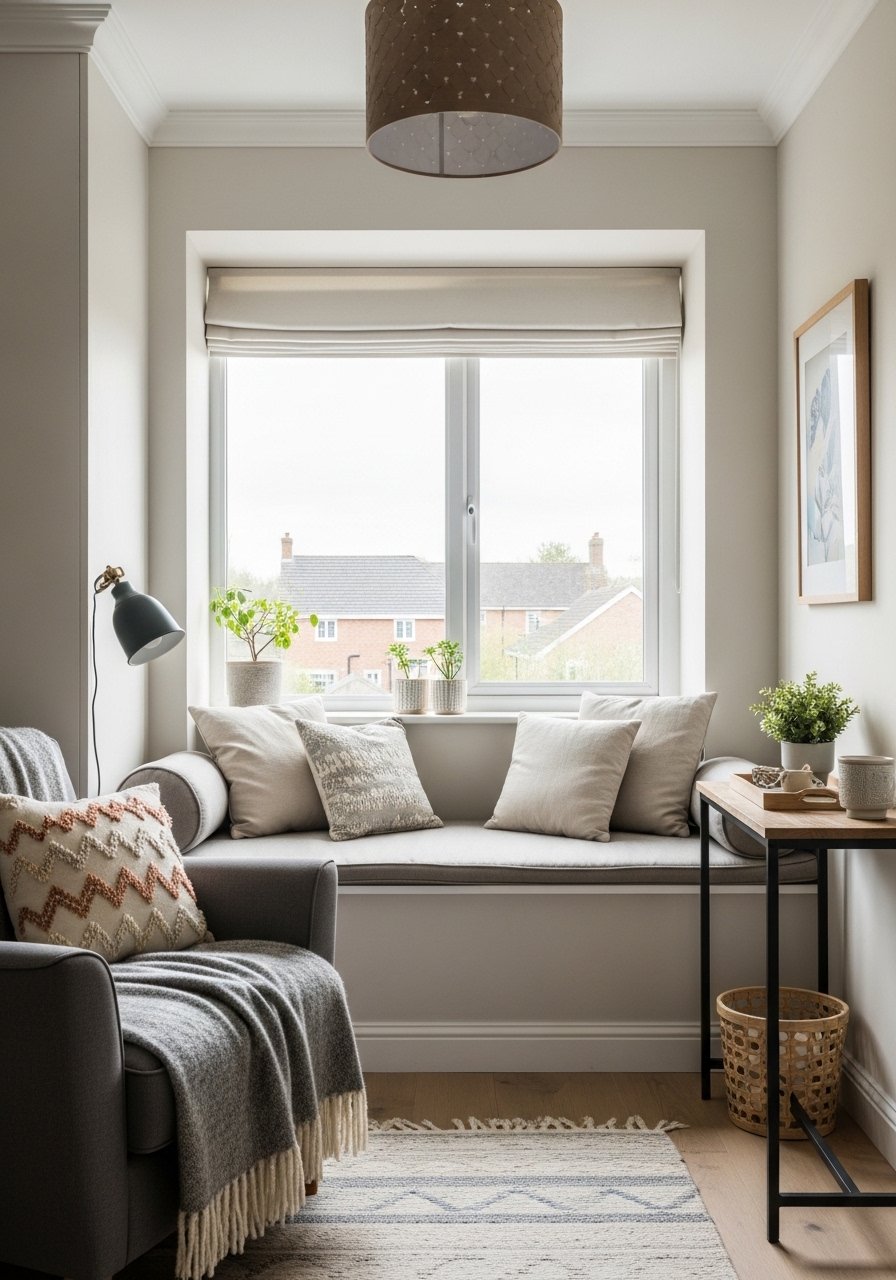
A window seat adds usable seating and a focal nook. For a DIY cushion measure the depth to sit comfortably, usually 18 to 20 inches, and use a foam core with a removable cover for washing. If you cannot build in a seat, a long bench with cushions works the same. Try a bench cushion and a narrow side table for functionality.
Mistake to Avoid: Making the seat too shallow so people slide off or never sit there.
12. Mix Vintage With Modern Finds
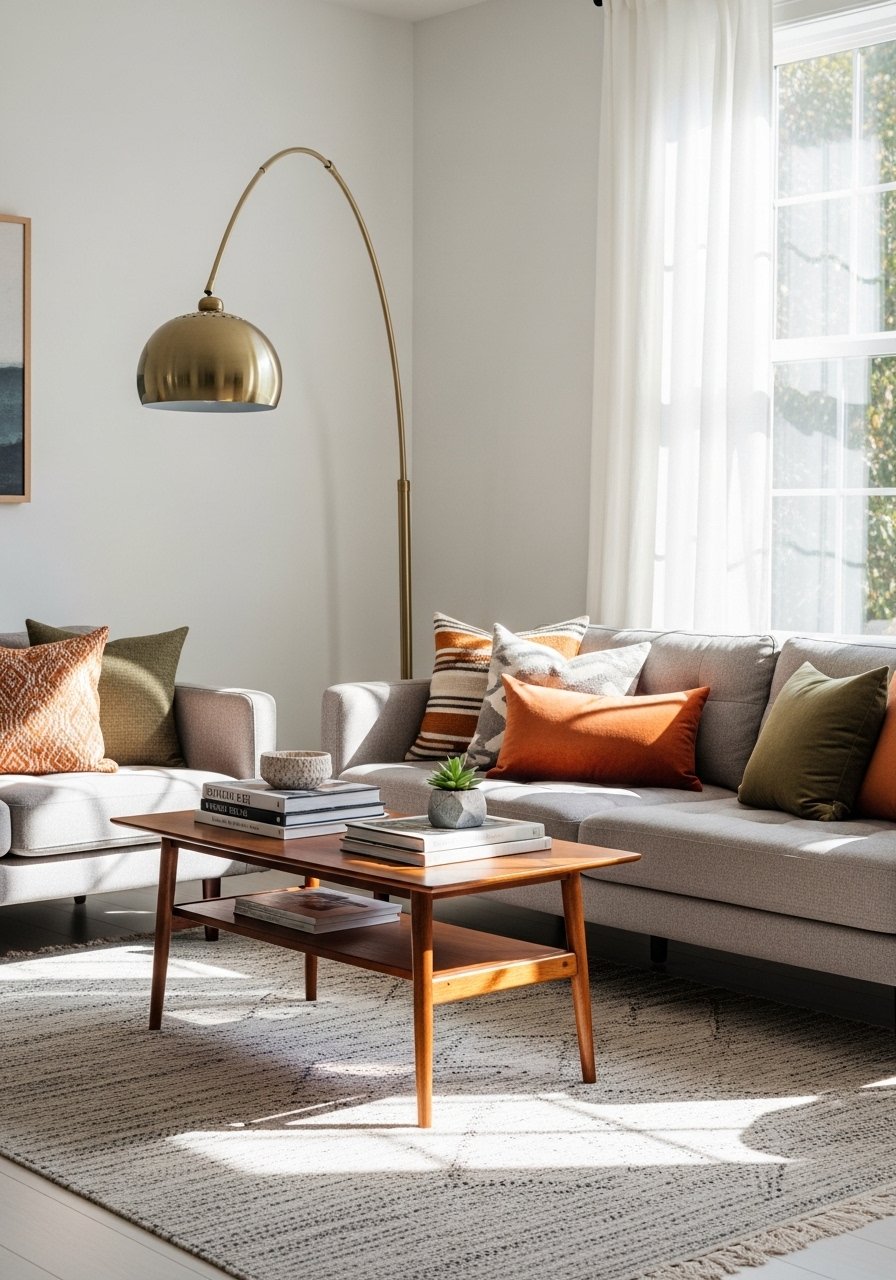
One vintage piece cuts through an overly new room. I pick a single statement item, like a mid-century coffee table, and keep the rest modern for a balanced aesthetic. Look for vintage pieces with solid construction and simple lines that read modern at a glance. Budget option: thrift a lamp and rewire it with a new plug. A mid-century coffee table can be a good anchor purchase.
Mistake to Avoid: Adding multiple out-of-era items that clash rather than harmonize.
13. Curated Book Stack Styling
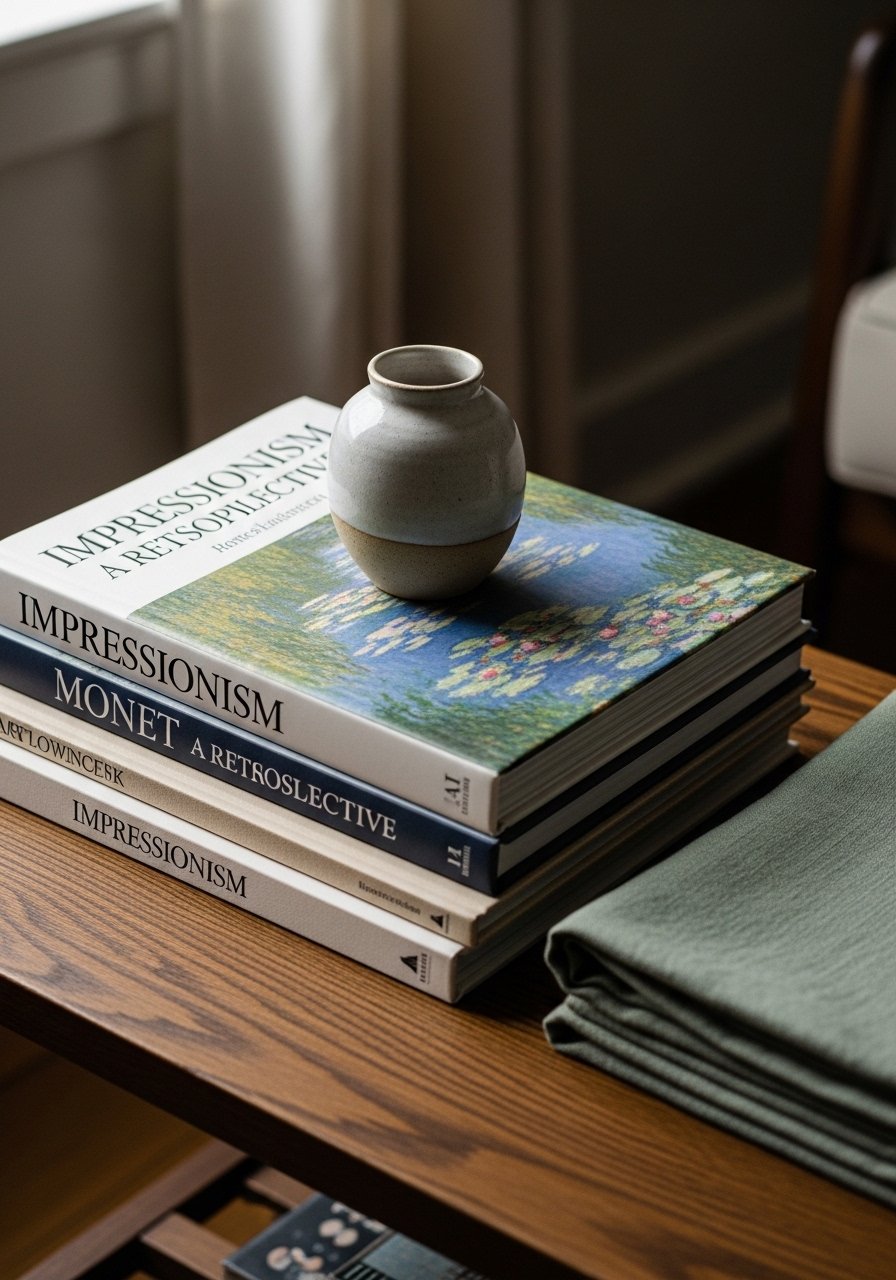
Books are an instant personality edit. Stack two to three books, place a tray or small object on the top one, and angle a single decorative piece beside the stack. Keep titles face-up when they are visually interesting. Change one book every few months to refresh the shelf without overhauling the room. I like to use a coffee table book set and a small ceramic vessel.
Mistake to Avoid: Piling random paperbacks so the stack reads cluttered not curated.
14. Hidden Cord Management Tricks
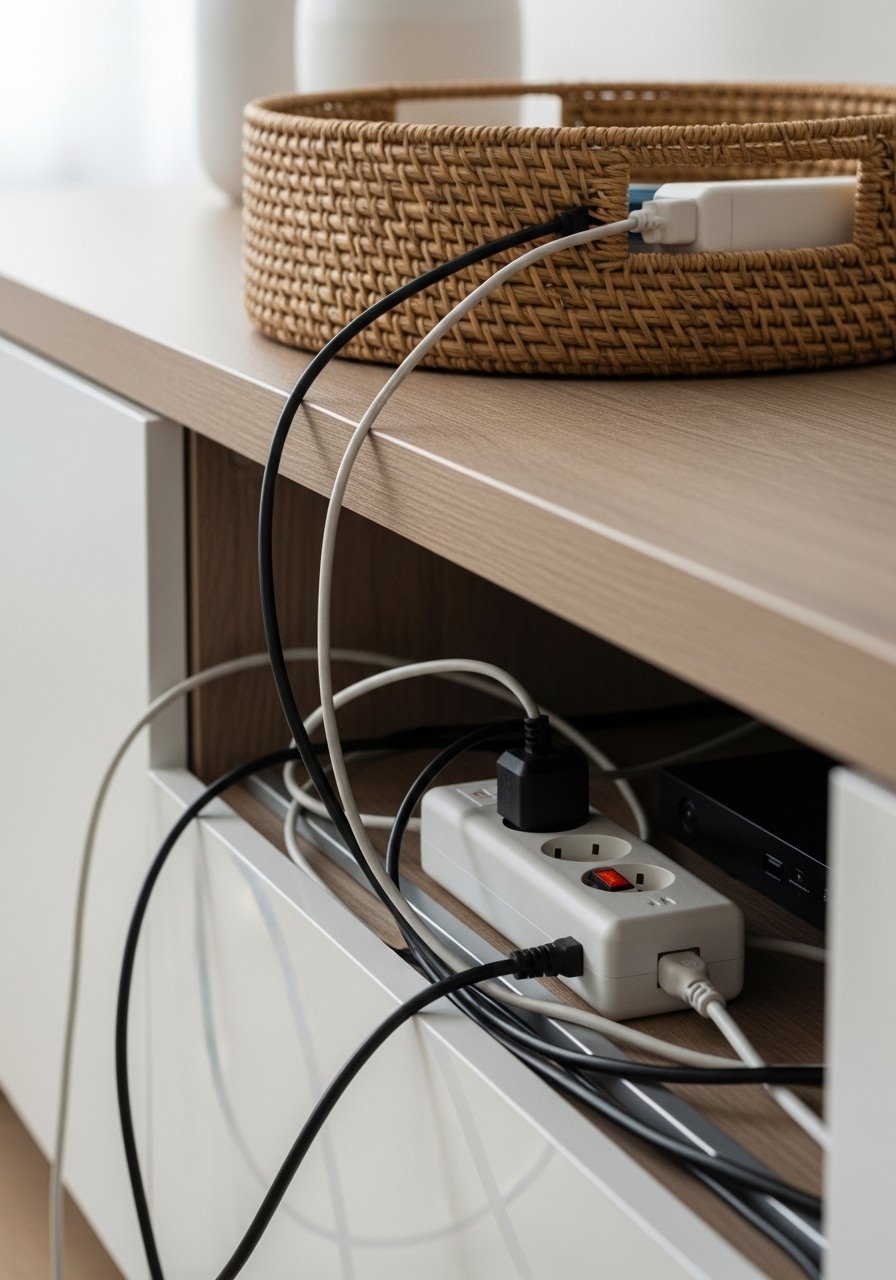
Cords age a room more than worn cushions. Use adhesive cable channels behind consoles, tuck power strips into baskets, and label chargers so you do not have a tangled pile behind the TV. Aim to keep visible cords under 6 inches where possible for a cleaner silhouette. For renters use removable cable covers that match wall color. Grab a cable raceway kit and a power strip with surge protection.
Mistake to Avoid: Hiding everything behind furniture without routing, which makes maintenance impossible.
15. Pet-Friendly Fabrics That Still Look Good
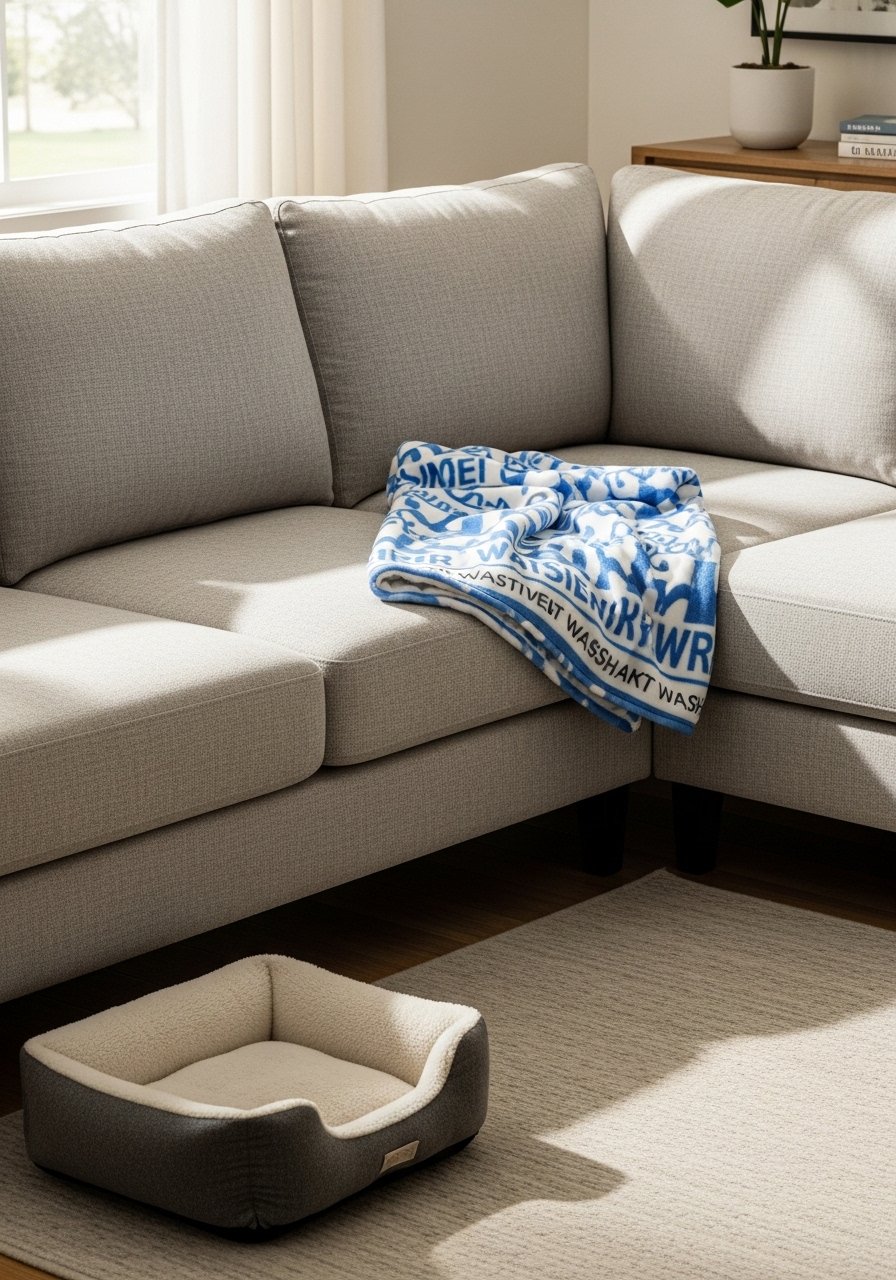
You can have both style and pet durability. Choose tight-weave, synthetic blends for upholstery and keep a washable throw for high-contact spots. Leather and faux leather show claws differently, so test a swatch. For pet hair, velvet is a pain but microsuede vacuums easily. I recommend performance upholstery cleaner and a washable throw blanket to keep the room guest-ready.
Mistake to Avoid: Picking delicate fabric because it looks great in the showroom and then never using the room.
Everyday Edits For Living Rooms
Thin coats beat one thick coat every time. When refreshing a pillow group start with a single oversized cushion and add two smaller ones, then edit. A pair of velvet pillow covers lets you change texture quickly.
Grab adhesive picture hanging strips for renter-friendly art swaps. They save holes and make rotating an art ledge painless.
Putting a rug under just the front legs of seating ties a layout together. Measure so there is at least 6 to 12 inches of rug visible between furniture legs and the edge of the rug. A low-pile neutral rug is easier to layer.
Everyone piles random objects on the coffee table. Instead, keep a tray-sized anchor and rotate a book and a plant. A coffee table tray makes the surface look intentional.
Curate a lighting routine. Warm lamps at night and brighter task light for reading maintain a room’s mood. Try a dimmable lamp so you can change the room without re-wiring.