
The Pinterest photo had a perfectly symmetric bed, a carved headboard framed by sconces, and a canopy that hung like a magazine spread. My first try gave me a sagging sheet and a crooked nail. After a few fixes and a lot of measurements, I learned the small adjustments that make a bedroom feel intentionally Indian, not like a costume.
These ideas are not about expensive antiques or full remodels, they are practical moves you can do in a weekend, many renter-friendly, many under $100 and some under $30. I tested several of these after trying this in three rentals, so where I call something renter-friendly it means no permanent holes or easy-to-reverse fixes. Expect a mix of sewing, simple hardware, and styling pointers for small rooms and pet-friendly spaces.
1. Block-Print Fabric Headboard Cover
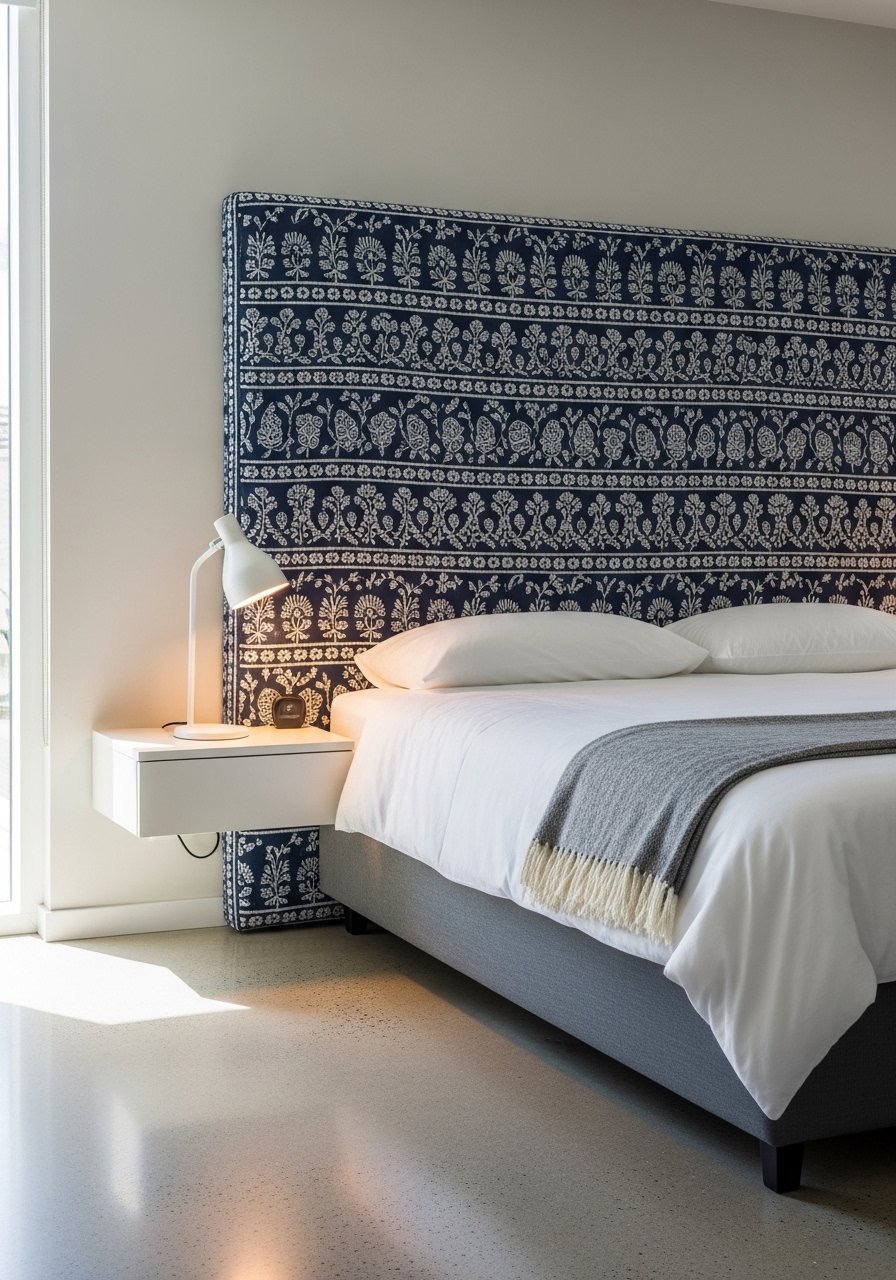
Covering a store-bought headboard with an Indian block-print fabric is cheap and dramatic. Use a staple gun or heavy-duty double-sided fabric tape, leave 2 inches of wrap allowance, and fold corners like you would wrapping paper for a neat finish. Visually this injects pattern and warmth, anchoring the bed in minutes. Works well in boho, modern, or traditional rooms and fits renters when you use adhesive rather than screws. I used a block print fabric and finished the sides with a wooden curtain rod for trim.
Mistake to Avoid: Pulling the fabric too tight so the pattern distorts and seams pucker.
2. Jaali Room Screen From Laser-Cut Panels
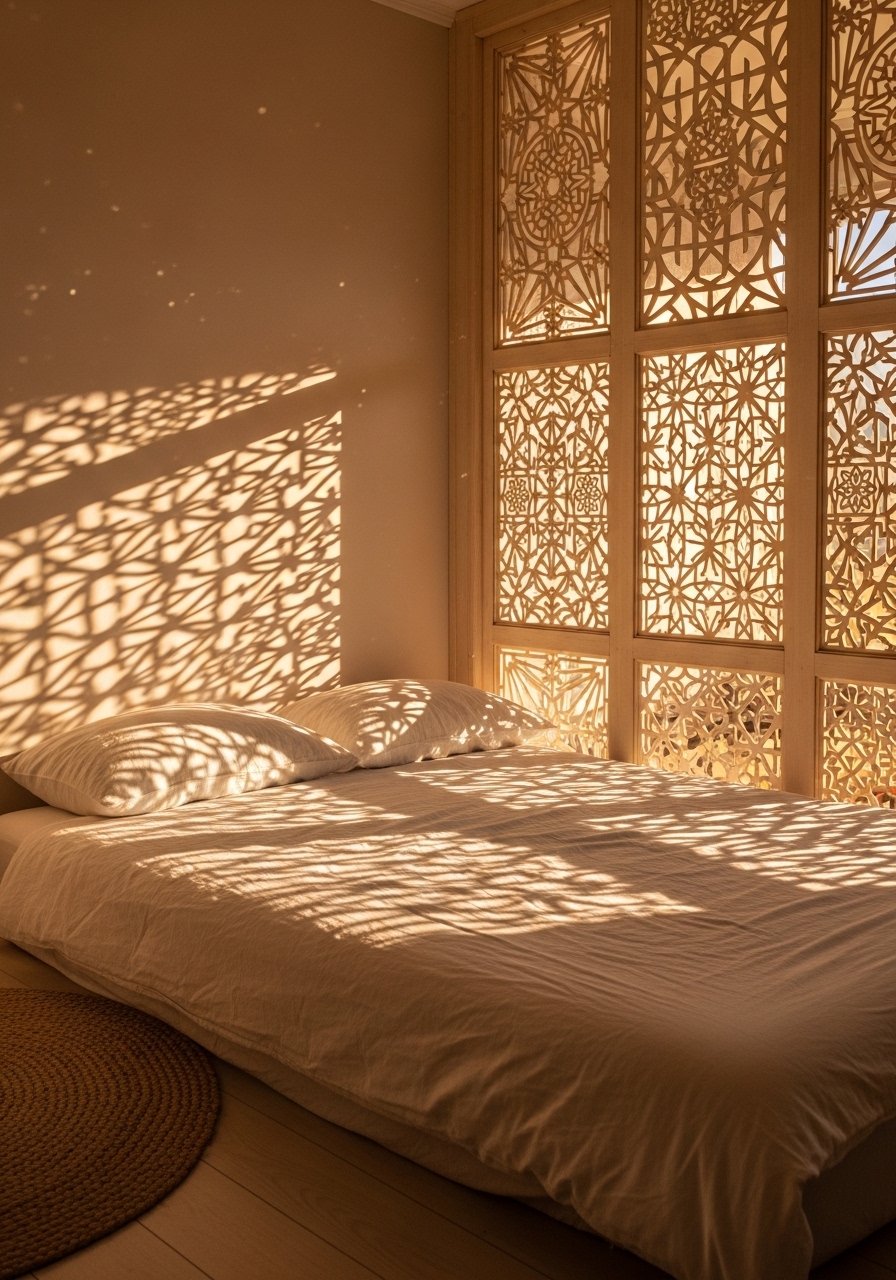
If you want the carved look without the weight or cost, buy laser-cut jaali panels and hinge them into a freestanding screen. Leave a 1 inch gap between panels for airflow, and paint them a warm cream or deep rust to match your palette. The screen creates privacy, filters light into ornate patterns, and acts as a focal point behind a low bed. This is a medium-skill build that looks custom. Pair with a set of wooden hinge brackets and a folding room divider panel.
Mistake to Avoid: Attaching panels flush without spacing so they rattle and trap dust.
3. Sari Canopy, No Ceiling Hook Needed
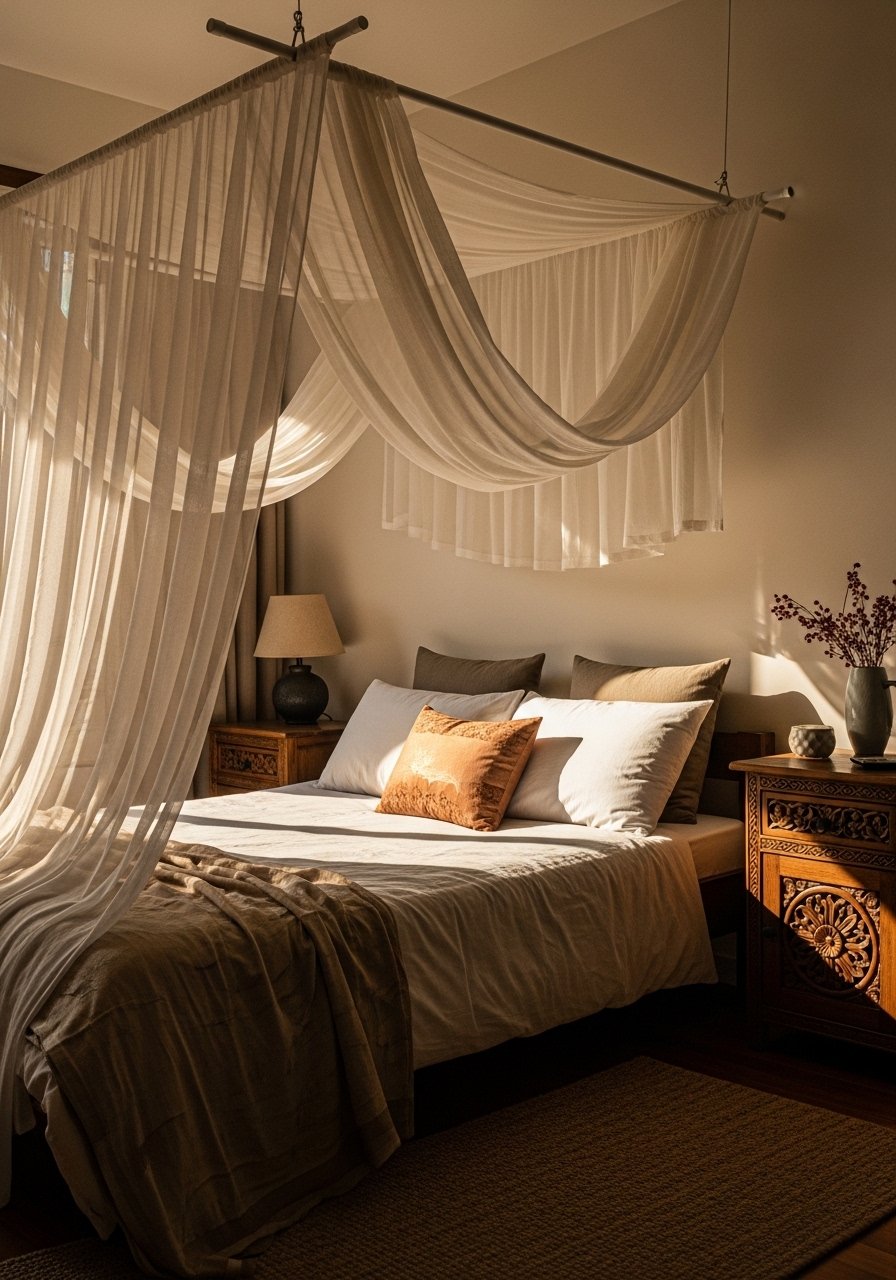
You can get the canopy look without drilling by using a curved tension rod that fits between walls or a freestanding hoop. Drape two sari lengths so they overlap by 8 inches at the center for a fuller canopy, and secure with cloth clips to keep folds even. The result reads traditional and softens harsh corners in a small room. This is low-cost and reversible for renters. I pair sari lengths with a tension curtain rod and small cloth grips.
Mistake to Avoid: Using one narrow sari so the canopy looks thin and saggy.
4. Brass Accent Shelf With Diya Display
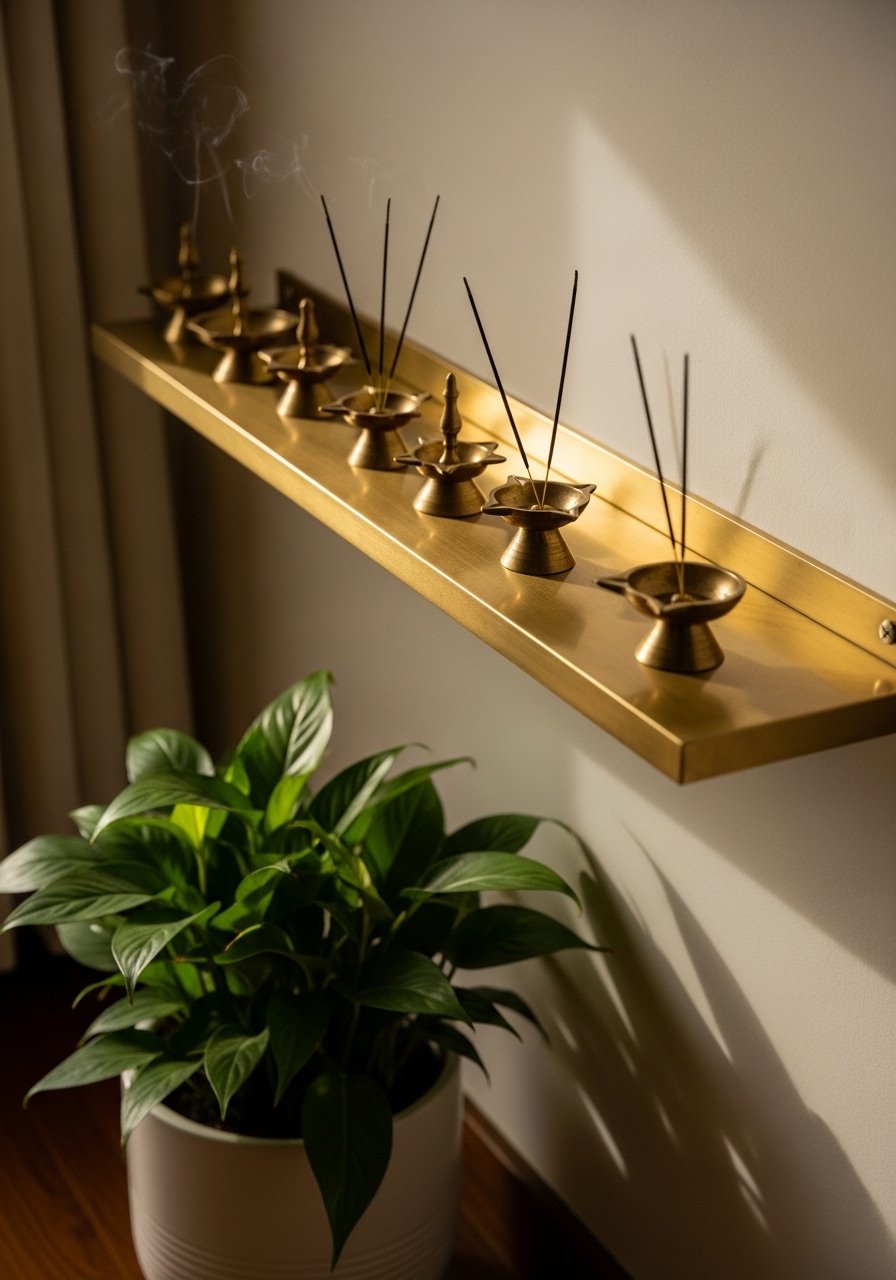
A slim brass floating shelf instantly makes a corner feel curated. Place three small brass diyas or mini vases, stagger heights, and add one living plant for balance. Mount the shelf 5 to 7 inches above a bedside table or 12 inches above a low bench so items read as a vignette. Brass pairs with warm woods and is easy to switch out seasonally. I mounted mine with removable picture hangers to keep it renter-friendly and used a brass shelf for the look.
Mistake to Avoid: Overcrowding the shelf with too many small items so nothing reads clearly.
5. Gallery Wall With Mixed-Frame Prints
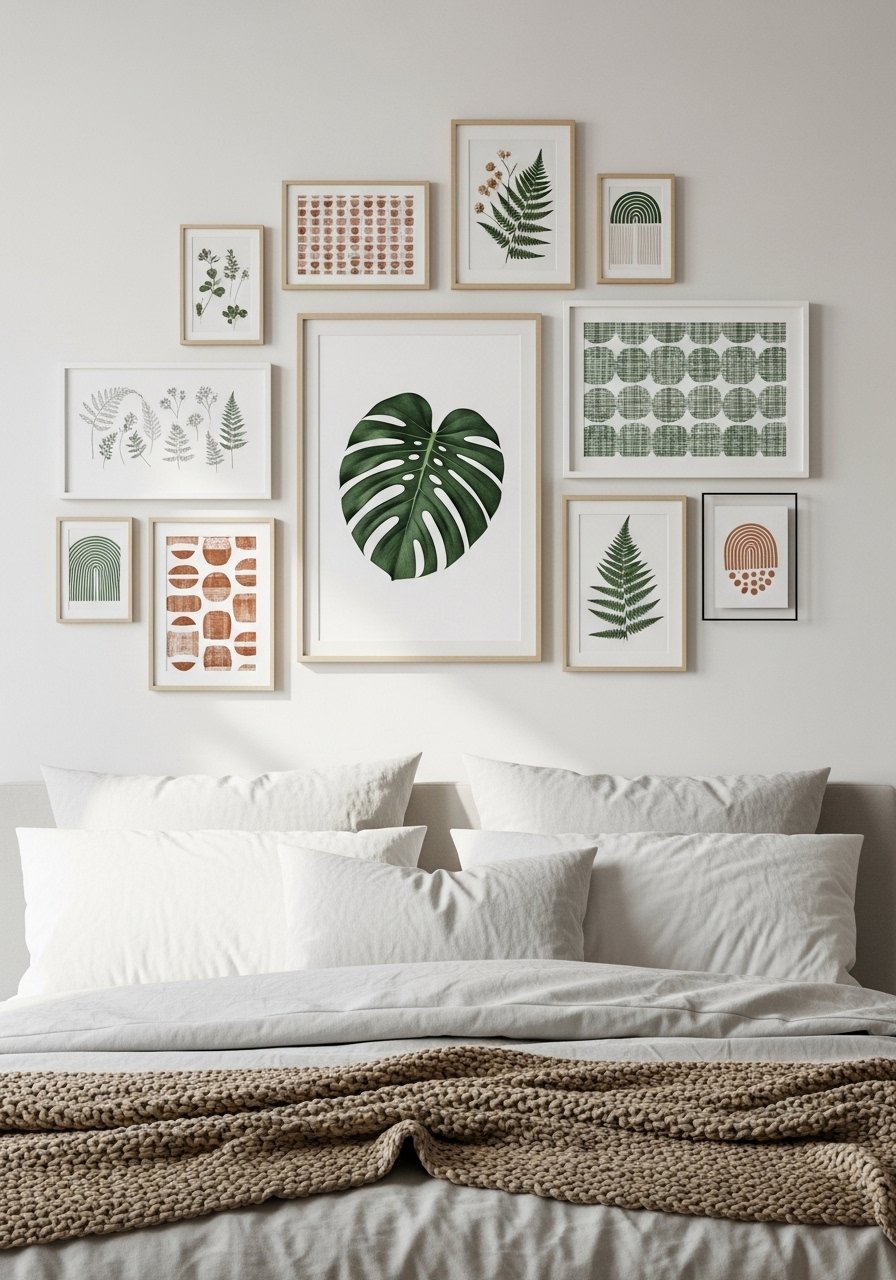
Create a gallery that mixes family photos, textile prints, and small mirrors. Lay layouts on the floor first and keep 2 to 3 inches between frames for cohesion. To get an Indian feel include a single framed textile or a print of a Madhubani motif. Use command picture strips for renters and keep heavier pieces anchored with a top anchor point. I like using a set of black picture frames and a textile print poster.
Mistake to Avoid: Hanging pieces too high above the bed so they feel disconnected from the sleeping area.
6. Layered Curtain Stack For Texture
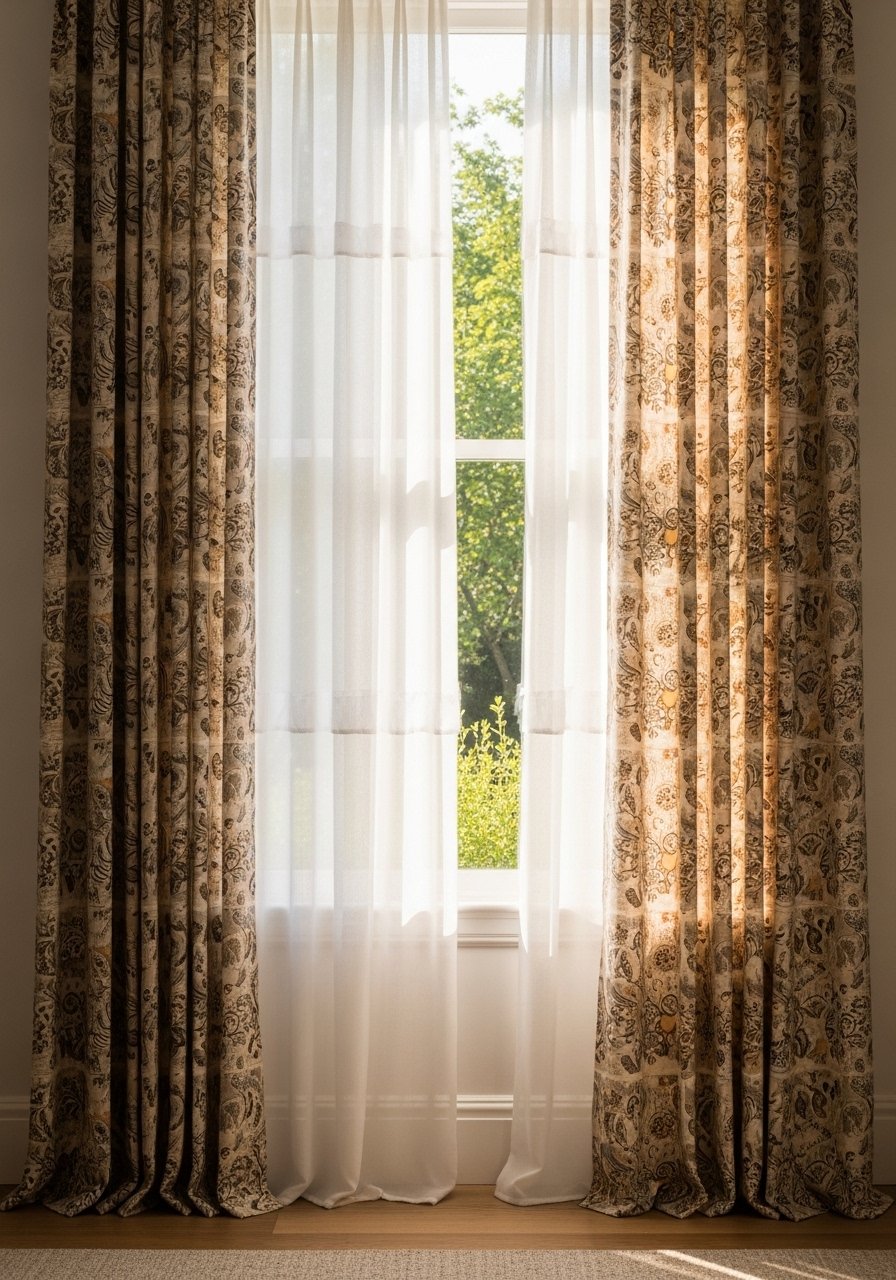
Layer sheers and patterned drapes for depth and room-darkening control. Hang the rod 6 to 8 inches above the window frame to make ceilings feel higher. Use two panels per side for fullness and choose a heavier printed fabric for outer panels and light linen for sheers. This combination gives privacy during the day and privacy at night and reads like a curated Indian window treatment. I used a sheer curtain panel and a printed curtain panel.
Mistake to Avoid: Choosing curtains the exact window height, which makes the room feel shorter.
7. Floor Seating Nook With Oversized Cushion
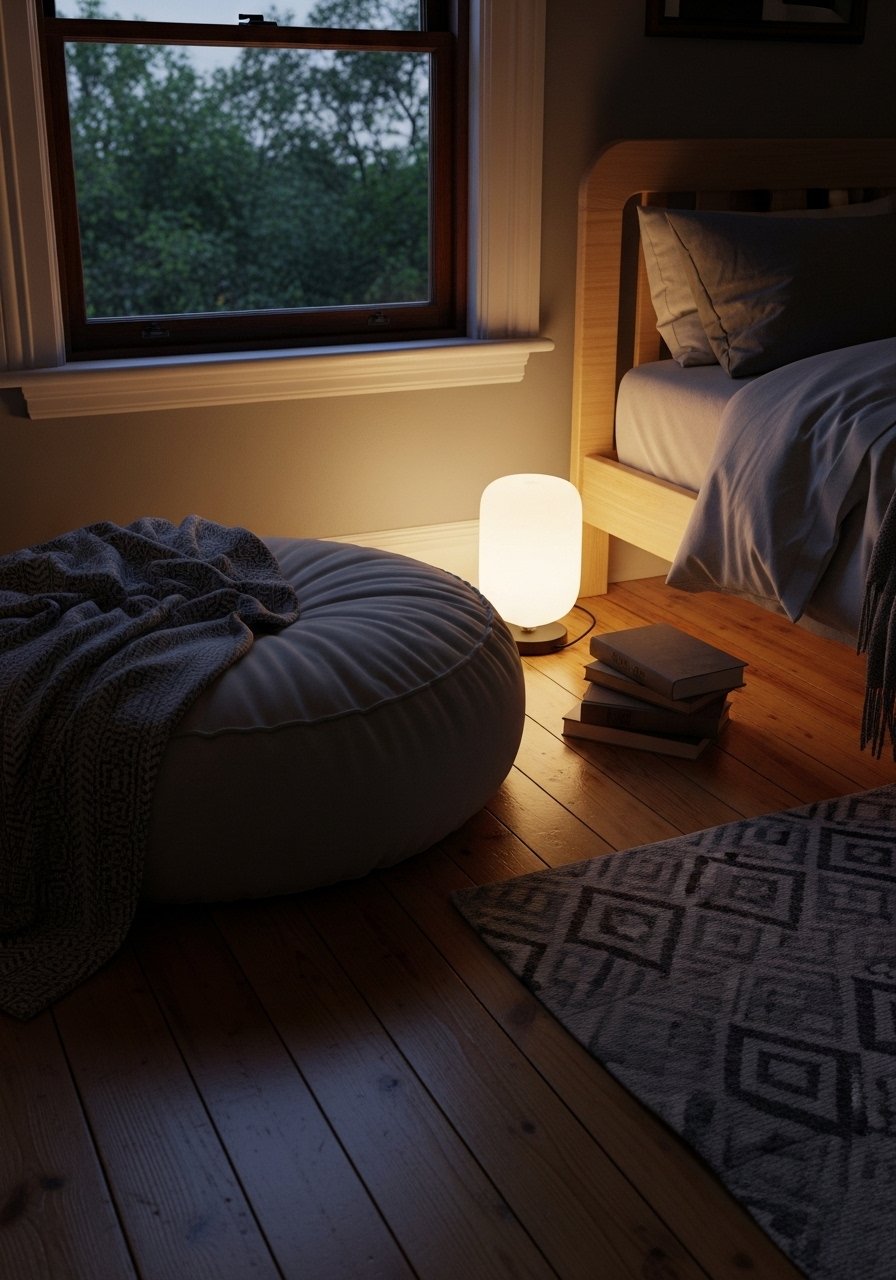
A single oversized floor cushion creates a reading nook and reduces clutter from many small pillows. Pick a durable cotton or linen cover that can be machine washed and aim for a 36 inch diameter for comfortable lounge seating in small rooms. Add a textured jute rug and a task lamp on an adjustable stand for brightness. This is budget-friendly and kid- and pet-tolerant when you pick washable fabric. I recommend a floor cushion and a jute rug.
Mistake to Avoid: Buying five small cushions instead of one large one that anchors the corner.
If any of these ideas have you ready to shop, here are the items I keep ordering for this style.
Starter Picks For Indian Bedrooms
Textiles & Soft Goods:
- Block print fabric (~$20-50), great for headboards or throw panels.
- Velvet pillow covers (~$12 each), swap by season.
- Floor cushion (~$30-70), oversized seating.
Hardware & Lighting:
- Tension curtain rod (~$15-30), no holes required.
- Brass shelf (~$25-60) for small displays.
- String lights fairylight (~$10-20) for gentle mood lighting.
Tools & Mounting:
- Removable picture hangers (~$8-15), renter-friendly.
- Double-sided fabric tape (~$6-12) for no-sew headboard covers.
8. Upcycled Sari Bed Runner

A sari turned into a bed runner is a fast way to add layered color. Cut a 18 inch strip from the selvedge edge and serge or hand-stitch a 1 inch hem for durability. Place it across the foot of the bed centered and pair with a neutral duvet so the runner reads intentional. It is a low-skill sew and looks curated even when the fabric is a thrift find. I used a cotton sari fabric and stitched with a basic sewing kit.
Mistake to Avoid: Using the sari edge without hemming so it frays after a few washes.
9. Painted Ceiling Border For Framed Feel
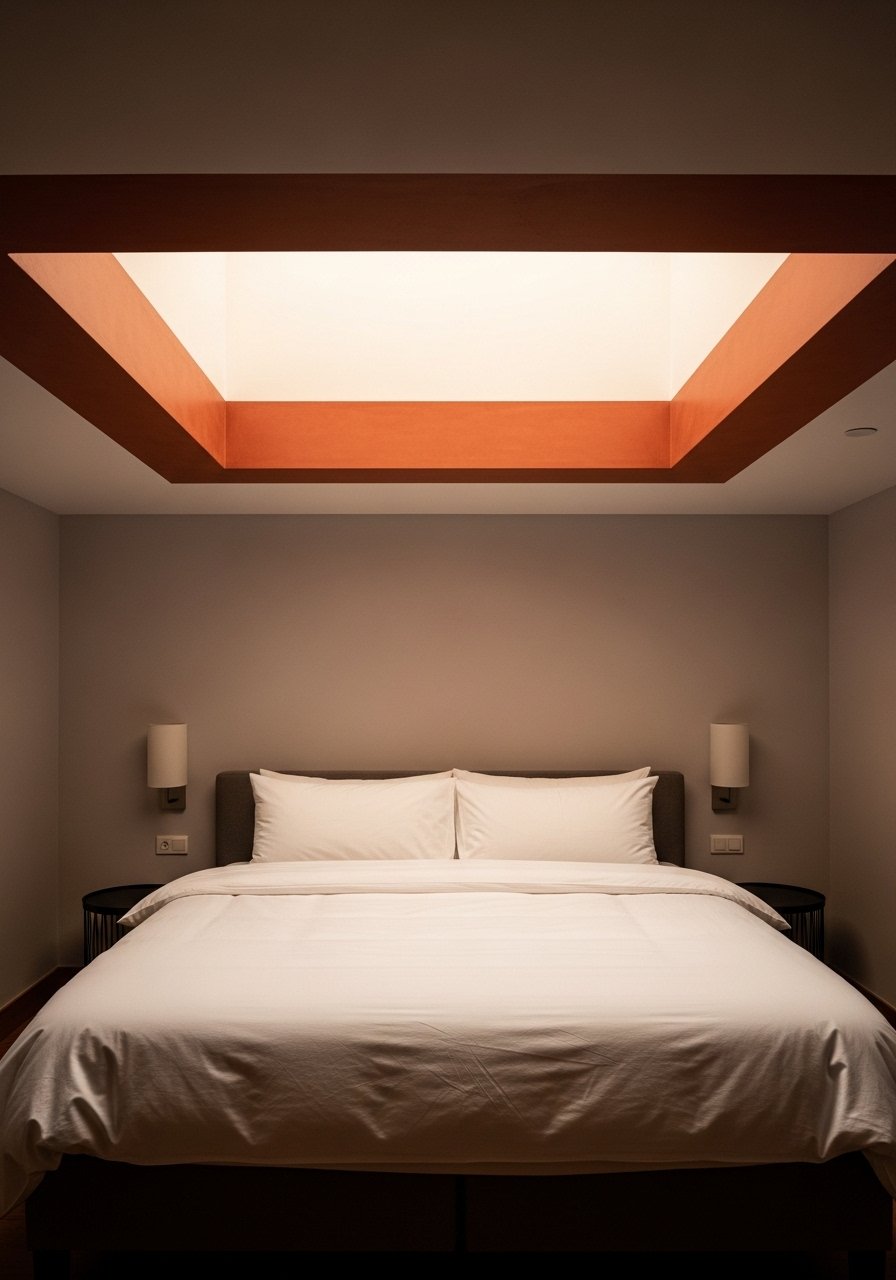
Paint a narrow ceiling border to give the room an architectural, temple-like frame. Tape off a 4 inch band around the ceiling edge and use a flat warm pigment like terracotta or deep saffron. Two thin coats give even coverage. Visually this raises the center and makes the ceiling feel intentional without a full paint job. Works in rental spaces if you test paint removal compatibility or use removable ceiling stickers as an alternative. I used a matte terracotta paint.
Mistake to Avoid: Painting too thickly so brush strokes show and edges look sloppy.
10. Mirror and Small Shelves Combo For Light

Lean a tall mirror to double natural light and add two staggered mini shelves beside it to display small brass pieces or books. Place the mirror opposite a window for the biggest effect. Keep shelves at eye level and stagger 6 inches apart. This combo expands a small room and gives a minimal nod to traditional decor through objects rather than heavy furniture. I use a full-length mirror and mini floating shelves.
Mistake to Avoid: Hanging the mirror too high so it does not reflect the room effectively.
11. DIY Block-Printed Pillow Covers

If you have a carving kit or buy carved blocks, printing simple pillows is addictive. Prewash cotton covers, use two thin coats of textile paint per print, and heat-set with an iron after 24 hours. A 2 by 3 inch repeat pattern printed in rows reads handmade rather than messy. These pillows pair well with one solid cushion and a lumbar in contrast. I used textile paint and a block printing kit.
Mistake to Avoid: Overloading the block with paint so prints bleed and lose definition.
12. Layered Lighting With Brass and Rope
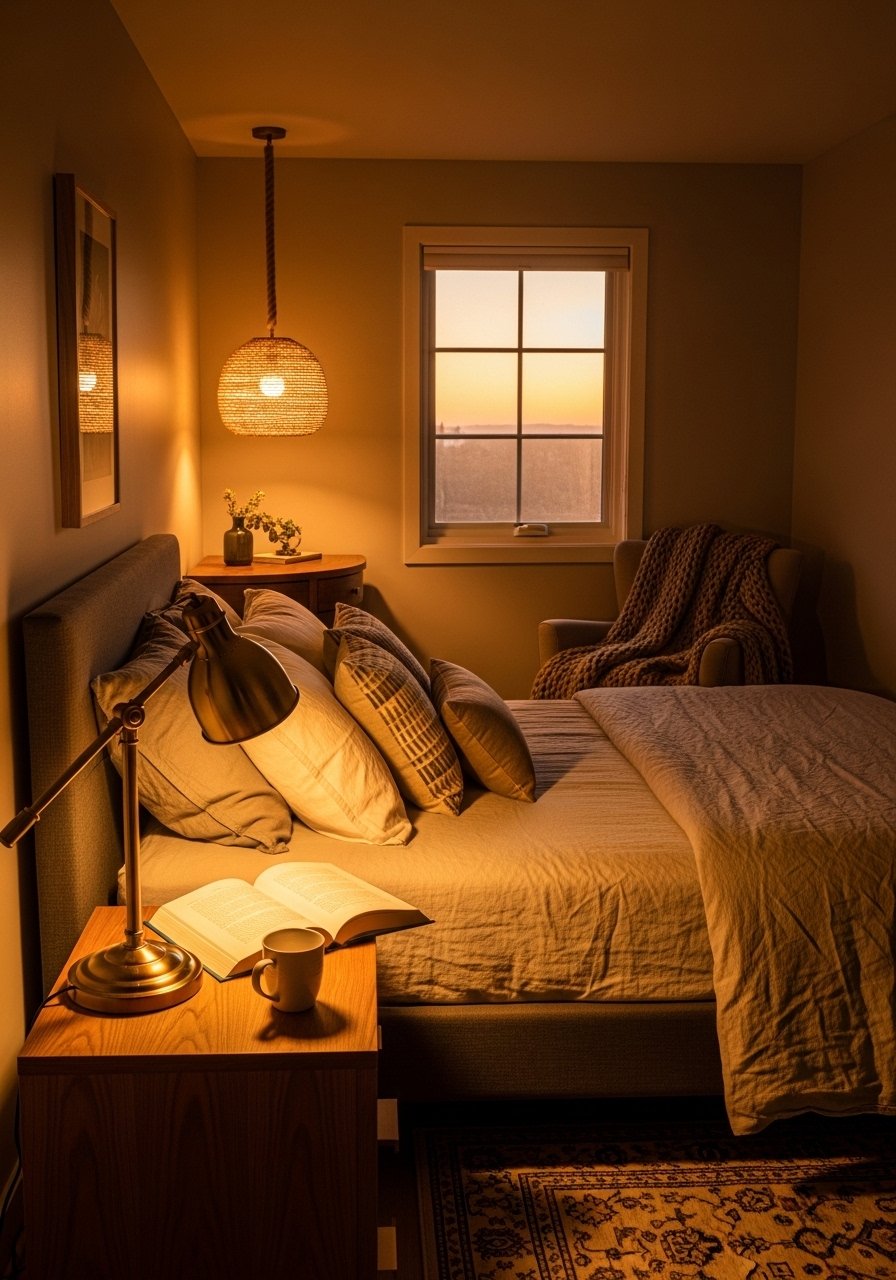
Mix a brass bedside lamp with a rope-wrapped pendant or lantern to add texture and warmth. Keep task lighting under 60 watts for bedside reading and use a string dimmer for mood control. Place the pendant 24 to 30 inches from the bedside surface so it does not glare. The contrast between metal sheen and natural rope gives an Indian-inspired look without heavy ornamentation. I sourced a brass bedside lamp and a rope pendant light.
Mistake to Avoid: Hanging pendants too low where they block sight lines or bump heads.
13. Textile Layering Plan For Small Rooms
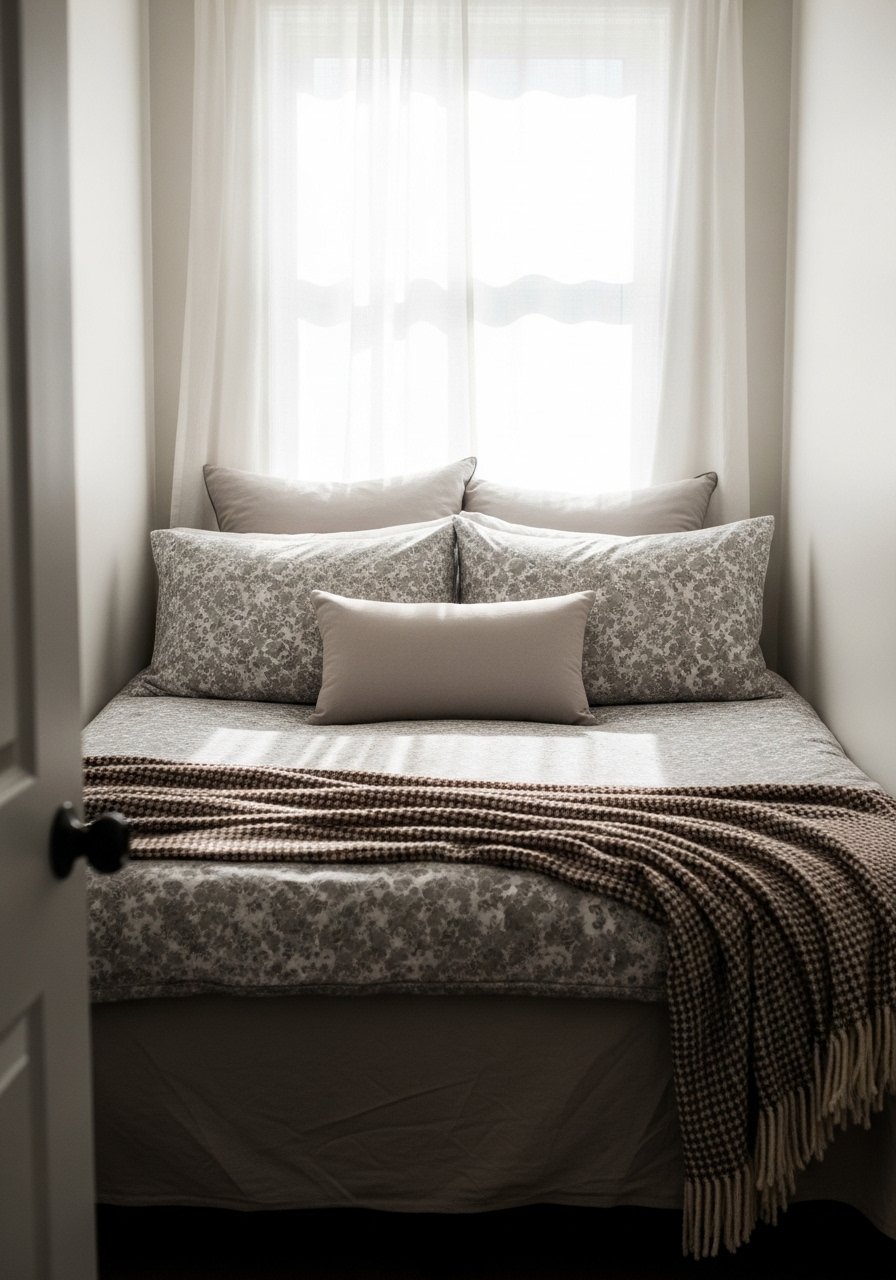
Plan bedding in three layers: a neutral base sheet, a patterned middle layer folded to show 12 inches at the foot, and a textured throw. Use two large euro pillows, two sleeping pillows, and one lumbar for balance. This ratio keeps the bed from looking cluttered in a tiny room and gives enough pattern without overwhelming. Pick washable fabrics for homes with pets. I like a neutral duvet cover and a textured throw.
Mistake to Avoid: Stacking too many small pillows so the bed looks fussy and requires constant fluffing.
Small-Room Indian Styling Tips
Measure before you buy. A 2 inch mistake on curtain rod placement shows up as a daily annoyance. Grab a metal measuring tape and mark with painter's tape before drilling.
Curate one pattern at a time. Pull a single block print into the room via a runner or pillow, then echo its color in a small brass object. Set of brass diyas are cheap and cohesive.
If you rent, use nonpermanent fixes first. Removable picture hangers and double-sided tape avoid holes and give you freedom to try arrangements.
Scale textiles to the room. In a tiny bedroom, one oversized floor cushion reads less cluttered than five small ottomans. Try an oversized floor cushion cover in a durable fabric.
When in doubt, edit. Remove one small decorative object from a surface and the remaining items will read more intentional. A simple wood tray keeps bedside surfaces tidy.