
I kept buying the same cheap tapestry and wondering why my dorm still felt cold, like someone forgot to finish the room. The moment I stopped treating every purchase as a one-off and started thinking in layers, it changed. Layering textiles, lighting, and storage in small moves turned a bare campus room into a place I actually wanted to read in after midnight.
These ideas are for anyone living in a small rental, on a student budget, and not looking to do permanent work. Most pieces are renter-friendly and quick to install, and I tested many of them after trying this in three rentals. Expect low to moderate cost, easy weekend installs, and tips that work in a typical twin XL layout. If you want warm without piling on clutter, these are the steps that actually hold up.
1. Layered Throw System for Instant Texture
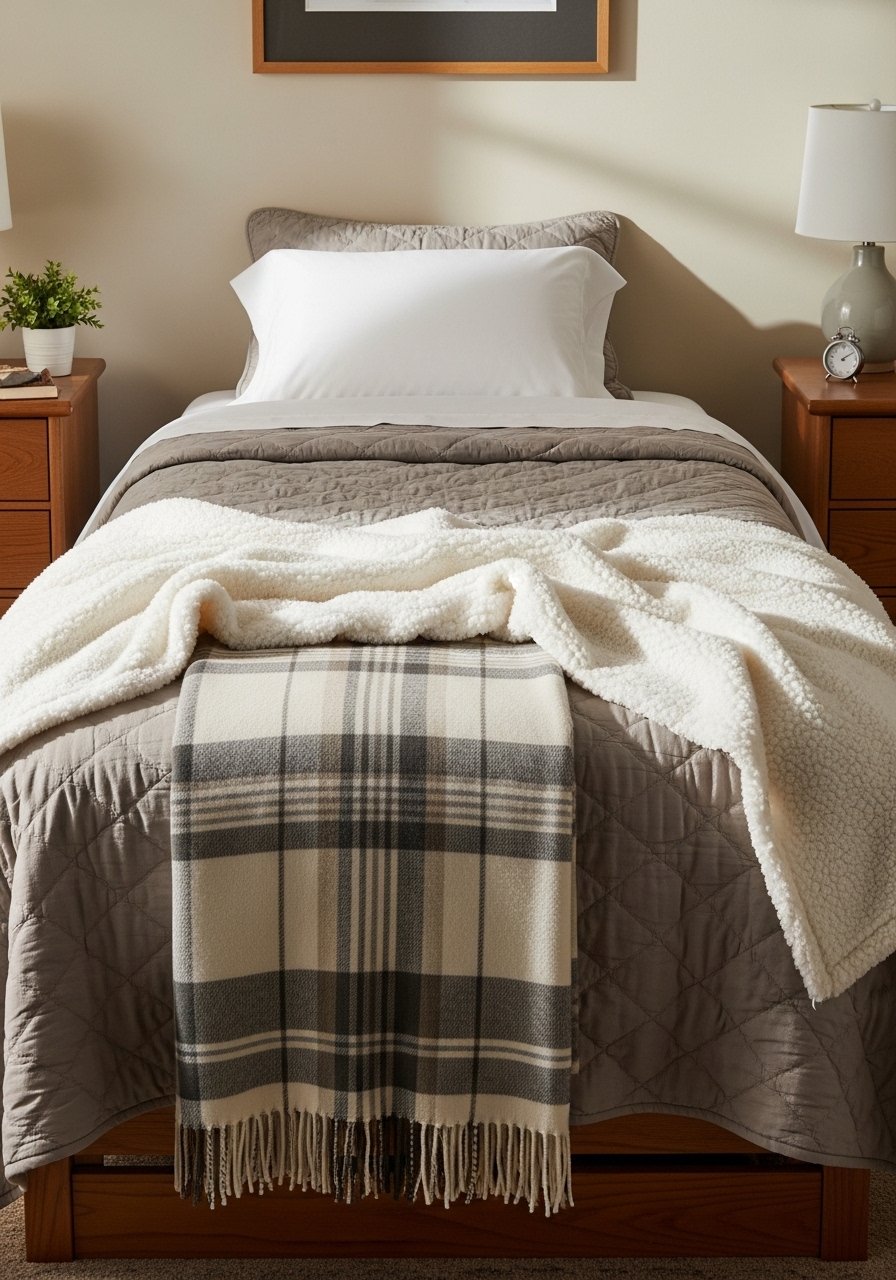
I stopped guessing which blanket to use and started using two, a base quilt plus a textured throw. The trick is one lightweight quilt for warmth and one chunky throw for texture, folded at the foot so the bed still looks tidy. For small rooms, a plaid cotton throw and a soft sherpa throw layer without bulk. Visually, stick to a 2:1 ratio of neutral to pattern so the bed reads warm not busy. This is low effort and easy to switch seasonally.
Mistake to Avoid: Buying one heavy blanket that overwhelms the bed and makes the room look cluttered.
2. Floating Shelves That Double as Nightstands
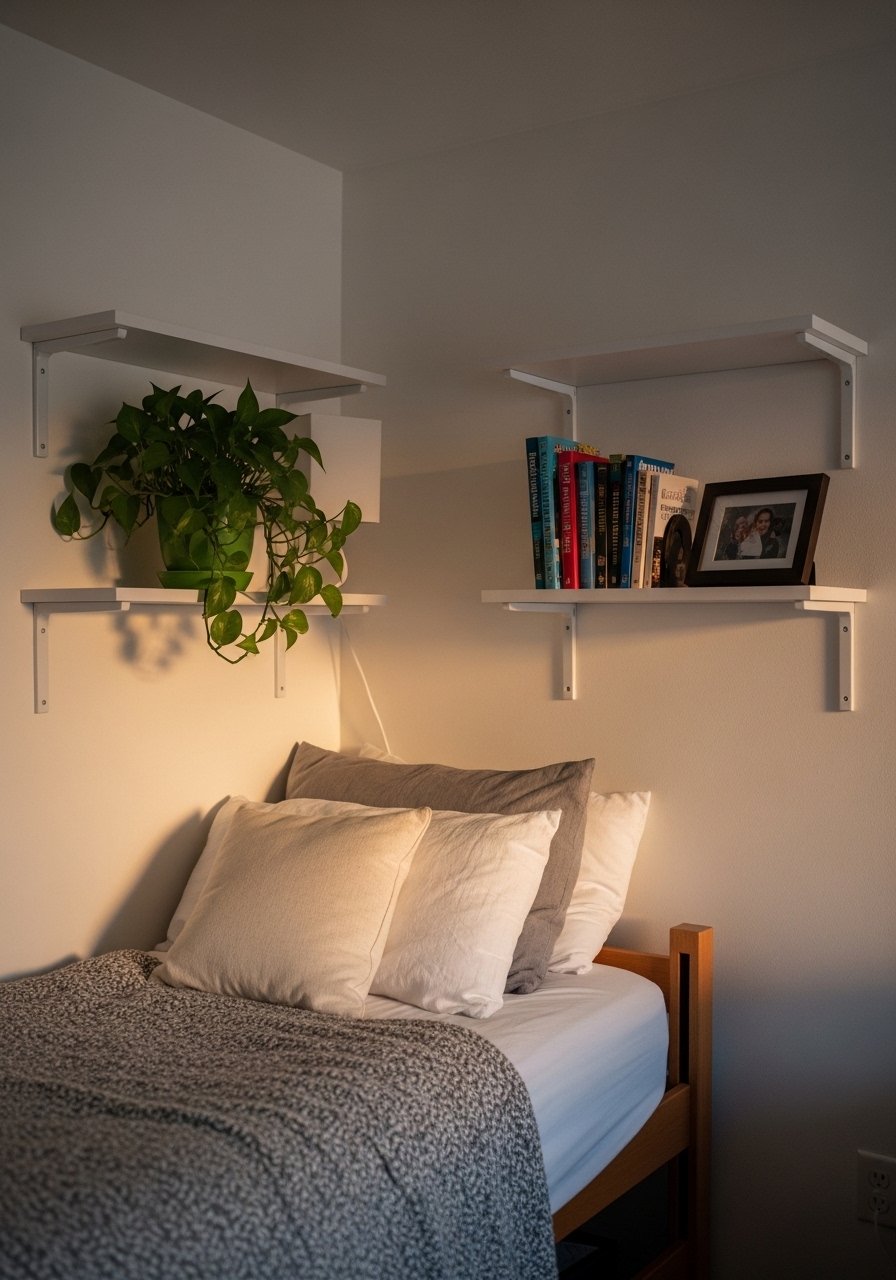
My bedside was always a pile until I used a pair of shallow floating shelves as a nightstand. Pick shelves 8 to 10 inches deep so they hold a lamp and a book without jutting into the walking path. For rentals, use heavy-duty adhesive strips or screw-in anchors if allowed. This frees floor space and creates a layered eye line that makes the room feel curated. After trying this in three rentals, I prefer staggered placement over a single clunky nightstand.
Mistake to Avoid: Choosing deep shelves that crowd the room and block the bed entry.
3. Layered Lighting Rule: Three Small Sources
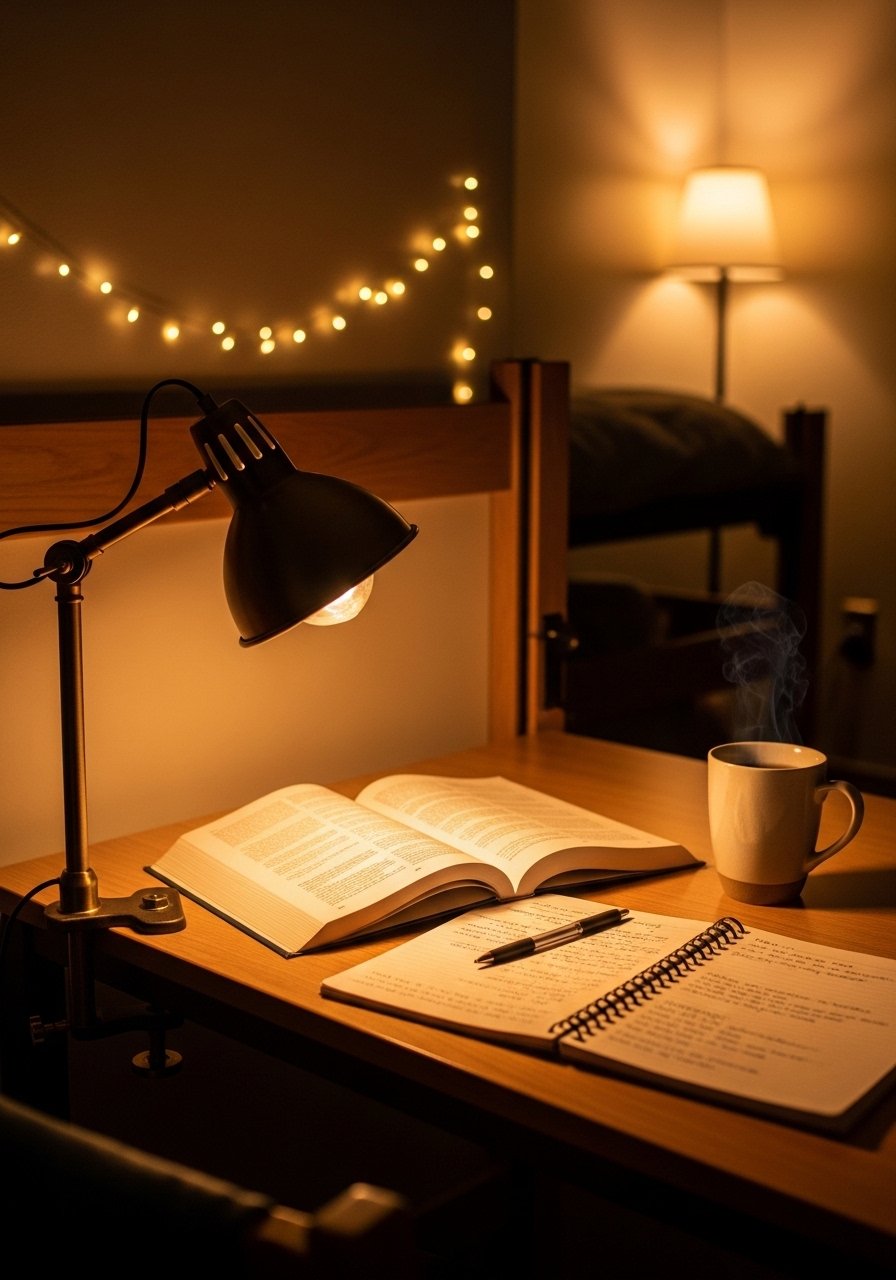
The light rule I actually use is three small sources, not one big lamp. Start with a task lamp at your desk, a clip-on bedside lamp, and soft string lights for ambient glow. A clamp desk lamp plus dimmable LED string lights gives control without rewiring. For warm tone, pick bulbs labeled 2700K to 3000K. Putting string lights behind a headboard creates an indirect wash that reads warm on camera and in person. It is an inexpensive way to make the room feel lived-in.
Mistake to Avoid: Relying on overhead fluorescent fixtures and ignoring layerable light sources.
4. Small Rug for Zoning and Soft Feet
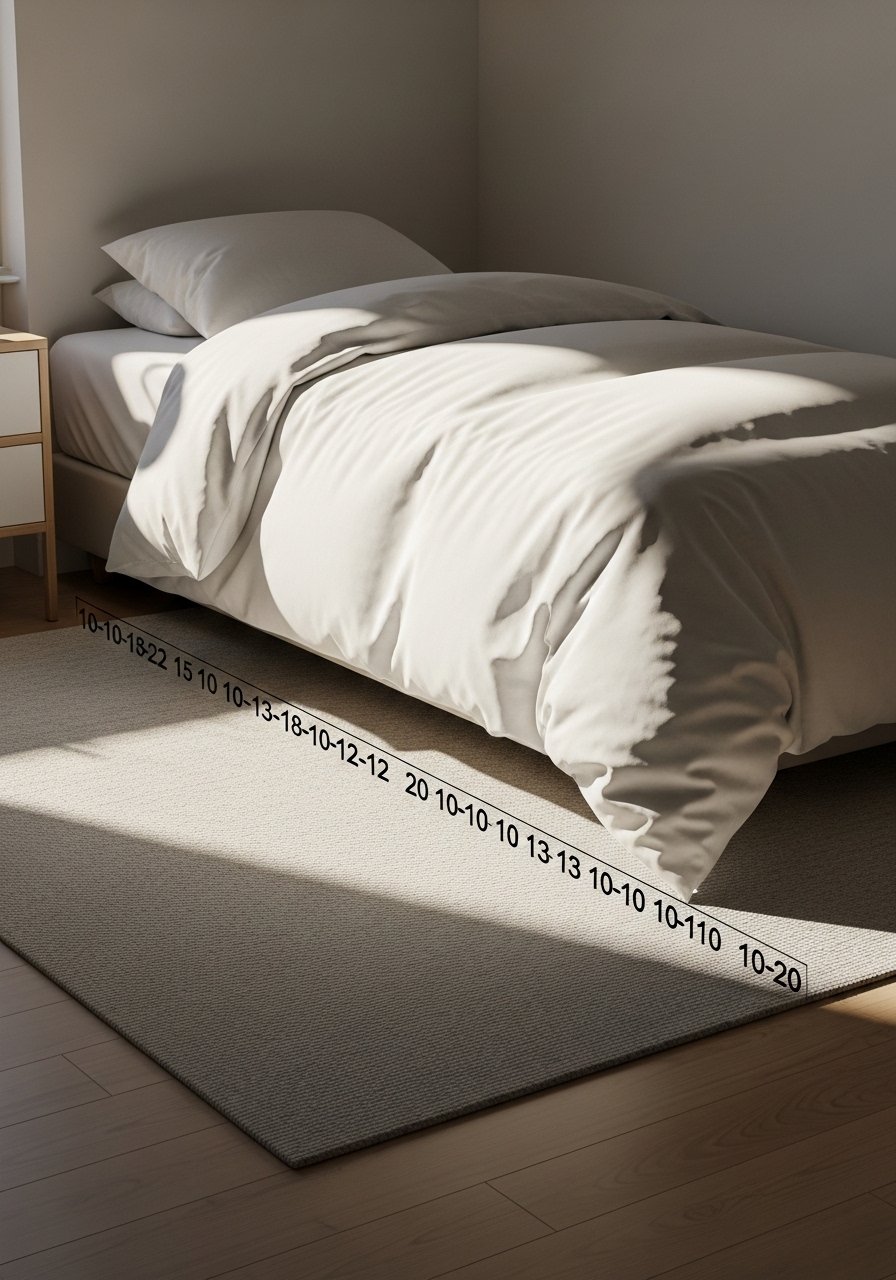
A rug defines the bed and softens cold floors. For a twin setup, choose a rug that extends at least 10 to 12 inches beyond the bed on the long side so the placement reads intentional. Use a thin grip pad so it lies flat in a dorm with little floor transition. I keep to low-pile options for dorms to avoid trips and for easier spot cleaning. A low-pile area rug in a warm tone anchors the room and cuts echo in small spaces.
Mistake to Avoid: Picking a rug that is too small so it looks like an accent rather than a floor zone.
5. Peel-and-Stick Accent Wall Behind Bed
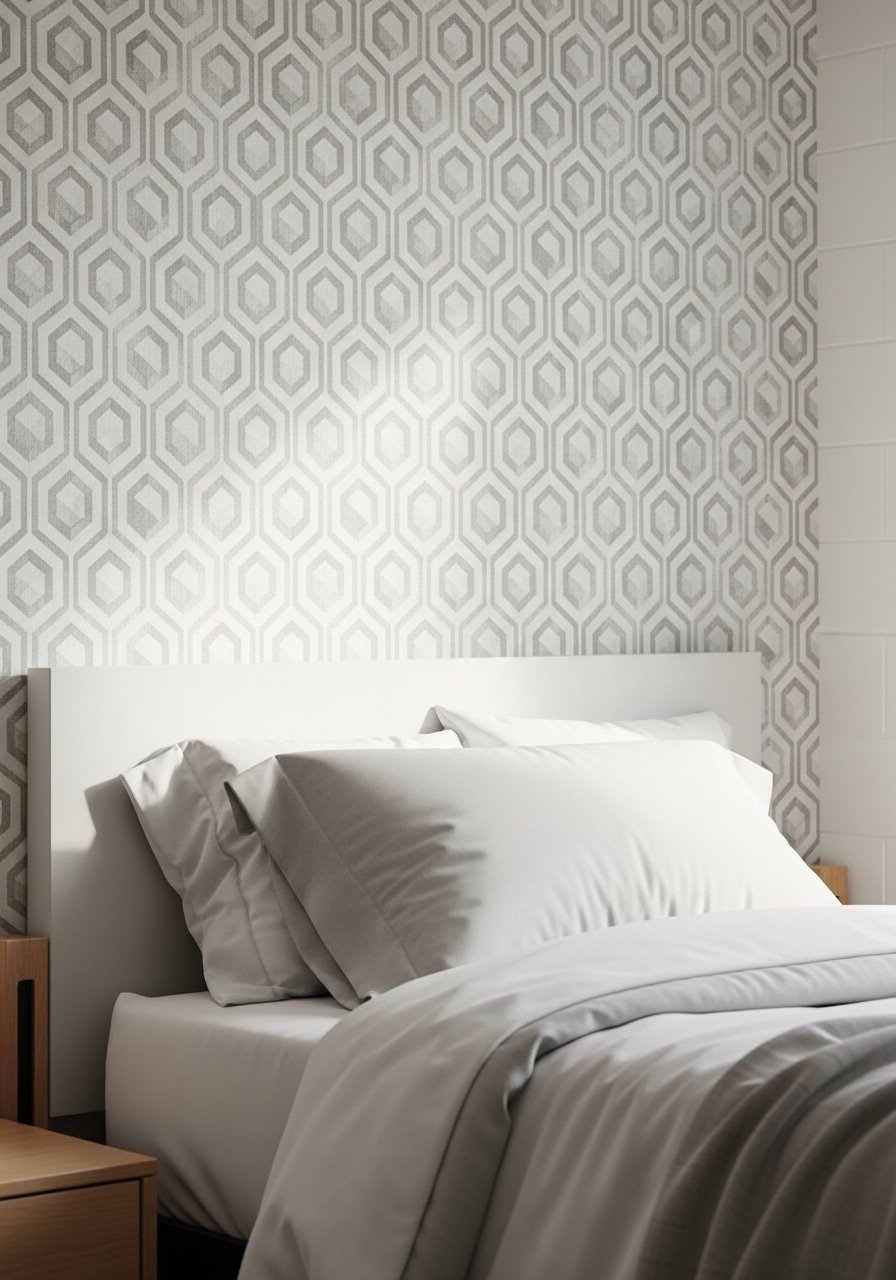
I learned the hard way that scale matters. Small repeating patterns shrink visually in low light, so pick a medium-scale print for a single accent wall. Peel-and-stick wallpaper is renter-friendly and removes cleanly when done correctly. Apply in vertical strips and smooth from the center outward to avoid bubbles. A neutral peel-and-stick wallpaper adds depth without painting. Keep furniture simple in front of it so the pattern can breathe.
Mistake to Avoid: Choosing an overly busy pattern that makes a tiny room feel visually noisy.
6. Oversized Floor Cushion as a Reading Anchor
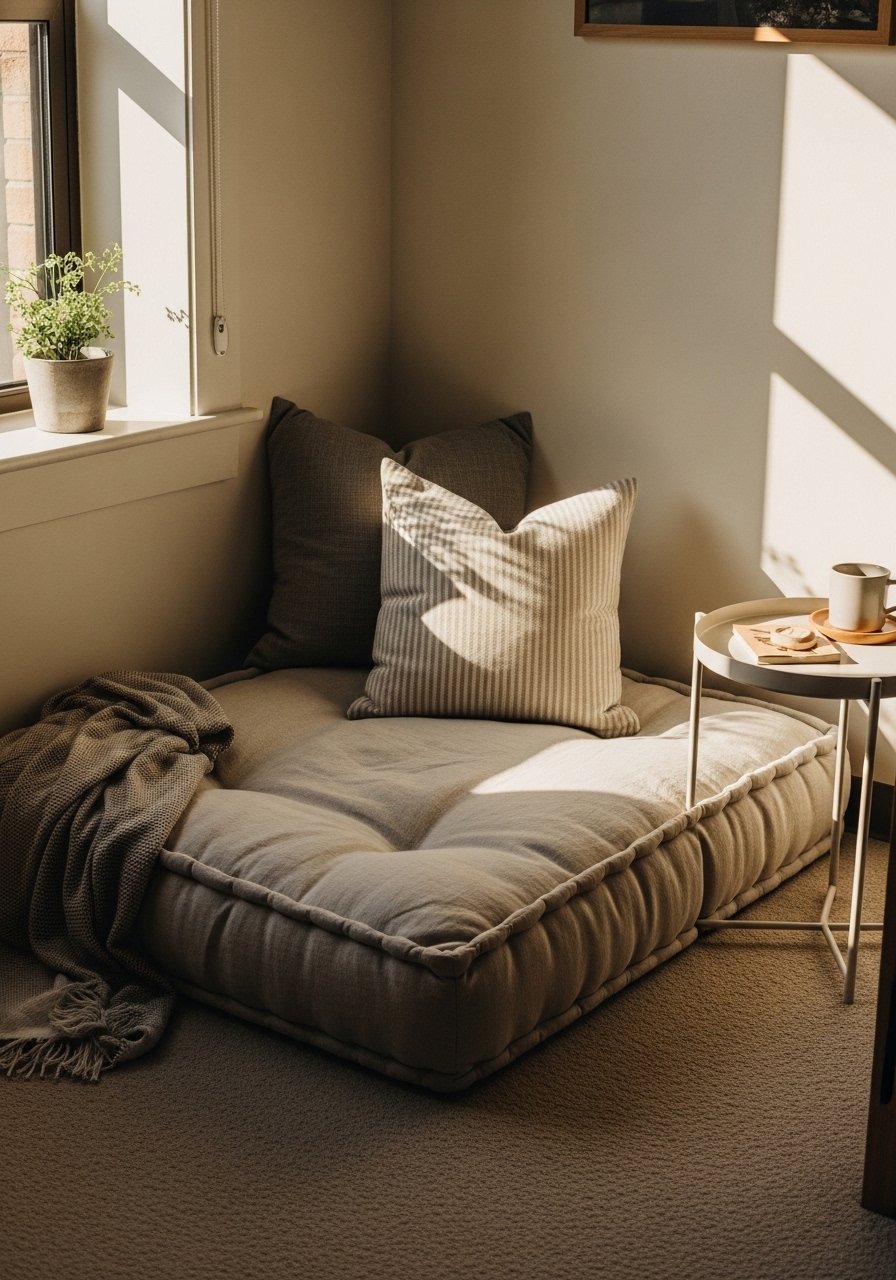
I traded five tiny pillows for one oversized floor cushion and a small side tray, and my reading corner finally worked. An oversized cushion anchors a corner, creates actual seating, and removes the visual clutter of too many pillows. Pair with a linen floor cushion and a thin tray table that doubles as a lap desk. This suits small rooms and shared spaces since it stores upright when not in use.
Mistake to Avoid: Buying multiple small throw pillows that end up in a heap on the floor.
7. Thermal Lined Curtains for Warmth and Quiet
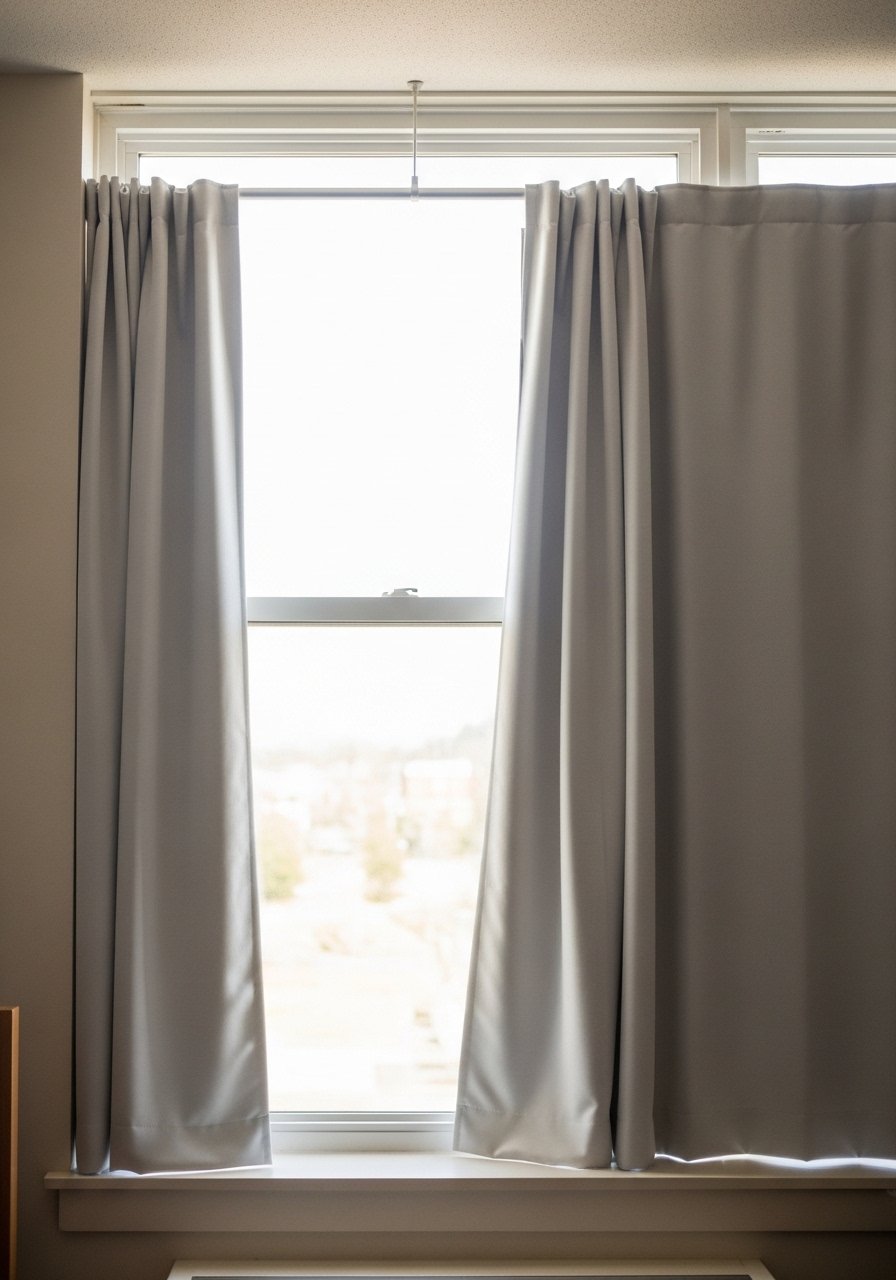
Curtains matter more than I expected for temperature and noise. Adding a thermal liner creates a warm barrier and reduces hallway sound. If you cannot drill, use a tension curtain rod and clip-in thermal liners. For length, curtains that puddle by 1 to 2 inches read cozy, but in a dorm keep them just grazing the floor for cleaning. Thermal liners are an affordable upgrade that also improves privacy.
Mistake to Avoid: Buying sheer panels and expecting them to block cold drafts or absorb street noise.
If any of these ideas have you ready to shop, these are the core items I actually use across most of the setups.
Dorm Cozy Essentials List
Textiles:
- plaid cotton throw (~$25). A patterned throw that hides wear and adds texture.
- sherpa blanket (~$30). For a soft top layer.
- low-pile area rug (~$70-120). Picks up warmth and zones the bed.
Lighting & Hardware:
- dimmable LED string lights (~$20). Soft ambient glow.
- clamp desk lamp (~$25). Bright task light without floor space.
- tension curtain rod (~$18). No drilling, renter-friendly.
Storage & Furnishings:
- linen floor cushion (~$45). Anchors a reading nook.
- under-bed storage bins (~$30). Maximize space.
8. Storage Ottoman That Pulls Double Duty
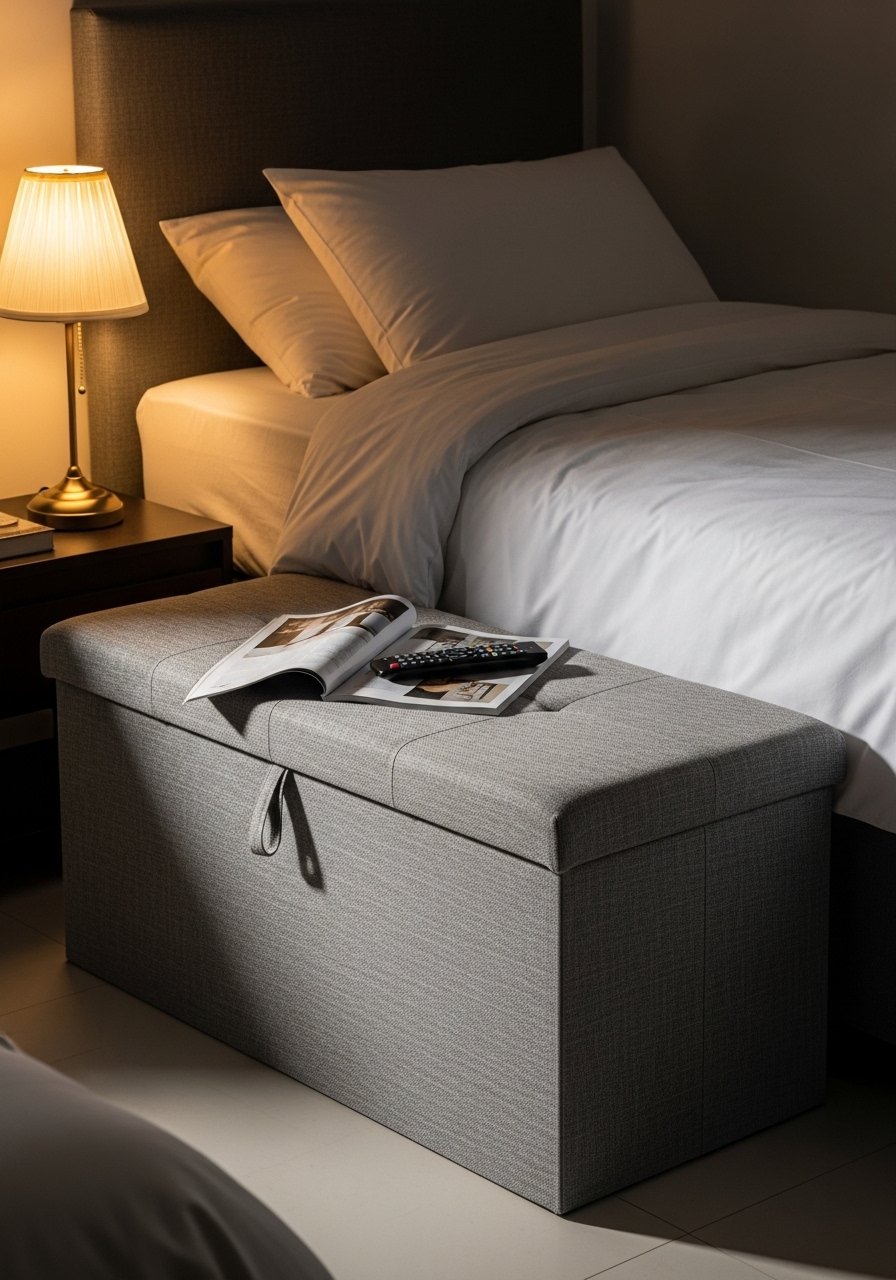
I used a storage ottoman instead of a bedside table for two seasons. It provides seat, surface, and hidden storage. Look for one with a flat top so you can place a tray for drinks. An upholstered storage ottoman works in small rooms where a chair would overcrowd the floor plan. Choose a light fabric that hides pet hair if you have a cat or dog.
Mistake to Avoid: Picking a soft ottoman with an unstable lid that tips when used as a table.
9. Command-Friendly Gallery Wall That Tells a Story
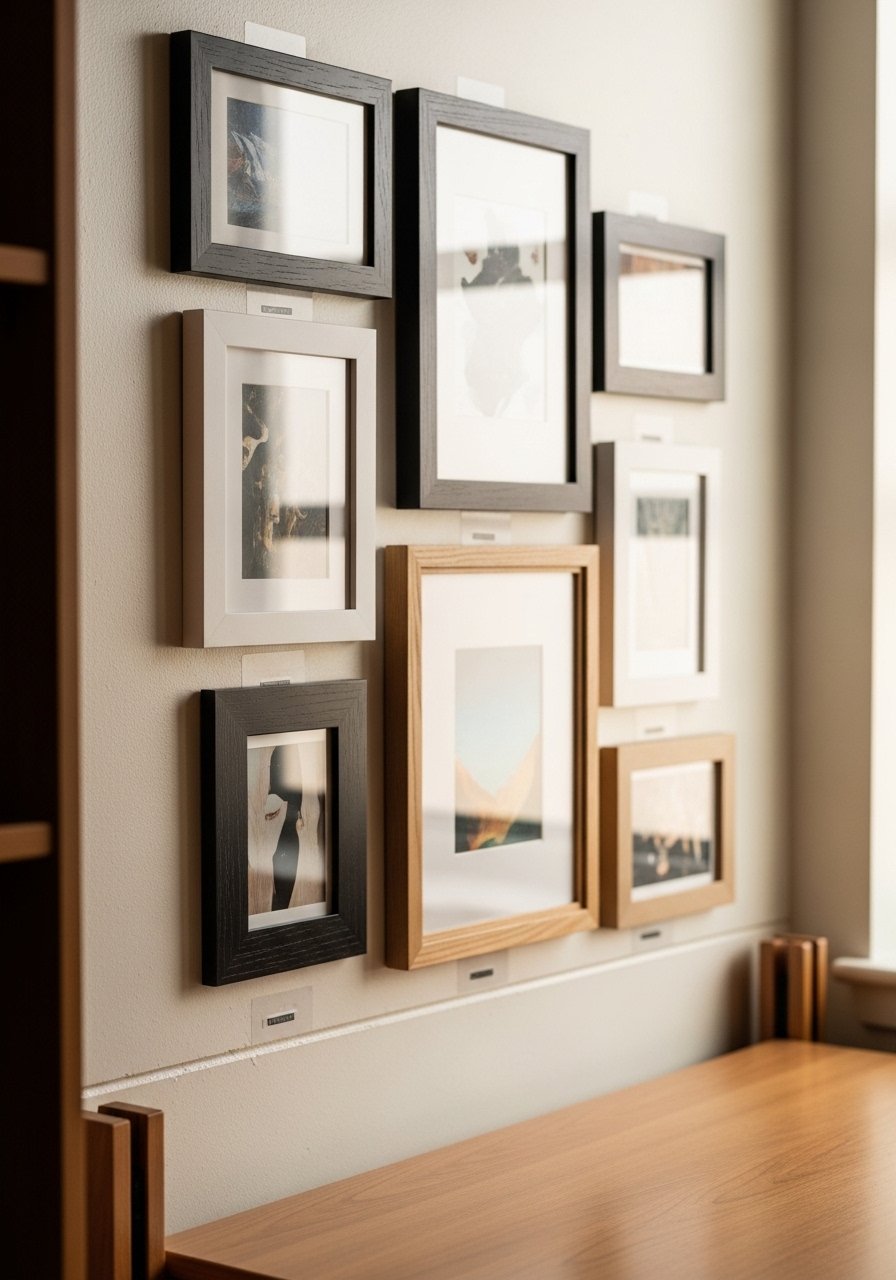
I settled on a three-row gallery layout and never regretted it. Use odd-number clusters and keep 2 to 3 inch gaps between frames so the group reads cohesive. For rentals, black picture frames with adhesive hanging strips make it removable. Mix prints with a mirror or a small shelf to break up flat imagery. This creates a personal corner without nails or permanent changes.
Mistake to Avoid: Hanging frames too far apart so the wall looks scattered instead of composed.
10. Low-Light Plants and Lifelike Fakes

Plants improve the sense of life even when your windows are small. If your window faces a hallway, pick low-light options like a snake plant or a ZZ plant in a ceramic pot. For those who travel, a faux greenery arrangement provides the look with no upkeep. Use lightweight planters with saucers so direct watering does not damage rental surfaces.
Mistake to Avoid: Choosing large, high-water plants that end up drooping in neglected corners.
11. Under-Bed Organization That Actually Works
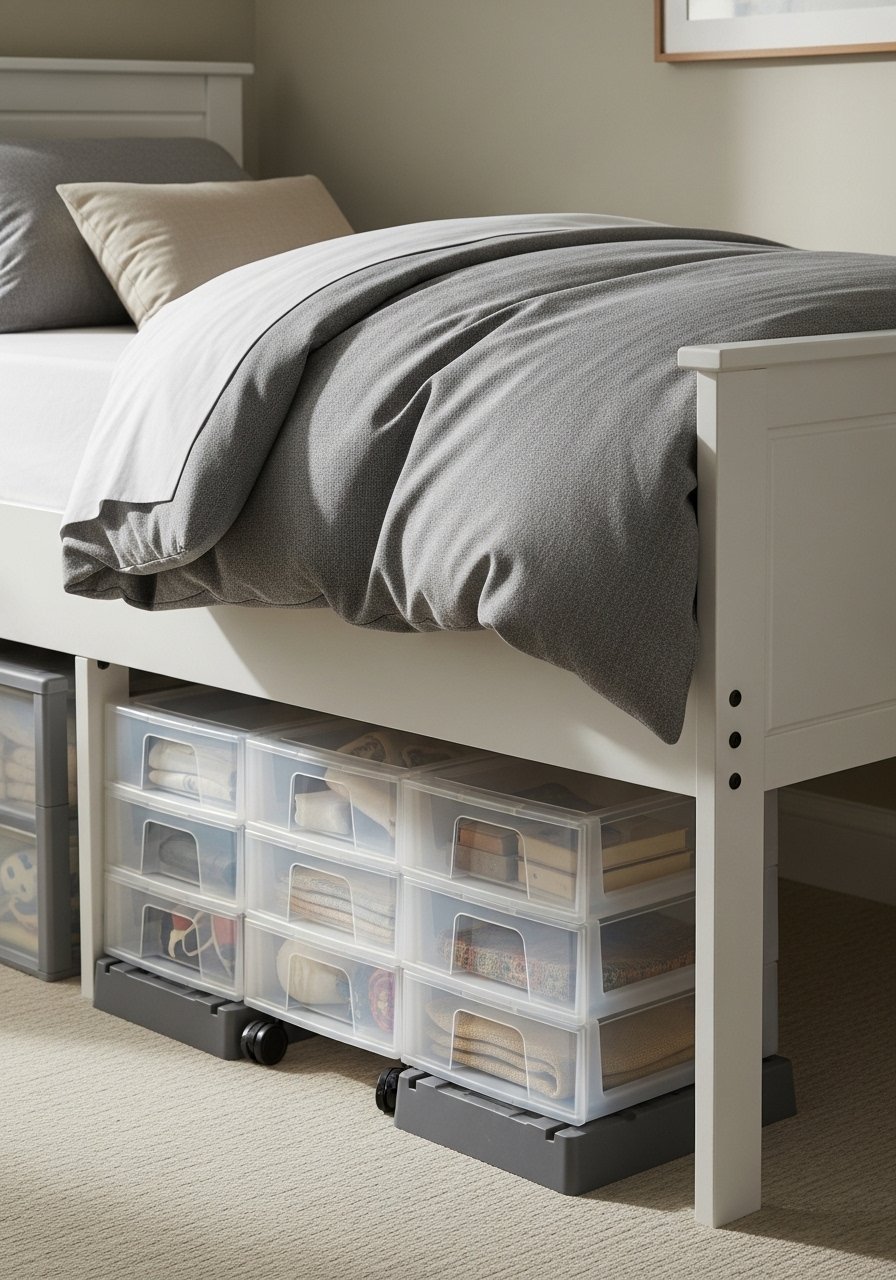
Raising the bed by 4 to 6 inches creates space for rolling bins that keep winter clothes accessible. Clear bins let you see contents at a glance, which matters when you are short on closet space. For twin XL setups, measure from floor to mattress base before buying. A set of under-bed storage bins is inexpensive and keeps clutter off the floor, making the room feel larger.
Mistake to Avoid: Buying bins that are too tall so they do not slide under the bed and end up stored awkwardly.
12. Warm Metal Accents for a Balanced Finish
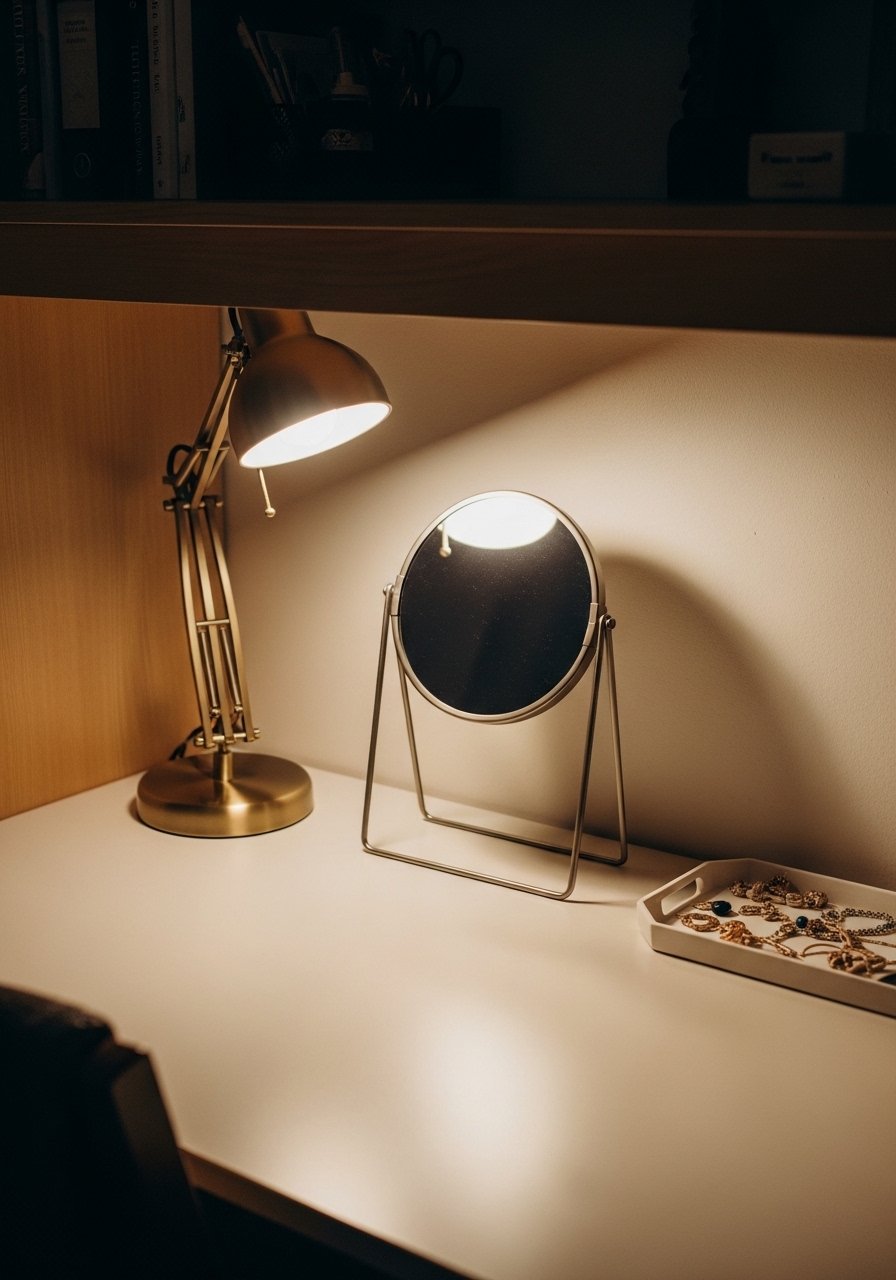
A small brass lamp or a warm-finish mirror warms the palette immediately. Pick one focal metallic and keep other metals muted to avoid visual noise. A brass task lamp on the desk gives a cozy reflection on wood surfaces. Budget alternatives like matte copper or bronze finishes read similar but cost less.
Mistake to Avoid: Mixing too many metal finishes so the room feels mismatched rather than intentional.
13. Bed Risers to Create a Headboard Nook
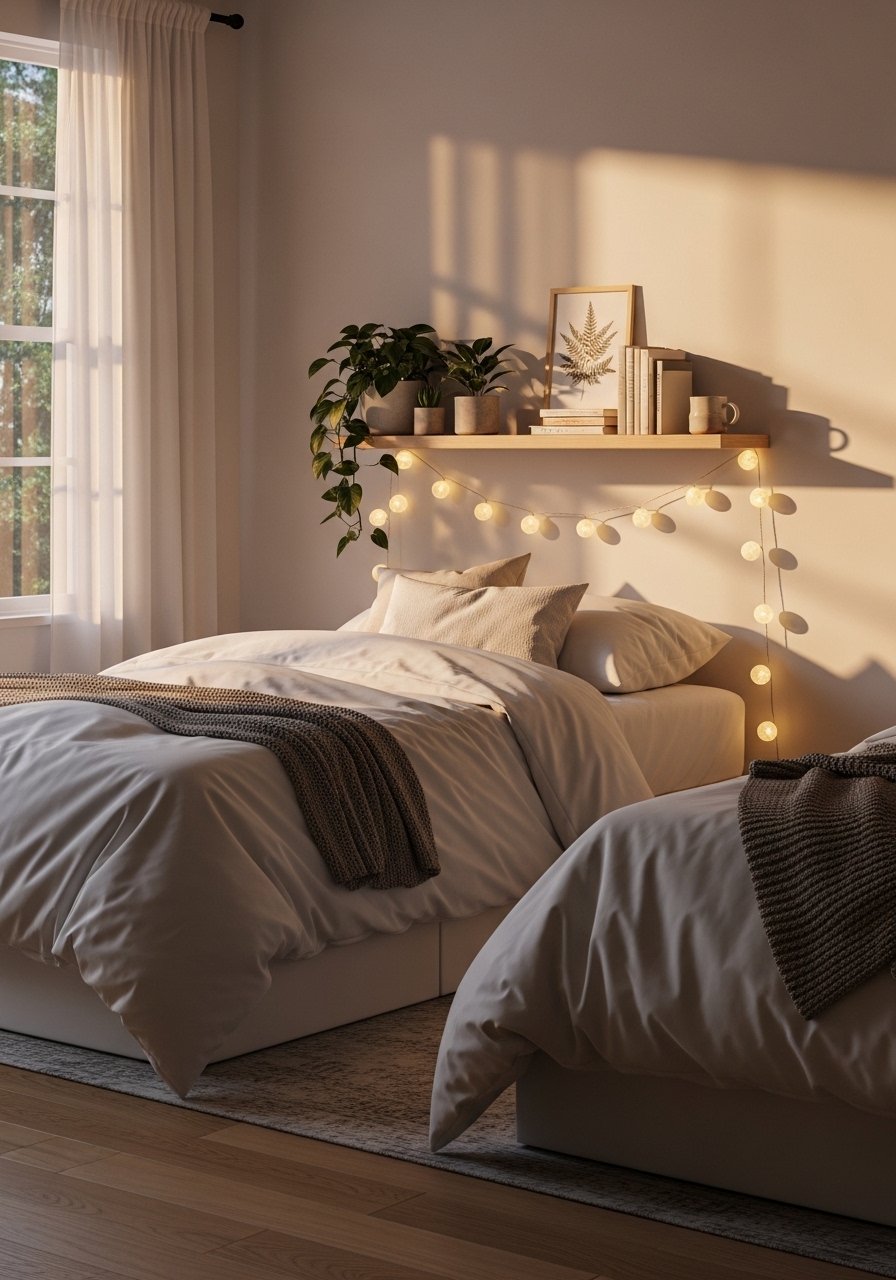
Elevating the bed by about 6 inches gives room for a low headboard shelf or string lights tucked behind it. This creates a soft backlight and a sense of depth without bulky furniture. Use stable bed risers rated for your mattress and frame weight. The little lift also allows luggage or storage boxes to slide neatly under the bed.
Mistake to Avoid: Over-lifting the bed so stairs and mattress access become awkward.
14. Layered Bedding: Flannel, Duvet, and a Throw
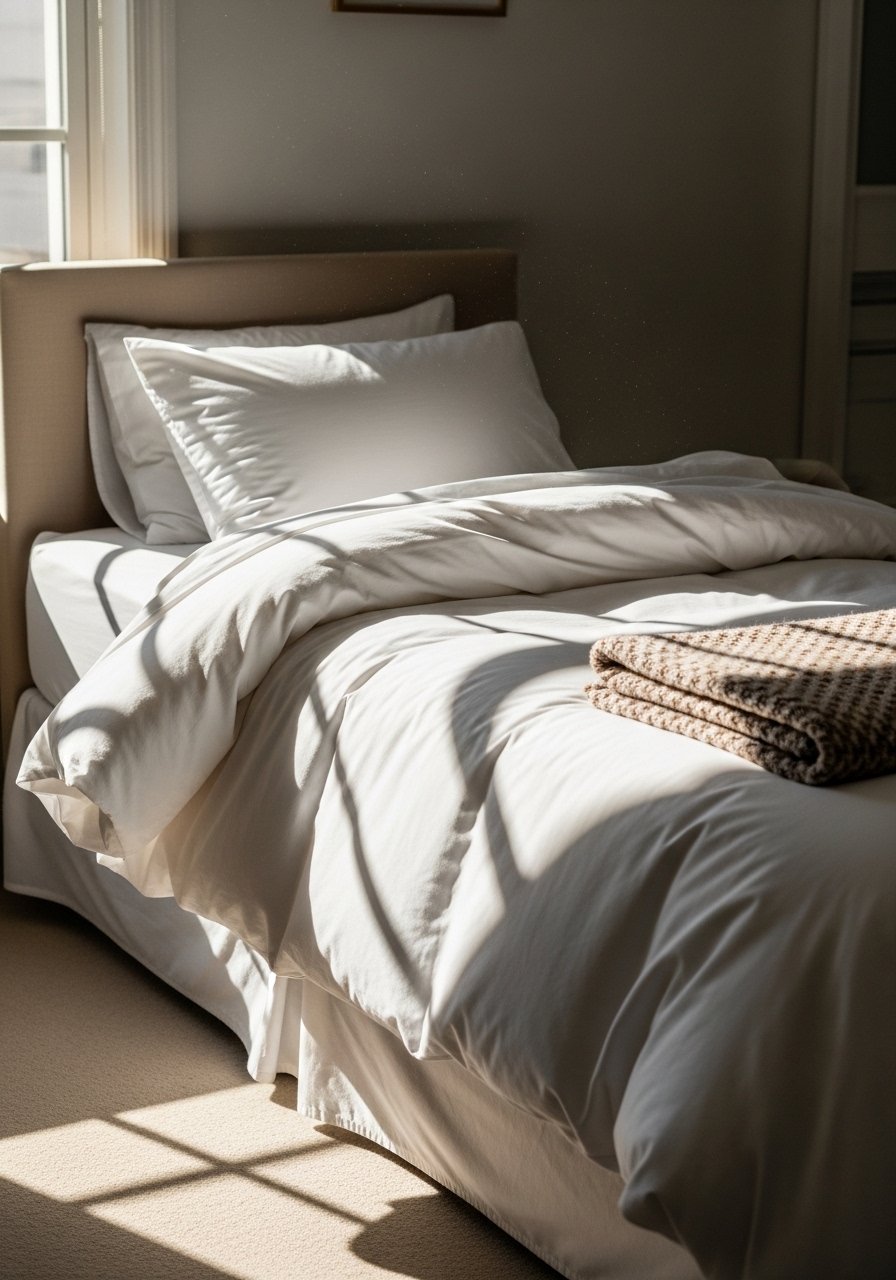
Some nights the campus heat is low, so I added flannel sheets under a down-alternative duvet. Flannel gives immediate warmth without adding bulk, and a medium loft duvet keeps mornings simple. A down-alternative duvet insert is easier to launder in dorm conditions. For visual balance, fold the duvet back to show a bit of the flannel top sheet, which reads intentional and cozy.
Mistake to Avoid: Using heavy quilts year-round that trap heat and make the bed feel suffocating.
15. Compact Reading Nook With Clip Lamp and Tray
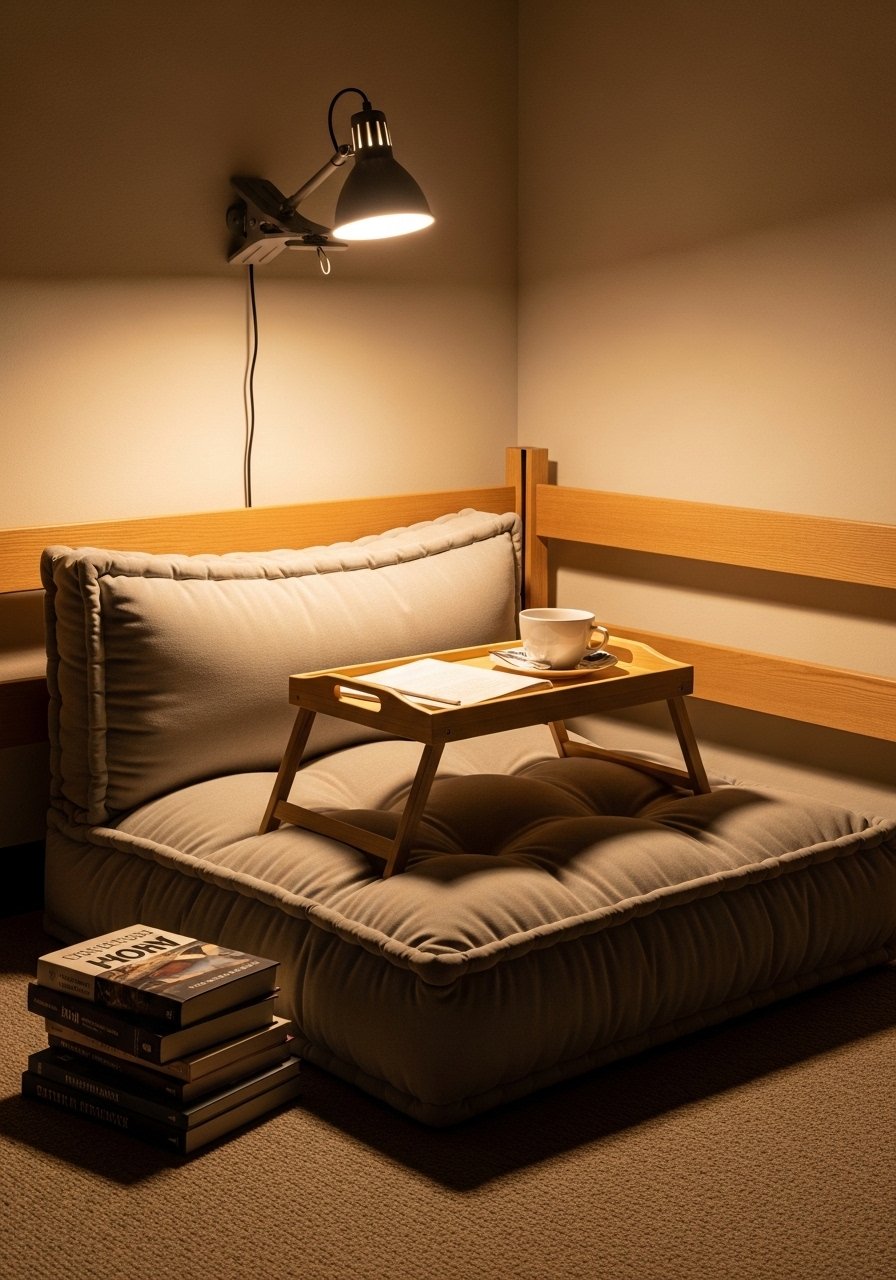
I carved a reading nook into a window corner with a clip-on lamp and a slim lap tray. A clip lamp clamps to a shelf or headboard and focuses light without a bulky floor lamp. Add a small lap tray for coffee and notes. This setup fits into corners that would otherwise be wasted, and it makes late-night study feel like a ritual.
Mistake to Avoid: Relying on a desk chair for reading so you never actually use the space as a cozy retreat.
Dorm Room Cozy Habits
Thin layers read warmer than one heavy layer. Swap heavy covers for a flannel sheet and a medium duvet, and add a sherpa blanket for evenings. It is easier to regulate comfort this way.
Grab dimmable LED string lights and use them behind a headboard, not in front. The indirect glow warms paint and textiles without glare.
Most people hang art centered on the bed. Try offsetting the gallery by a few inches toward the door so it lines up with sight lines when you walk in. Use black picture frames with adhesive strips for an instant swap.
If you have a pet, choose washable textiles and a sturdy storage ottoman rather than open shelving. It keeps claws and curious paws away from fragile items.
When in doubt, pick one warm accent color and repeat it in three places, such as a throw, a pillow, and a small lamp. A coordinated repetition grounds the room without matching every piece.