
I kept buying bulky cardio machines and then tripping over them two weeks later. Each time I moved apartments I swore I would be smarter, then I would see a sale and bring home another hulking box. The moment I started thinking vertical, foldable, or dual-purpose, everything fit. This list is what I use after trying this in three rentals, for small living rooms, shared bedrooms, and anyone who needs a workout that disappears when guests arrive.
These ideas lean modern and renter-friendly, not permanent garage installs. Most require basic tools or a single drilling session, and budgets range from under $50 for bands to a few hundred for folding rigs. I note exact clearances and fold-flat depths where it matters so you can measure your space before buying.
1. Fold-Up Wall Bench That Disappears
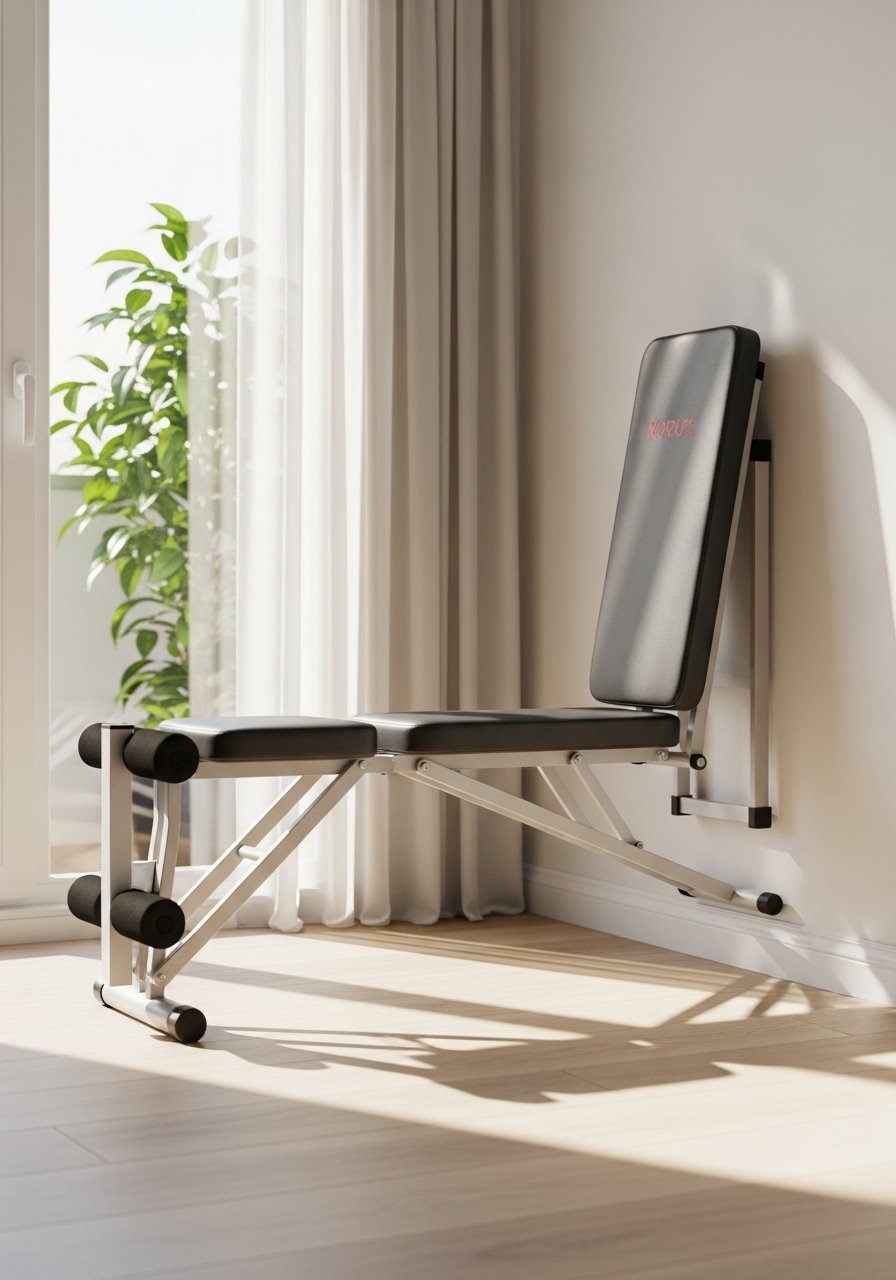
A fold-up bench works because it creates a stable horizontal surface for presses and step-ups, then tucks flush against the wall when you are done, saving about 12 to 16 inches of floor depth. It reads clean when closed, so it fits modern, minimal styling and small apartments. This is a moderate-skill install, usually two studs and a few lag bolts, and the bench should fold to 4 inches deep to sit unobtrusively. Pair with a folding wall bench for an under-the-window spot, and add a low-profile exercise mat if you do floor work.
Mistake to Avoid: Buying a cheap bench that does not lock when open. It should click securely into place.
2. Vertical Dumbbell Tower for Tight Corners

A vertical rack uses height instead of footprint, so a 14-inch wide tower can hold several pairs of weights safely. Visually it reads like a deliberate sculptural object, not clutter. I mount mine against drywall with a stud-sited backboard for extra support. Fit-wise this suits petite rooms and renter setups because it only needs a 2-inch clearance from the wall edge and a 30-inch ceiling height for taller kettlebells. Try a vertical dumbbell rack that stacks plates or kettlebells, and use felt floor pads underneath to protect flooring.
Mistake to Avoid: Lining up dumbbells on the floor. That wastes visual space and trips people.
3. Door-Anchor Band Station That Hides in a Drawer
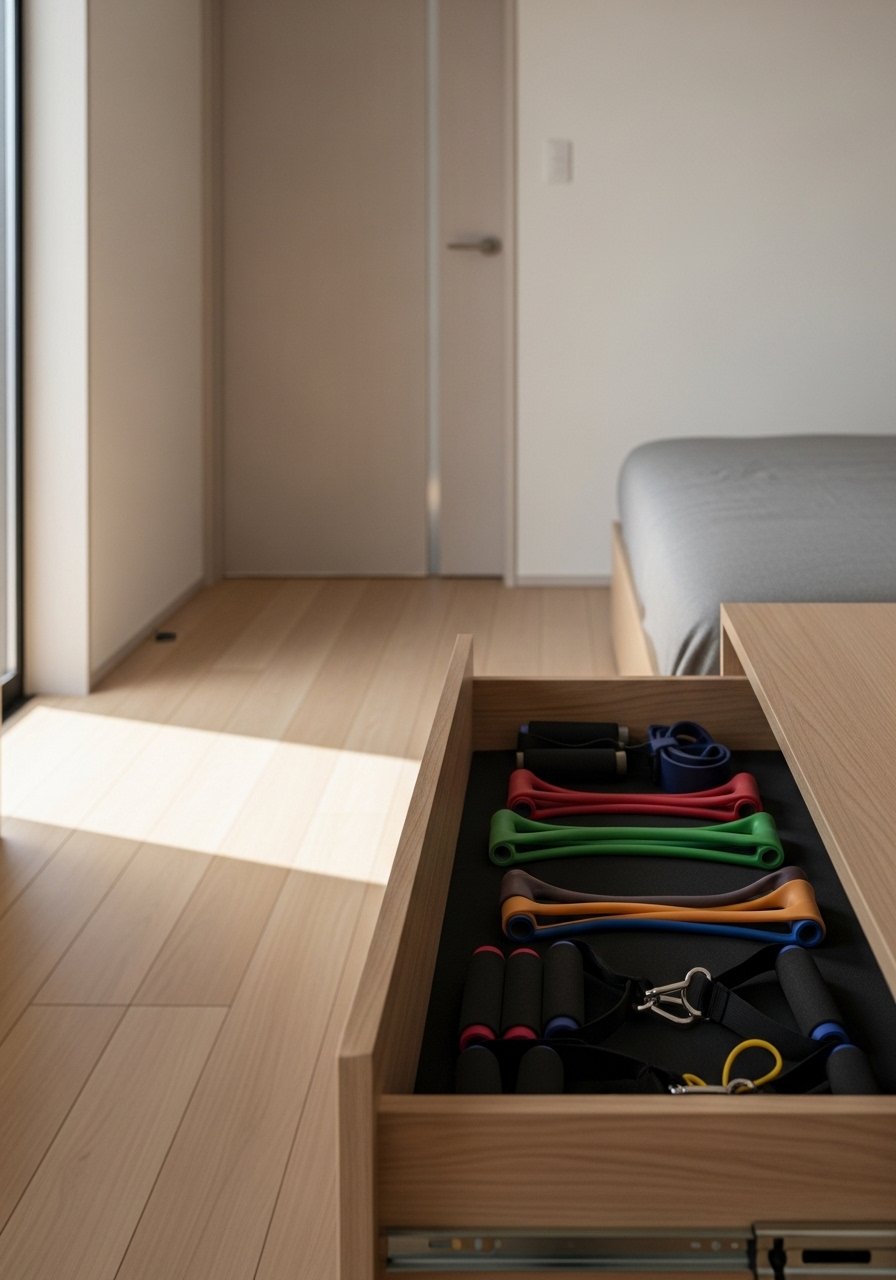
Resistance bands give full-body options without weights, and a door anchor takes almost zero space. I keep a set in a long drawer so my workout is literally five seconds away. Choose a kit with 3 to 5 tension levels so you can match progress, and label bands by resistance so you do not guess mid-set. Bands fit anyone from beginners to seasoned lifters when used in higher rep ranges. I use a resistance band set with a fabric travel pouch so it stays tidy.
Mistake to Avoid: Anchoring bands on hollow doors. Use the door frame or a reinforced anchor point.
4. Full-Length Mirror With Slim Shelf for Gear
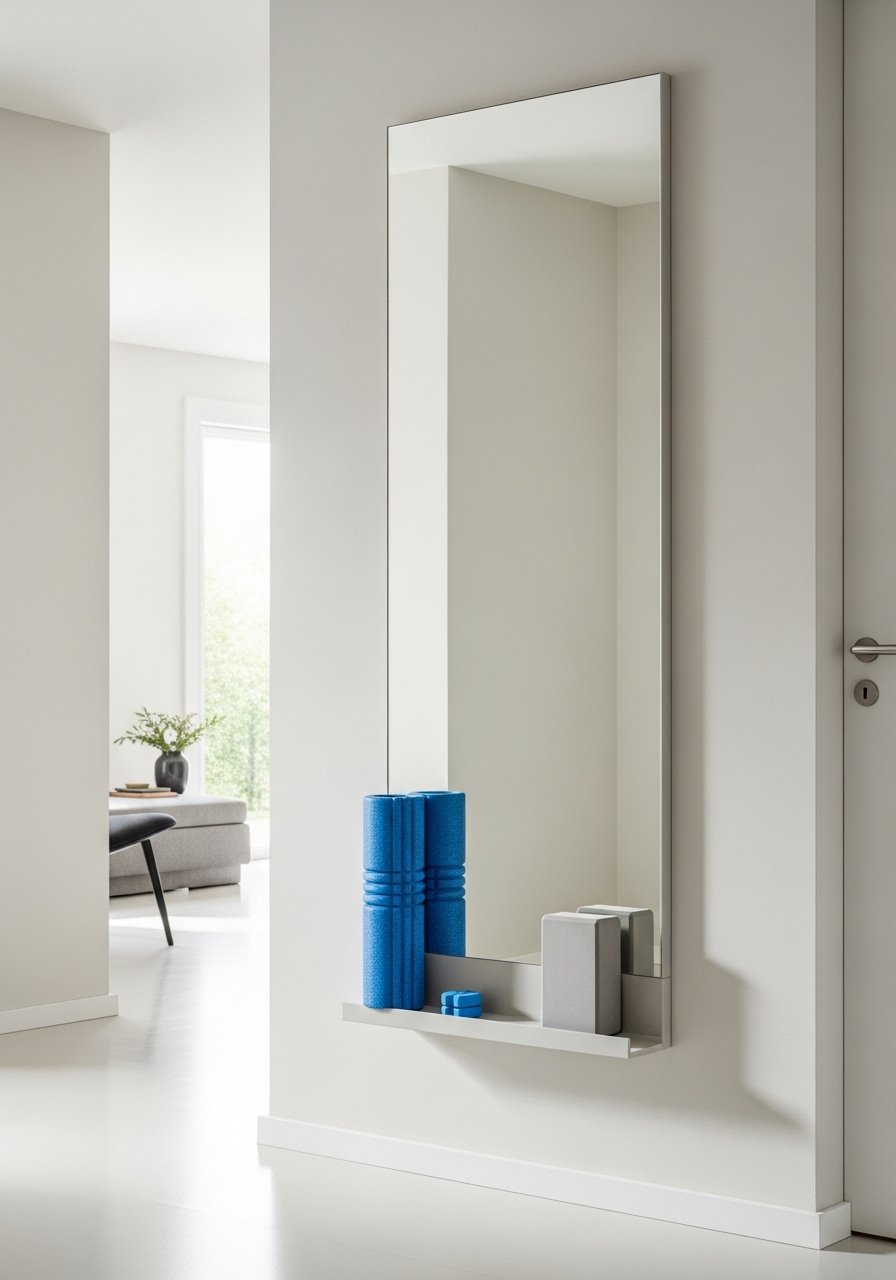
A mirror does double duty, giving you a visual check for form and reflecting light so the room feels bigger. Pick one with a shallow shelf or integrated hooks so small tools live attached but the profile stays under 3 inches. For visual balance, hang the mirror at eye-center about 60 to 66 inches from the floor depending on your height. This suits people who want live feedback and a cleaner visual line in small living rooms. I recommend a full-length mirror with shelf that can be wall-mounted or leaned.
Mistake to Avoid: Placing the mirror where glare hides your form. Aim for indirect natural light.
5. Convertible Storage Ottoman That Doubles as a Plyo Box
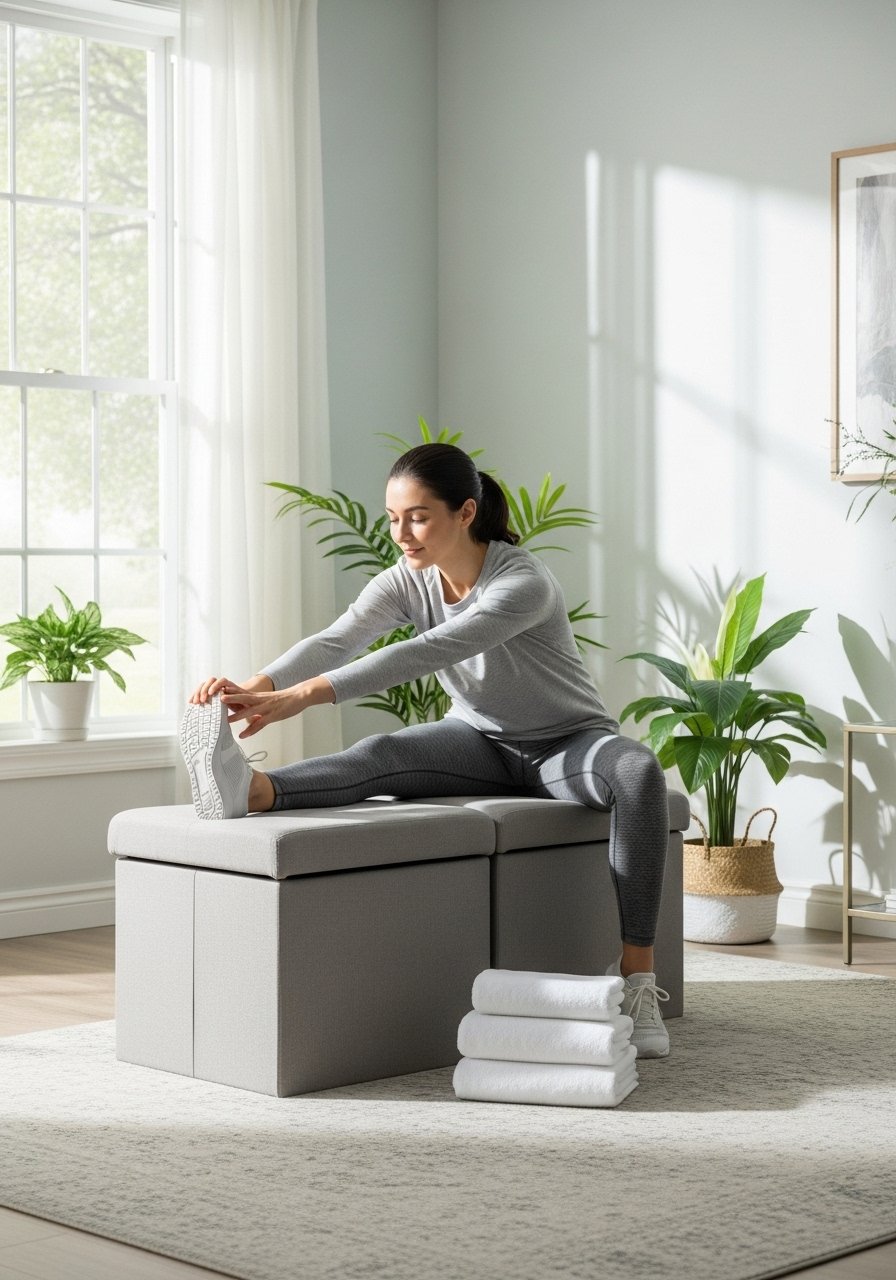
Furniture that moves between seating and workout platform saves space and looks intentional. A storage ottoman with a firm, non-slip lid can serve as a low plyo box or step, and its interior hides bands and sliders. For safety, the top should be at least 16 inches wide and grippy. This approach fits shared living rooms and roommates because nothing screams "gym" when guests arrive. I use a storage ottoman bench for quick circuits and to store jump rope and straps.
Mistake to Avoid: Using a soft-top ottoman for jumps. It should be firm and stable.
6. Under-Desk Treadmill That Stores Under the Couch
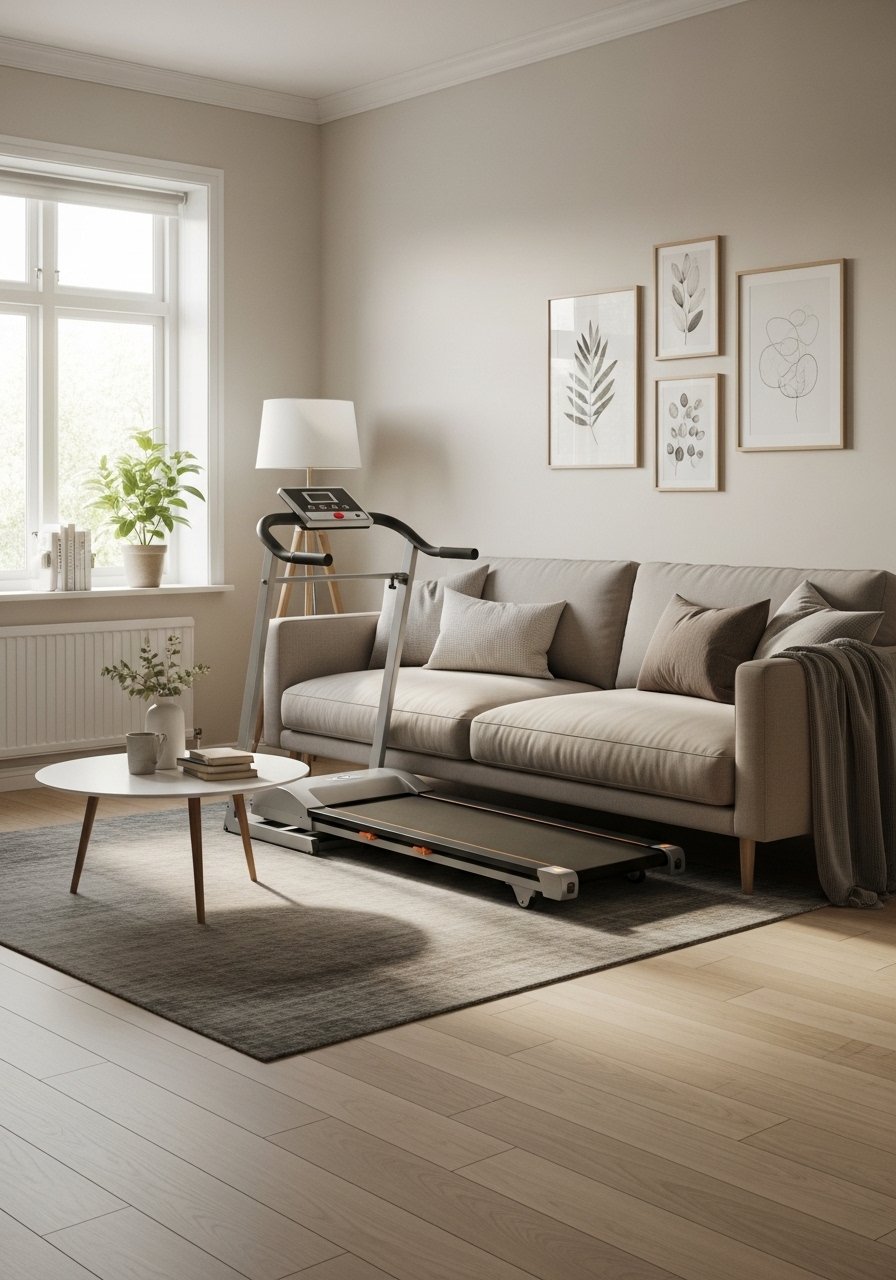
An under-desk treadmill is low-profile and can roll under furniture, making daily walking or incline intervals possible without a dedicated room. Pick a model that folds to under 6 inches in height so it truly stashes away. It fits apartment layouts where full treadmills are impossible, and it is ideal for people who do short sessions frequently. For higher-intensity runs, a full folding treadmill works if you have a closet that can handle a 35 to 40 inch unit. Try a folding treadmill that lists collapsed depth in its specs.
Mistake to Avoid: Buying a treadmill that does not list collapsed depth. Measure your storage spot first.
7. Ceiling Anchor for Suspension Training
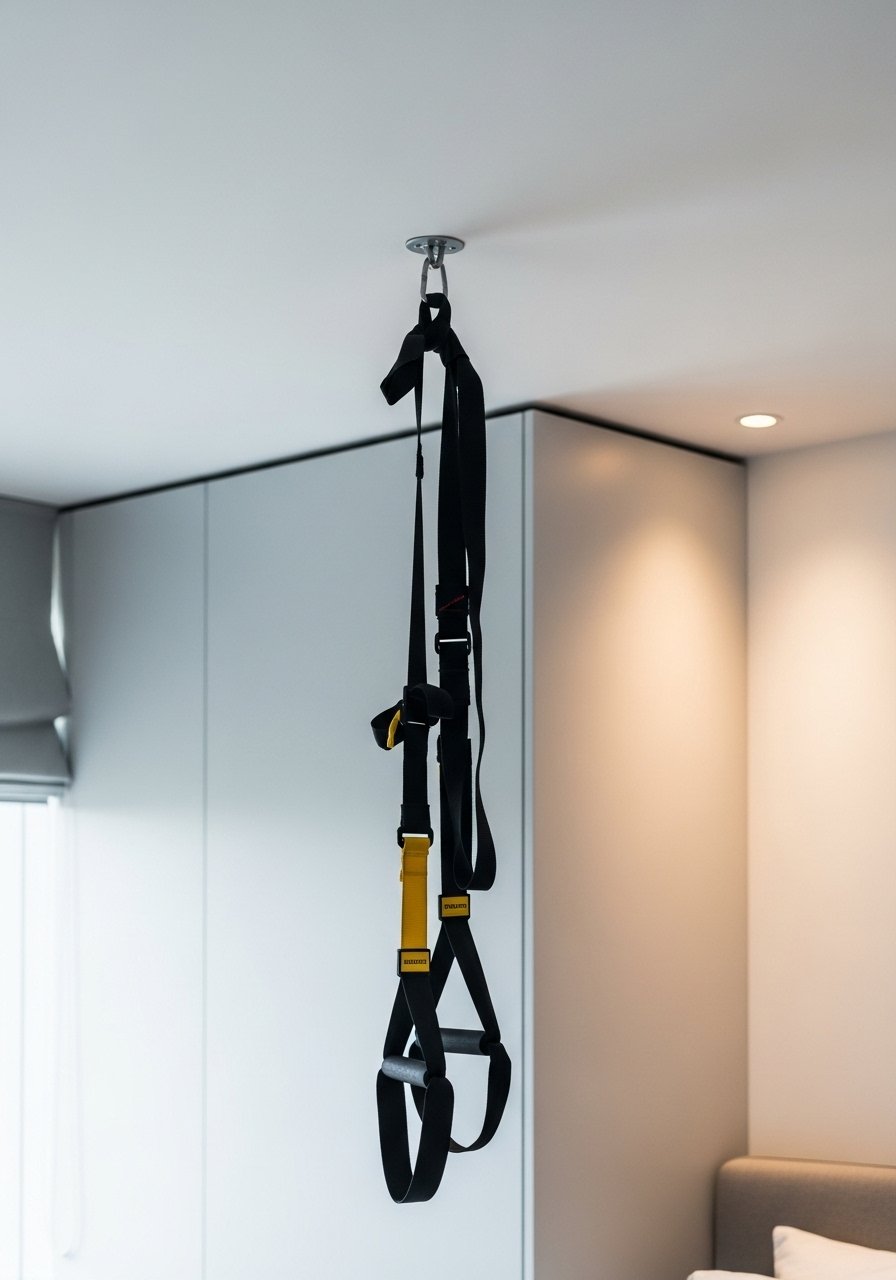
A ceiling-mounted anchor pulls everything up out of the way and gives you full-body suspension work while opening floor space. Mount the anchor to a joist at around 84 inches for comfortable hanging length, or use a short chain to fine-tune. This is a slightly higher-skill install but it frees wall and floor real estate. Suspension trainers are scalable, so they work for newcomers and strength-focused athletes. I like a ceiling suspension trainer kit that includes a carabiner and quick-link hardware.
Mistake to Avoid: Anchoring into drywall alone. Always locate a solid joist or beam.
If any of these got you picturing rearranging your whole living room, here are the actual products I use most often.
Space-Saving Home Gym Gear
Strength Essentials:
- vertical dumbbell rack (~$75-200). Holds multiple weights in one narrow footprint.
- adjustable kettlebell (~$40-120). Swaps loads without multiple kettlebells.
Cardio & Movement:
- folding treadmill (~$300-800). Check collapsed depth before you buy.
- under-desk treadmill (~$200-500). Best for walking and low-impact cardio.
Small Tools & Storage:
- resistance band set (~$15-40). Multi-level tension fits every routine.
- foam roller (~$20-45). Store vertically in a closet or corner.
Mounts & Hardware:
- folding wall bench (~$120-350). Look for locking hinges.
- ceiling suspension trainer kit (~$25-80). Include proper mount hardware.
8. Foldaway Squat Rack Mounted Behind a Door
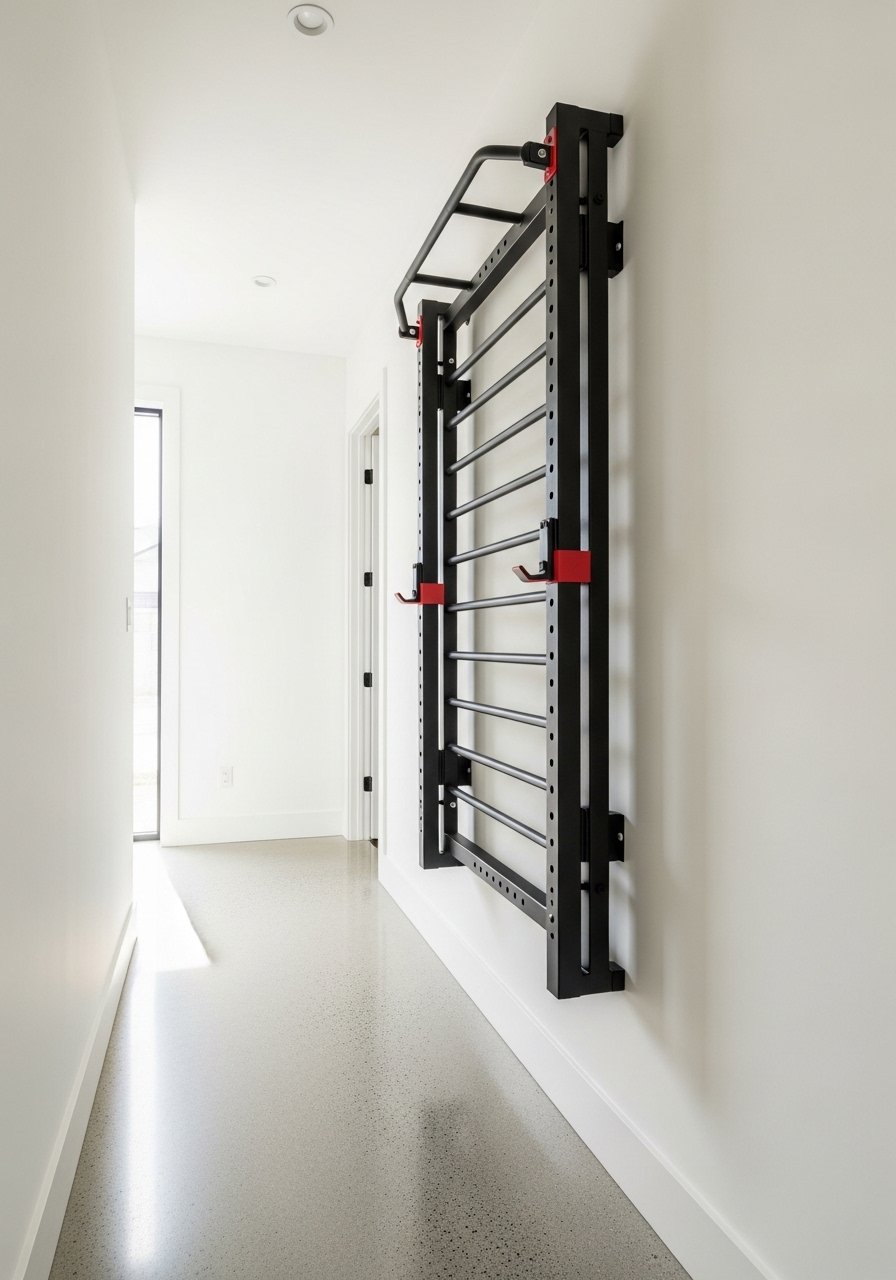
A foldaway rack converts a hallway or spare wall into a strength zone when needed then folds flat to reclaim space. The trick is mounting to studs and leaving about 24 inches of clearance for the bar when in use. This suits garage-adjacent apartments or urban dwellings where walls are at a premium. It is higher-skill and higher-budget, but for someone who wants heavy lifting without a dedicated room it is the cleanest answer. A folding wall-mounted squat rack with secure pins lets you fold it in under a minute.
Mistake to Avoid: Installing without measuring bar clearance. Bars need room to move and for safety.
9. Compact Cable Pulley That Hangs on the Wall
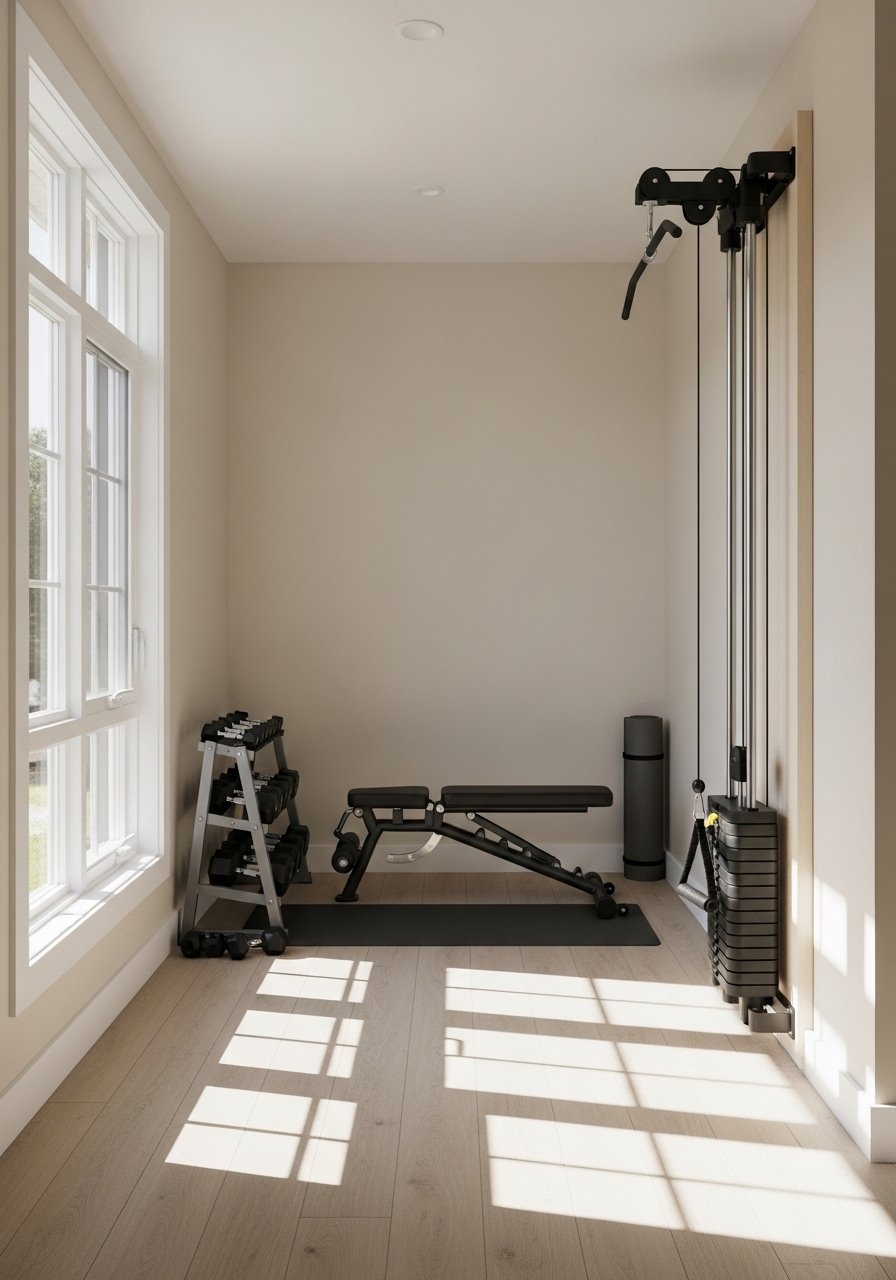
A single-point cable pulley replicates many gym machines while taking the footprint of a small bookshelf. Mount it at adjustable heights to do rows, lat pulls, and tricep work. Look for systems rated for 200 pounds and that require a 14-inch clearance from the wall for full range of motion. This is ideal for intermediate lifters who want controlled tension and for renters if you use a removable backboard. Consider a compact cable pulley that ships with anchor plates.
Mistake to Avoid: Buying a pulley with vague weight ratings. Check the max load for safety.
10. Adjustable Kettlebell That Swaps Plates

An adjustable kettlebell replaces an entire rack of bells by letting you dial weight up or down in 5 to 10 pound increments. It is function-forward and compact, and it fits high-intensity intervals and mobility work. Expect a small learning curve for locking plates, but once dialed it saves a lot of space. Use a adjustable kettlebell that lists secure locking mechanisms and test it with light swings first.
Mistake to Avoid: Not checking the locking mechanism under load. Test before a full workout.
11. Pegboard Wall for Mats, Ropes, and Small Gear
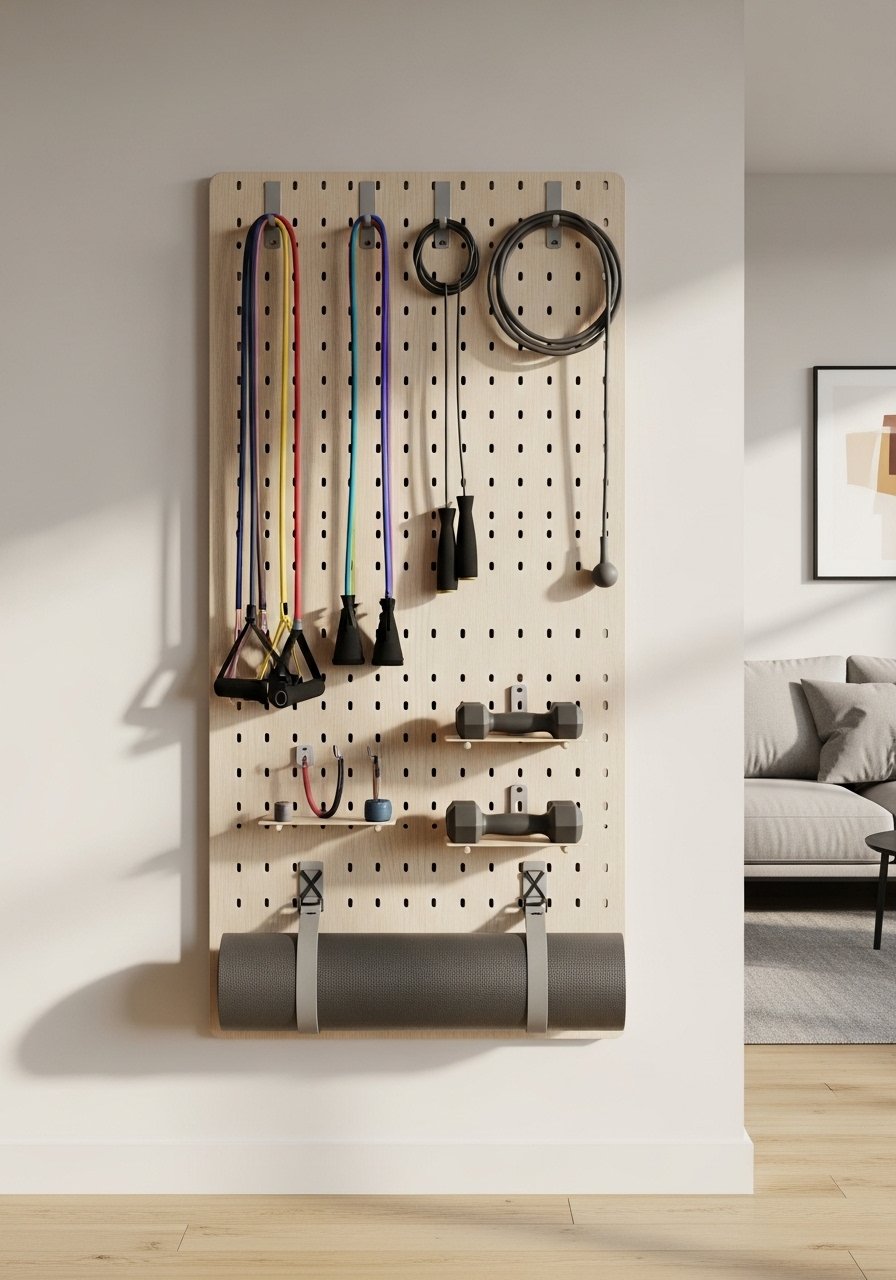
A pegboard system makes everything visible and off the floor, which reduces the "gym mess" feeling. Layout hooks in a 2:1 vertical to horizontal ratio so heavier items sit lower. It is inexpensive and renter-friendly when mounted on a thin backboard. Pegboards are great for people who like routine and quick cleanup. I use a wall pegboard organizer and label hooks for each item.
Mistake to Avoid: Clustering heavy items at the top. Keep weight low and balanced.
12. Drawer Storage for Mats and Rollers

If you have a deep closet, install shallow drawers to store a mat and rollers flat, which keeps them from warping and hides the gear. Drawers that are 14 inches deep and 4 to 6 inches tall work best for rolled items. This is a low-cost build for someone with basic tools and it keeps shared spaces tidy. A yoga-mat storage rack can be adapted into drawer form for a neat appearance.
Mistake to Avoid: Jamming mats in vertically so they crease. Roll or lay flat to preserve shape.
13. Smart Speaker and Scene Automation for Quick Workouts
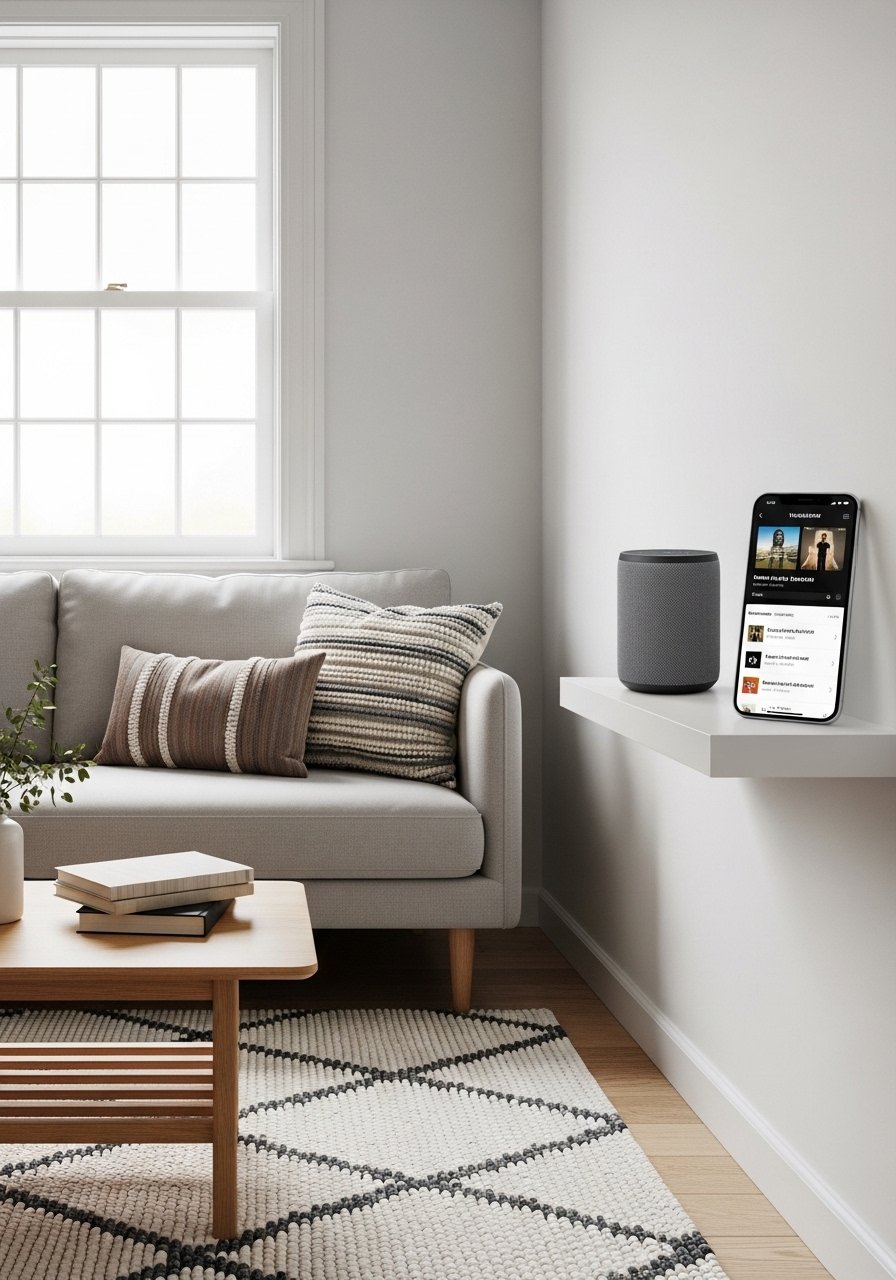
A smart speaker saves time by cueing intervals, playing training tracks, and controlling lights so your space switches to workout mode. Set a scene that dims lamps and moves a plug-in fan on a single voice command. This is low-skill and low-cost and it suits anyone who wants habit cues instead of constant setup. For privacy, place the speaker out of direct sightlines. I use a smart speaker with a simple routine that starts my 20-minute circuit playlist.
Mistake to Avoid: Putting the speaker where it picks up too much echo. Put it on a soft surface to reduce bounce.
Tiny Gym Habit Checklist
Warm up with mobility before heavy moves. Five minutes of joint circles and band pulls prevents awkward strain. A resistance band set is small, portable, and perfect for warm-ups.
Start with one compound movement per session. Pair a fold-up bench press or kettlebell swing with a bodyweight accessory for balance. A folding wall bench lets you set that routine up in under a minute.
If storage feels overwhelming, photograph how it looks when tidy. Keep that image as the standard, then spend five minutes at the end of each session returning gear to its place. A wall pegboard organizer makes this especially quick.
Alternate standing and seated moves to avoid an overly padded routine. Standing moves engage core and balance more than always sitting. An adjustable kettlebell forces standing engagement.
Limit setup time to two minutes. If it takes longer your habits will drift. Keep a storage ottoman bench open for the two things you use most to make start-up immediate.
Try a two-week challenge where the gym disappears after each session. If you can pack away everything in under 90 seconds you have a truly space-saving routine. A folding treadmill or compact gear helps meet that goal.