
I almost threw out the narrow console table that came with my first apartment, until I propped it against the window, added a lamp, and it turned into the only place I could focus. The table was tiny, the lamp too bright, and the cord a mess. Over time I learned the small measurements that actually make a study work, and how one stubborn piece can become the whole room if you set it up right.
After trying these setups in three rentals, I wrote down what repeated itself. These ideas are practical, mostly renter-friendly, and aimed at people with 60 to 200 square feet to spare. Expect simple tools, a couple of smart purchases, and a handful of quick swaps that take an afternoon not a renovation.
1. Compact Sit-Stand Converter For Tiny Desks
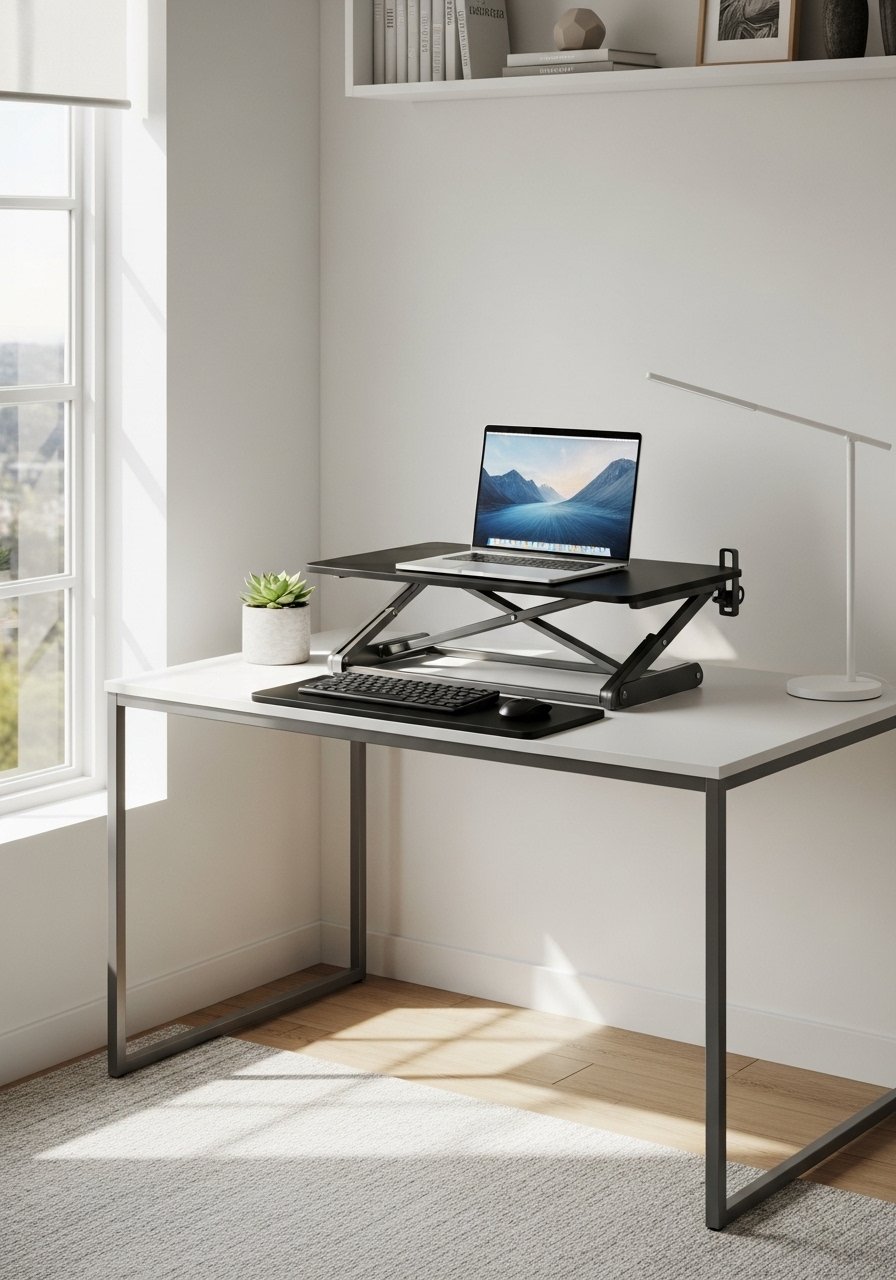
A height-adjustable converter lets you use a 28 to 30 inch desk as a sit-stand surface without buying a new table. I picked one rated for 33 pounds so a monitor, laptop, and lamp fit safely. Keep the monitor top at eye level, roughly 12 to 15 inches from your face, and tilt the lamp 15 degrees so glare drops but the desk stays bright. This setup fits a 24 inch deep desk and keeps floor space clear. Try an adjustable sit-stand converter that locks in place and has gas-spring lift for smooth movement.
Mistake to Avoid: Buying a converter rated under 25 pounds and overloading it with dual monitors.
2. Layered Lighting With Warm Bias Strips
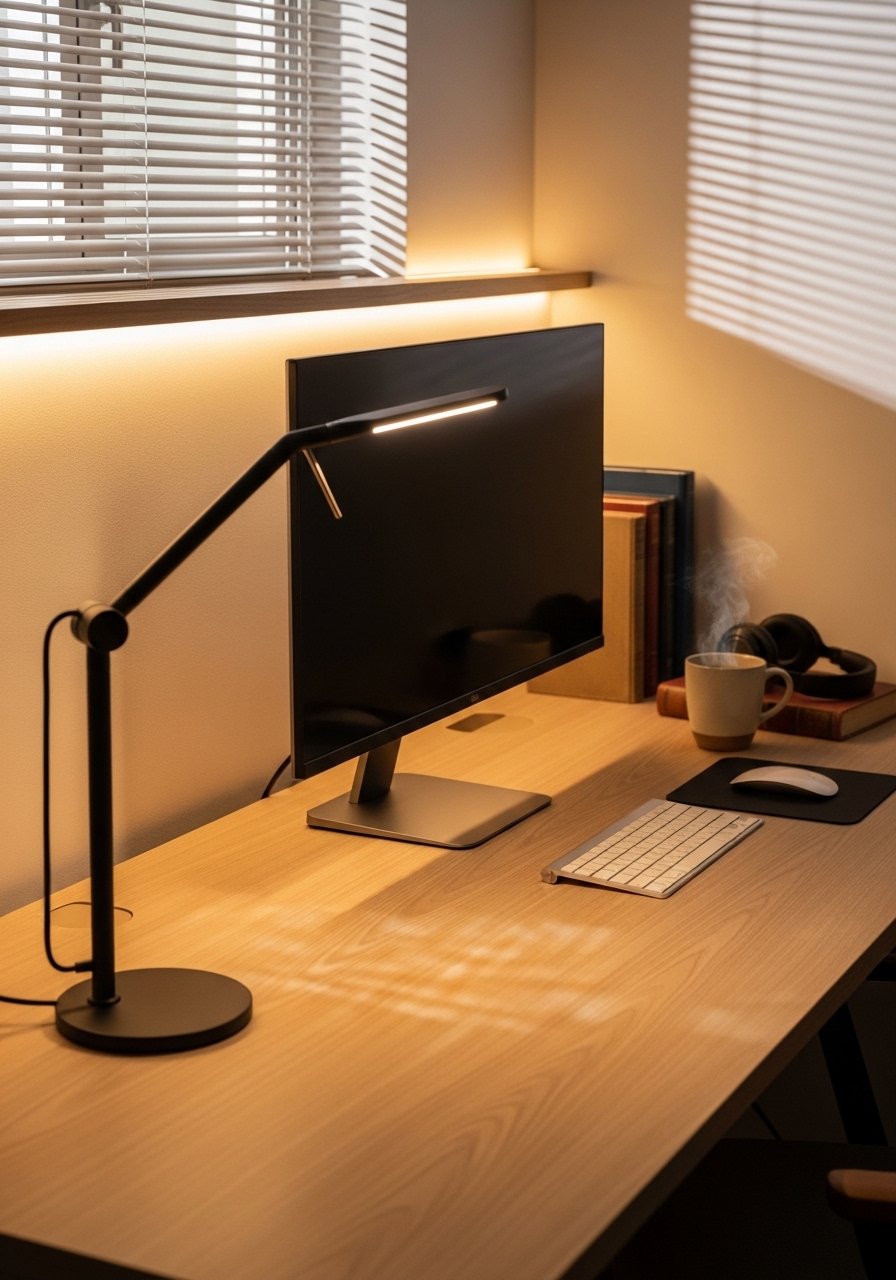
Task light plus bias light clears eye strain and reduces screen glare. Aim for a desk lamp around 400 lumens and a bias strip set to 3000 to 3500 kelvin behind the monitor. The lamp should have adjustable arm reach so you can direct light across a 24 inch work surface. I like a lamp with both warm and cool settings so I shift to warmer tones in the evening. Pair that with a strip that mounts discreetly to the back of your monitor for a subtle halo effect. I use an adjustable LED desk lamp and a warm LED bias strip.
Mistake to Avoid: Putting a single bright overhead light on, which creates flat glare and collapses depth.
3. Shallow Floating Shelves With Vertical Files
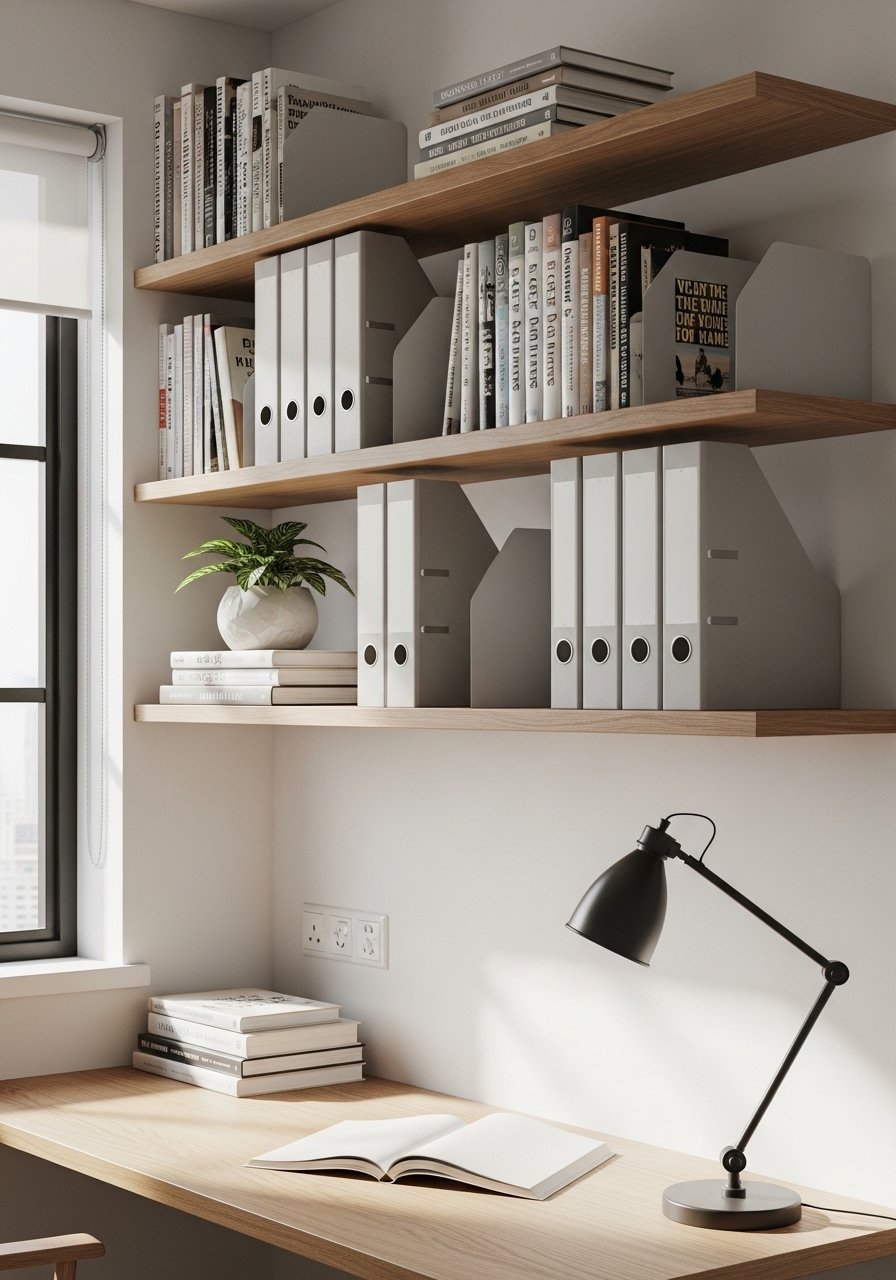
A 10 to 12 inch shelf depth keeps the wall usable but not heavy. Space shelves about 12 inches apart so a mug, a few books, and a file slot fit comfortably. Use vertical steel file dividers to separate current projects and avoid piles on the desk. For renters, use brackets that screw into studs or secure with high-load anchors. A floating shelf with hidden brackets looks built-in without the cost. I keep frequently used stationery on the lower shelf and rotate items up top monthly. Try a set of floating shelf brackets and steel file dividers.
Mistake to Avoid: Making shelves too deep, which creates visual clutter and encourages junk to gather.
4. Acoustic Panels That Double As Art
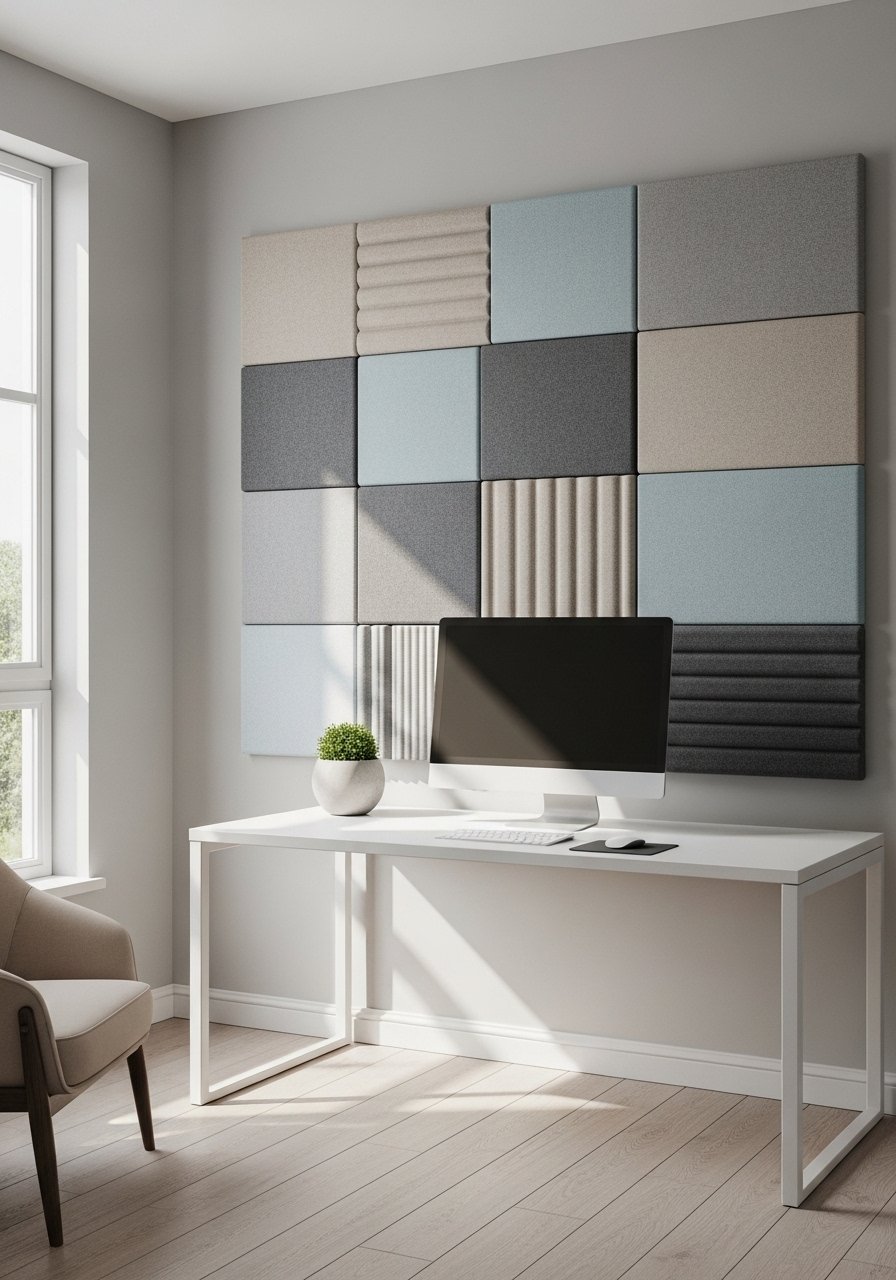
If noise leaks into your schedule, replace one ugly foam panel with art-style fabric panels. Mount a 24 by 36 inch panel behind your chair and two smaller panels on the flanking walls to tame mid-frequency speech. Aim for panels with an NRC rating suited to midrange reduction and hang them at ear height when seated. Choose fabrics that match your palette so the room stays calm. I once covered panels in a linen print and they blended into the wall instead of shouting acoustics. A fabric-wrapped acoustic panel works well and reads like a canvas.
Mistake to Avoid: Covering only the ceiling with panels and ignoring the walls where reflections hit first.
5. Under-Desk Cable Tray And Power Rail
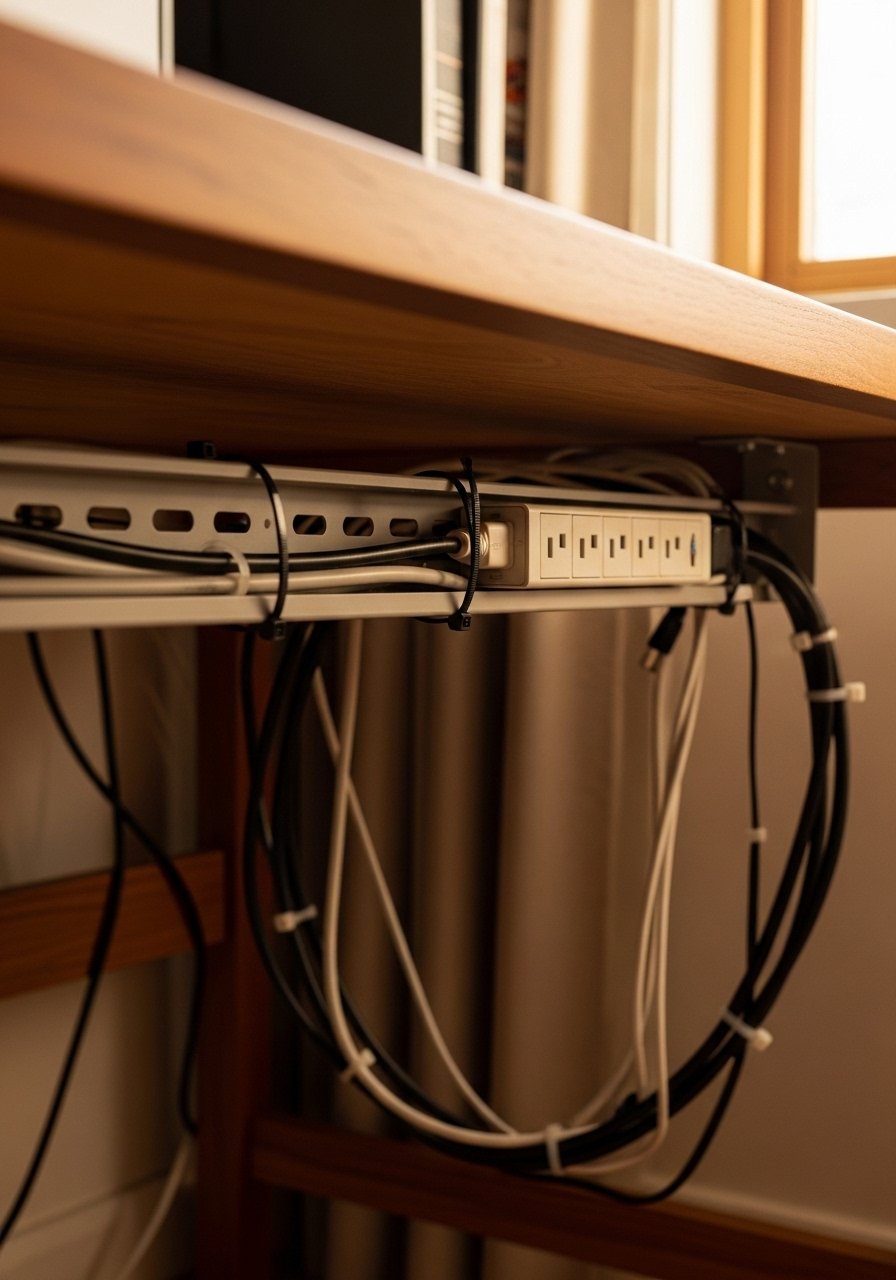
Cable chaos kills focus. Install a cable tray under the desk centerline, route the monitor and lamp cords through a conduit, and mount a slim power rail under the front edge for easy access. The tray should be at least 3 inches deep and sit 3 to 4 inches back from the desk front to keep knees clear. Use Velcro straps for flexibility and label each cord if you swap devices often. A mounted surge-protected power rail keeps plugs off the floor and out of the way. I use an under-desk cable tray and a slim power rail.
Mistake to Avoid: Taping cords to the floor, which becomes a trip hazard and looks messy fast.
6. Window Seat Desk For Natural Light And Storage
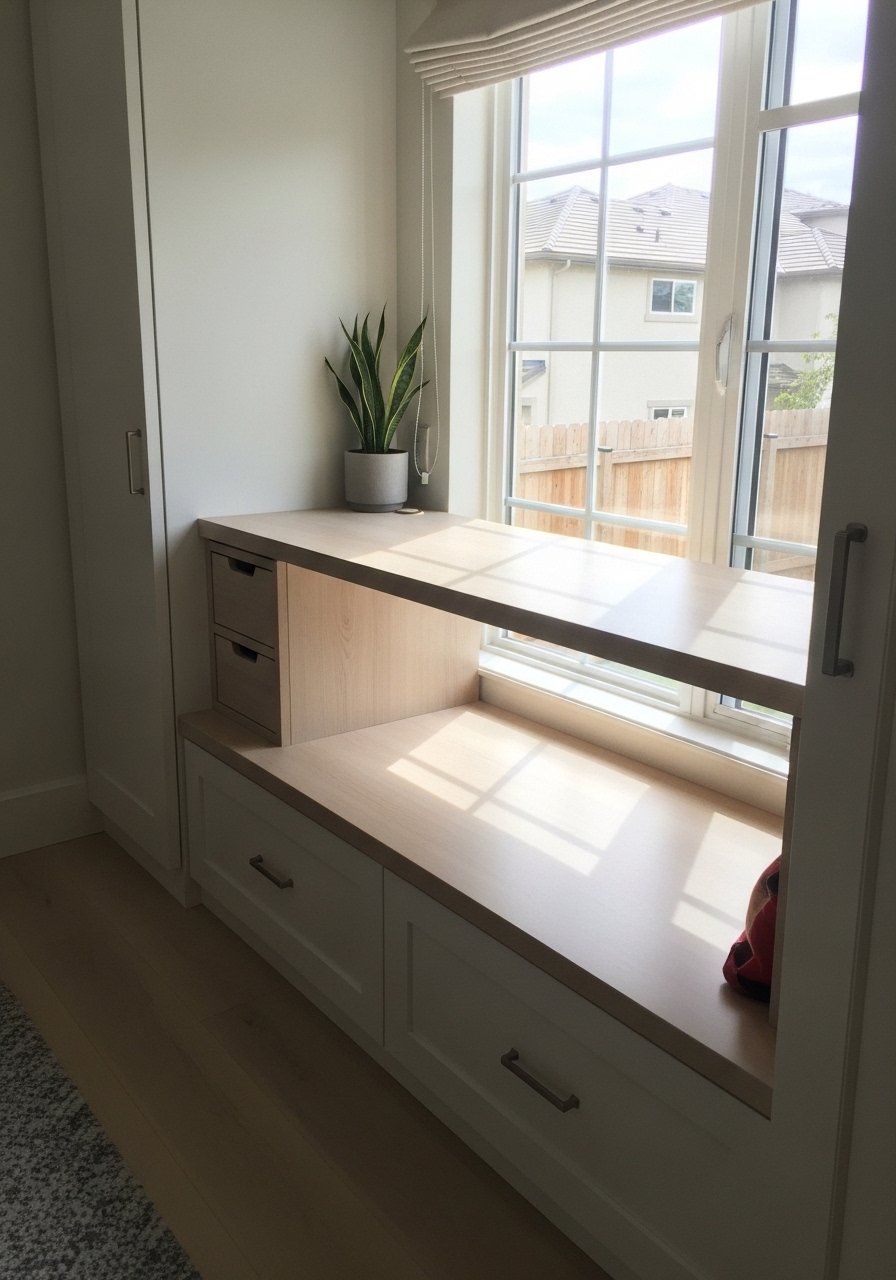
Turn a shallow window bay into a desk area with a 18 to 20 inch deep bench and a 2 to 3 inch foam cushion for comfort. Install drawers or baskets under the bench for paper and chargers. The desk surface should be higher than the bench by 2 to 3 inches when used for laptops to maintain wrist angle. This layout brings daylight directly across the workspace and frees wall space for shelves. If you rent, a narrow console desk pushed under the window mimics the same effect without permanent changes. Try a narrow console desk and a bench cushion.
Mistake to Avoid: Placing the monitor in front of the window, which creates backlighting and a dim screen.
7. Magnetic Grid Wall For Notes And Samples
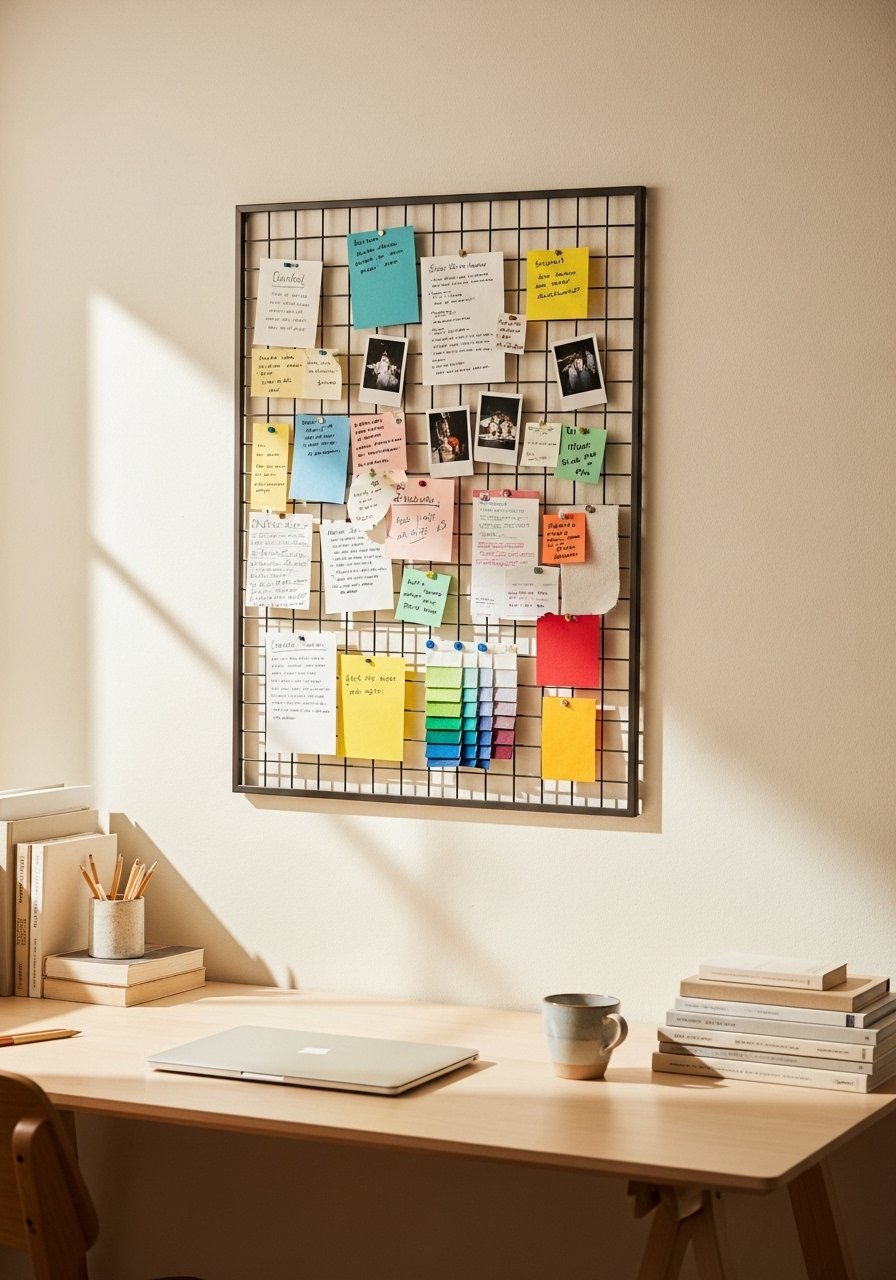
A magnetic grid lets you pin reference material, mood swatches, and to-do lists at a glance. Paint the wall with a magnetic primer in a 2 to 3 coat sequence, then top with your paint of choice so magnets hold but the surface still looks painted and not chalky. Use a framed metal grid or modular panels for renter-friendly installation. Keep the active zone within arm reach, roughly a 30 inch wide area centered on your seat. I use small clips and index cards for project steps so the board never gets overloaded. A framed magnetic grid panel replaces sticky notes.
Mistake to Avoid: Making the board two feet too wide, which tempts you to pin everything and creates visual fatigue.
If any of these setups have you ready to shop, here are the core things I rely on across most of these ideas.
Study Room Buying Shortlist
Lighting & Power:
- Adjustable LED desk lamp (~$40-80). A lamp with dim and color-temp control handles most desk sizes.
- Warm LED bias strip (~$15-30). Easy behind-monitor lighting.
Storage & Surfaces:
- Floating shelf brackets (~$12-25). Invisible supports for shallow shelves.
- Under-desk cable tray (~$18-35). Keeps cords off the floor.
Sound & Comfort:
- Fabric-wrapped acoustic panel (~$40-90). Looks like art, works like sound treatment.
- Adjustable ergonomic office chair (~$120-300). Look for adjustable seat height 16 to 21 inches and lumbar support.
Organizational Extras:
- Steel file dividers (~$12-20). Keep current projects vertical and visible.
Small Study Habits That Stick
Thin lists beat long ones. A single daily project list on a magnetic notepad keeps focus in one place and prevents task scatter.
Grab a compact white noise machine for about $35. Set it at a steady level to mask neighbors without stealing clarity during calls.
Curate one useful plant for the desk, not five tiny ones. A snake plant is low-maintenance and safe in most pet-free homes. If you have pets, choose pet-safe varieties or put greenery out of reach.
Set work blocks with a timer: 25 minutes on, 5 minutes off. A simple digital kitchen timer keeps you honest and helps the room become a signal of work rather than a place to collapse into chores.
Rotate textiles seasonally. Swap a heavy cushion for a slim linen one in summer. A set of removable cushion covers refreshes the room without a full redecoration.