
I kept redoing tiny designs because I thought smaller meant easier, and every time the line feathered into a fuzzy dot by week three. The moment I stopped treating miniature tattoos like scaled-down full pieces and started planning for how skin moves and heals, they finally stayed crisp.
These ideas are for people who like ink that reads quiet up close and stays work-friendly, budget-friendly, and simple to care for. They range from beginner-friendly dots to slightly technical single-needle scripts that need one short session. I tested variations across five shops I have visited and rotated several designs through three full healing cycles to see what actually lasts. Expect low pain sessions, modest aftercare, and designs that tuck under sleeves or peek out on purpose.
1. Fine-Line Wrist Motif
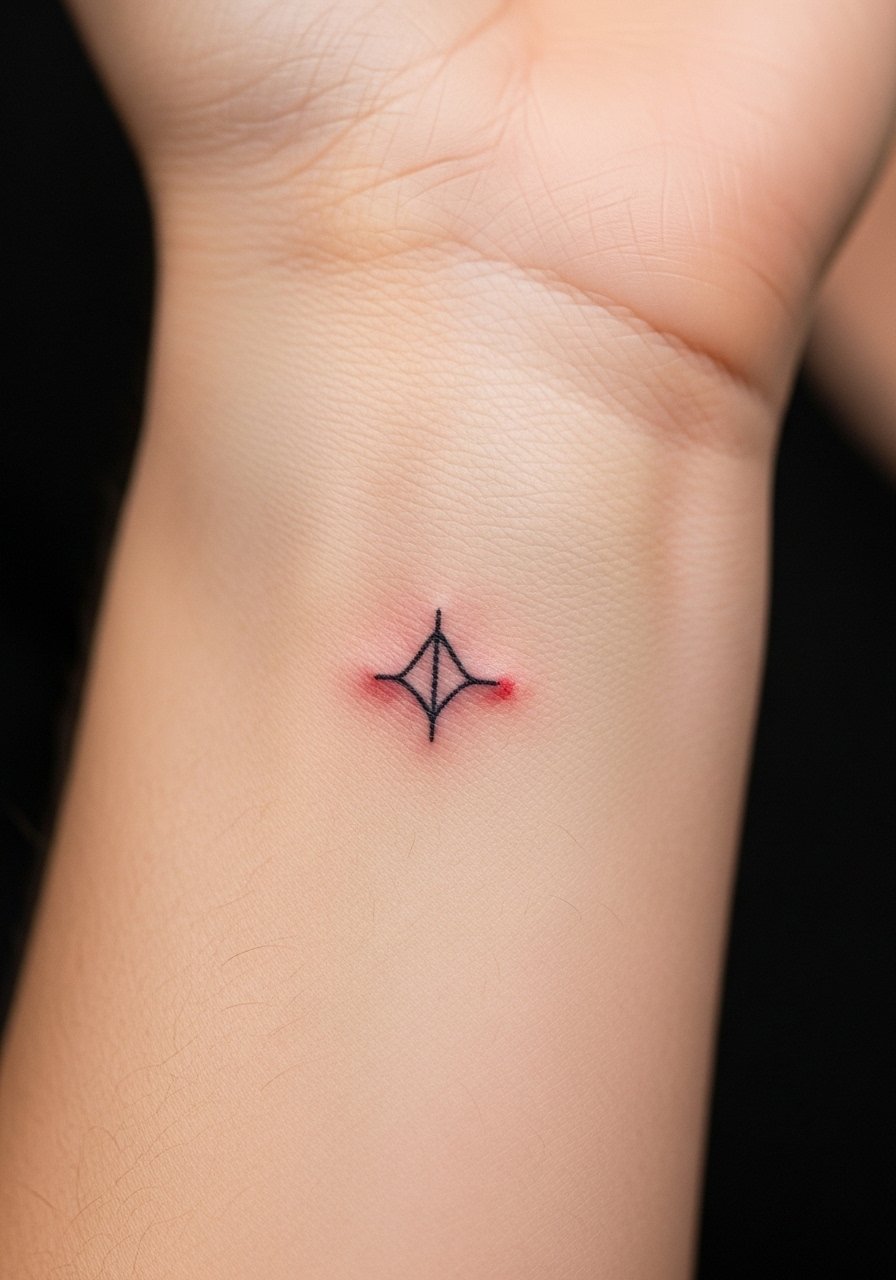
This one works because the wrist sits flat and heals evenly when the line is sparse. Keep lines at single-needle width, about 0.25 to 0.35 millimeter visually, and limit the stroke to one or two passes for cleaner aging. It reads delicate from a distance and feels intentional up close, good for office-visible placements. Time investment is short, usually 20 to 40 minutes. Use a gentle soap like fragrance-free gentle soap for first-week cleansing, and finish with a thin layer of healing salve to prevent scabbing. The extra detail most people ignore is the wrist crease; position the design off the deepest fold so movement does not stretch the ink.
Mistake to Avoid: Placing the line directly over the wrist crease where repeated folding blurs fine work.
2. Mini Geometric Sternum Accent
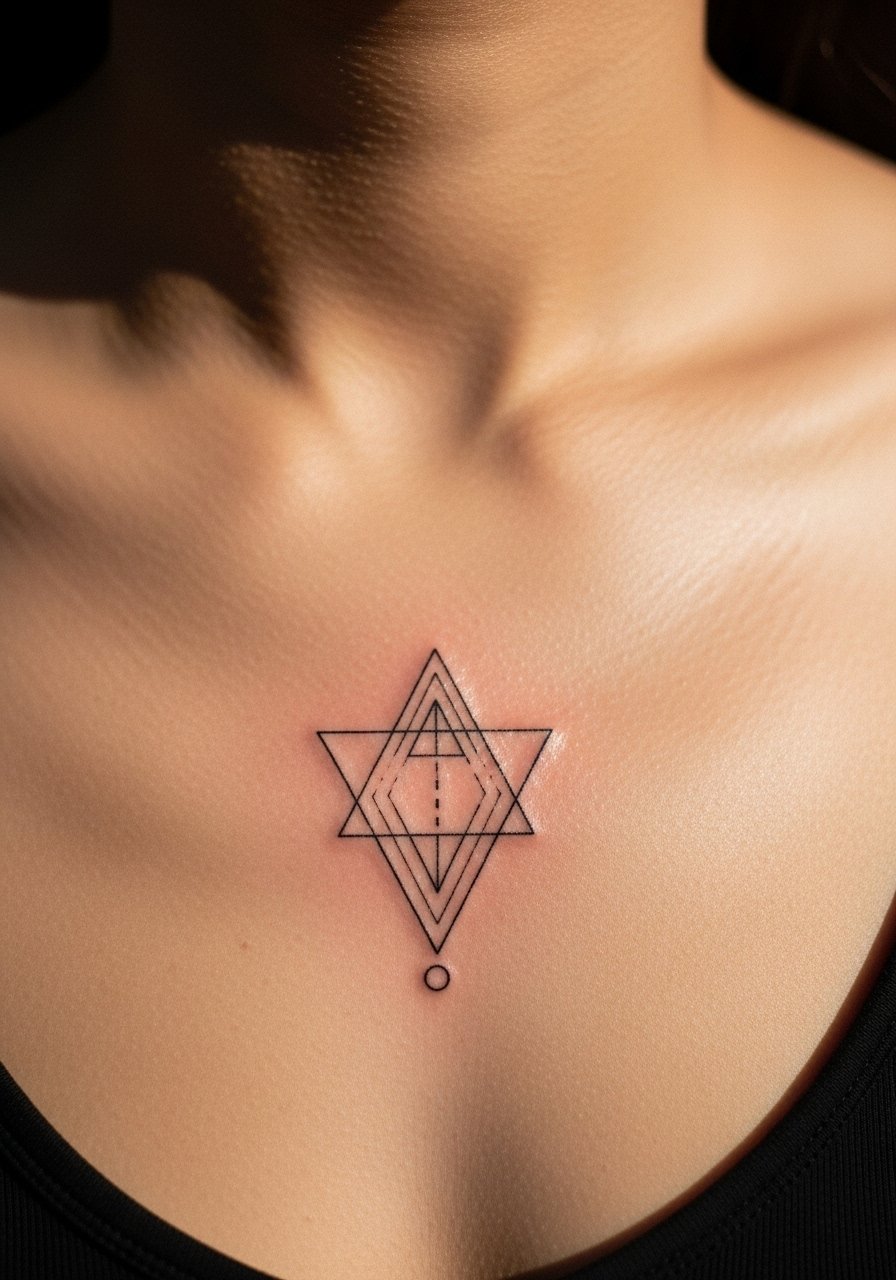
A small geometric cluster on top of the sternum looks sculptural and keeps its shape when the design uses negative space. Negative space speeds healing because less saturated skin means less trauma. This style suits someone who can wear low necklines sometimes but also cover up for work. Session time is typically 30 to 60 minutes. I bring a breathable non-stick dressing for the first night and recommend non-stick gauze and medical tape to keep clothing from rubbing. For budget alternatives ask for fewer ink passes, which cuts session time and swelling without losing the shape.
Mistake to Avoid: Asking the artist to fully saturate every negative space area, which defeats the minimalist look and slows healing.
3. Tiny Dot Cluster Behind Ear
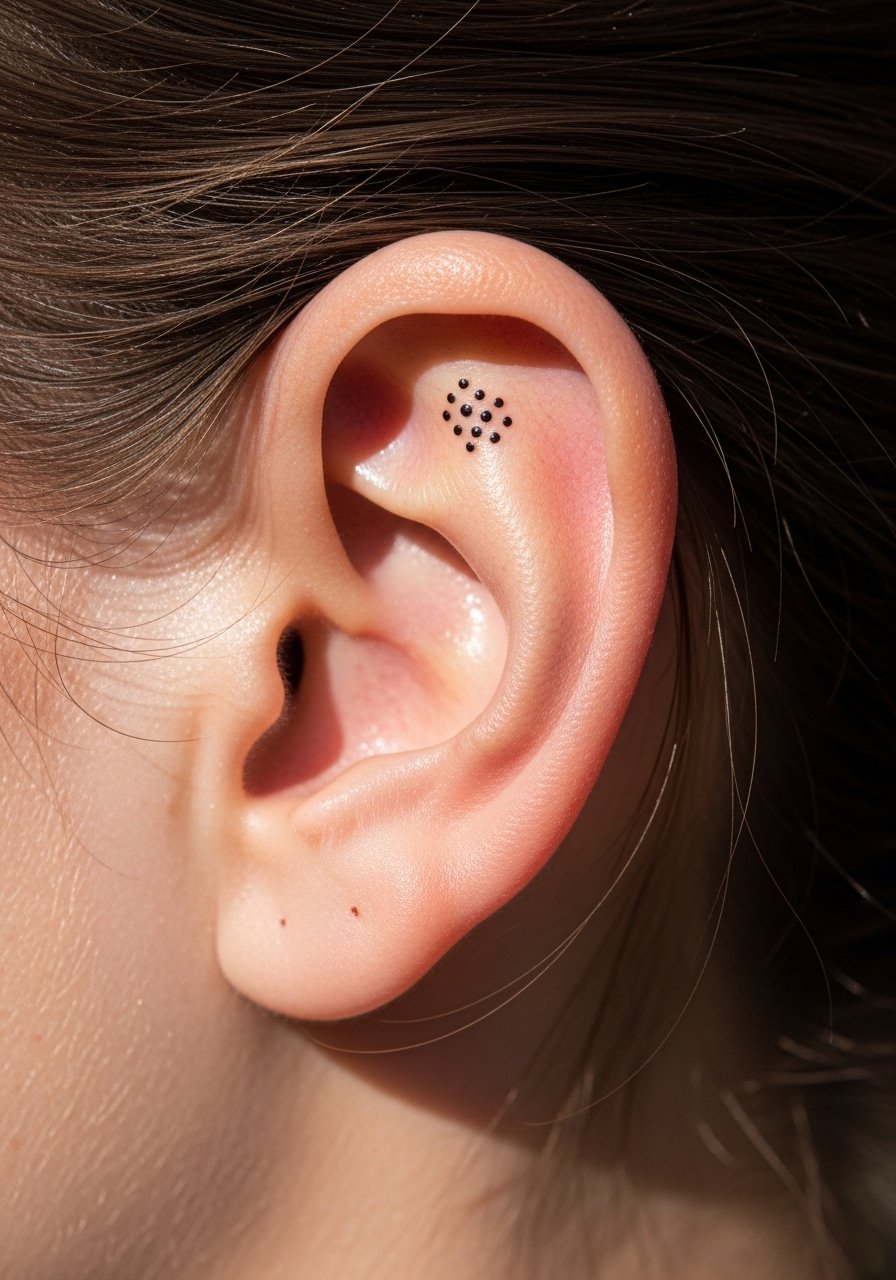
Behind-the-ear dots are small, discreet, and age well when the cluster is spaced 2 to 3 millimeters apart. Because the area sees little sun, contrast stays stable with basic care. This is a great first-timer piece if you want something coverable. Keep a sunscreen stick for later, like spf lip and stick sunscreen, and apply a thin healing cream for the first five days. I learned across five shops I have visited that artists who use tiny spacing and stop after one pass get the best crisp edges. Design note, hair growth and shampooing in early healing are the main causes of smearing, so be gentle.
Mistake to Avoid: Scrubbing the shampoo area hard in the first week and picking at the flaking dots.
4. Micro Script On Finger Side
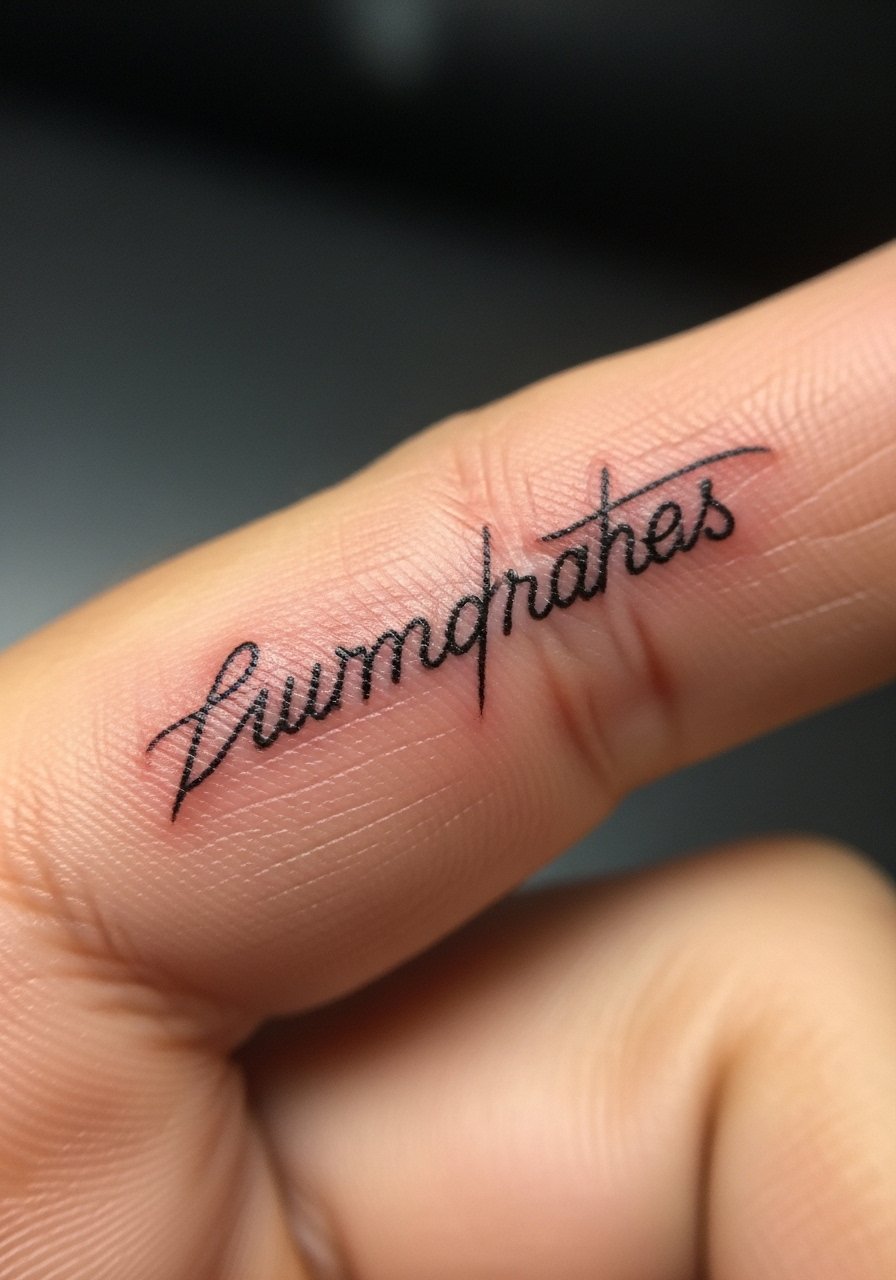
Finger-side scripts read discreetly when done in very shallow single-line strokes and limited to three to six letters. They heal faster if the letters are spaced slightly wider than normal, because skin on fingers moves and swells. This is an advanced minimal choice because the area sees heavy wear. Use a lightweight hand cream like fragrance-free hand cream and avoid soaking. Expect touch-ups; plan for a short follow-up appointment in three months. For longevity, place the script on the side of the finger rather than the pad, and have the artist reduce line density.
Mistake to Avoid: Requesting ultra-tight lettering on a finger, which almost always results in blurring.
5. Petite Floral Ankle Sprig
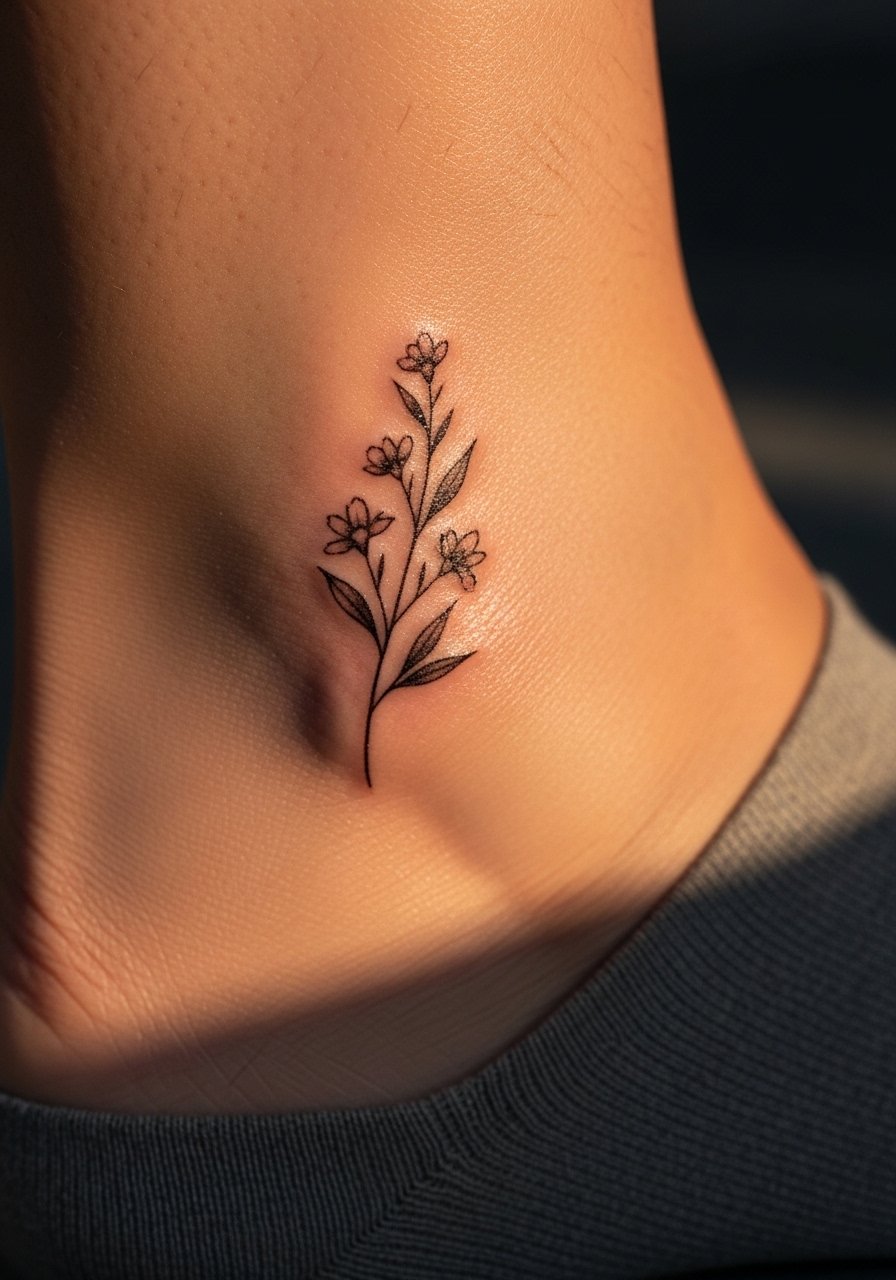
A small ankle sprig feels like jewelry without the metal. It works visually because the ankle skin stays relatively flat and the design uses single-point dot shading that needs minimal saturation. This style fits casual dressers and vacationers who want something visible with sandals. Protect it early with a breathable ankle sleeve or low-top sock and use healing salve at night. Budget-wise, ask for line-only petals rather than filled shapes to cut time and swelling. Tip from practice, avoid placing stems where shoe straps sit.
Mistake to Avoid: Putting the sprig directly under a shoe strap, which causes constant abrasion during healing.
6. Tiny Crescent On Collarbone
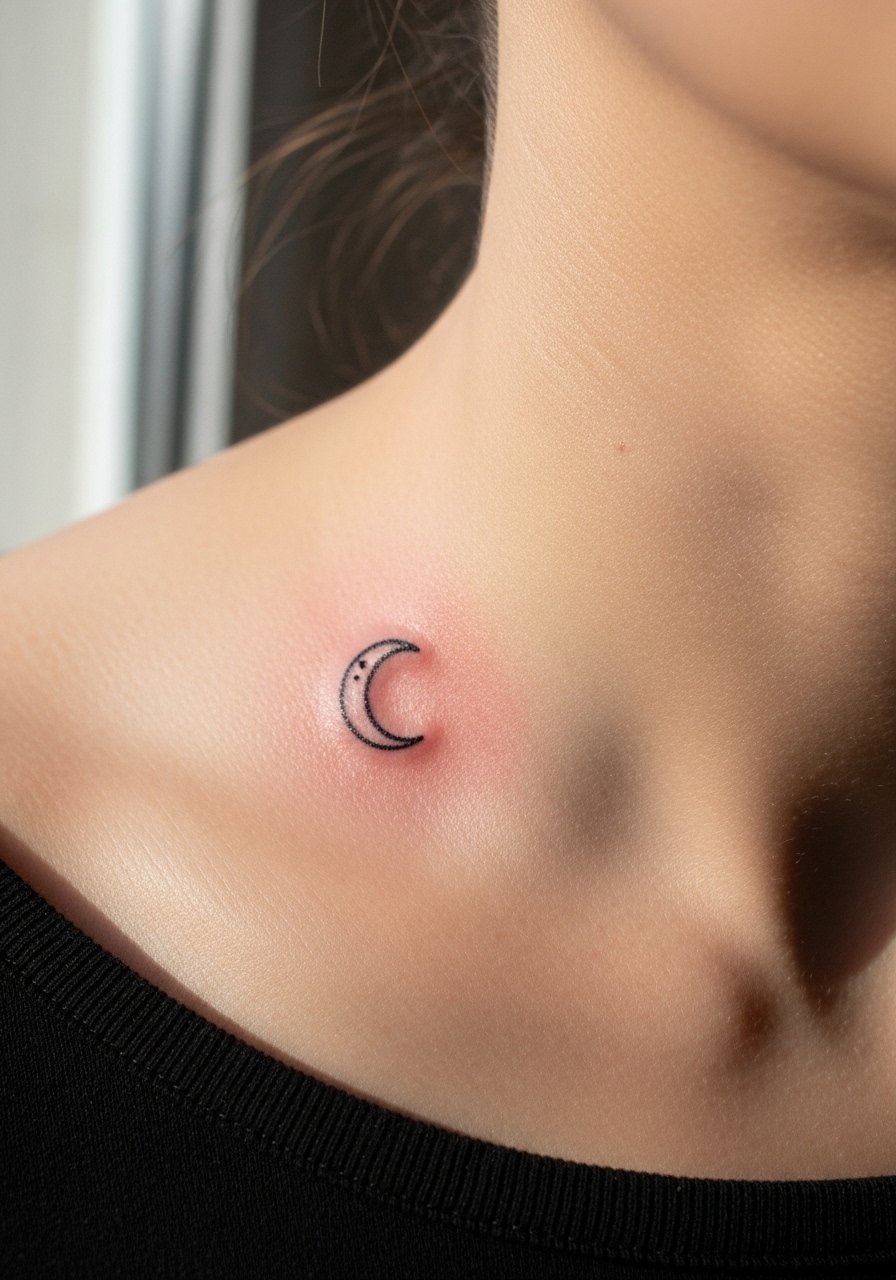
A collarbone crescent sits in a spot that looks deliberate with low effort. It reads minimal because it uses soft single-needle shading only on one edge, creating a slight dimensional hint without heavy ink. This placement is great if you want something that shows with boat-neck tops and can be hidden under shirts. Sleep friction is the biggest threat, so swap to a silk pillowcase and consider a lightweight scarf while sleeping. I recommend silk pillowcase to reduce rubbing. Designers often forget to scale the arc to the collarbone width; too small and it looks like a freckle, too large and it becomes a focal point.
Mistake to Avoid: Minimizing the crescent so much it disappears against clavicle highlights when worn.
7. Single-Needle Nape Line
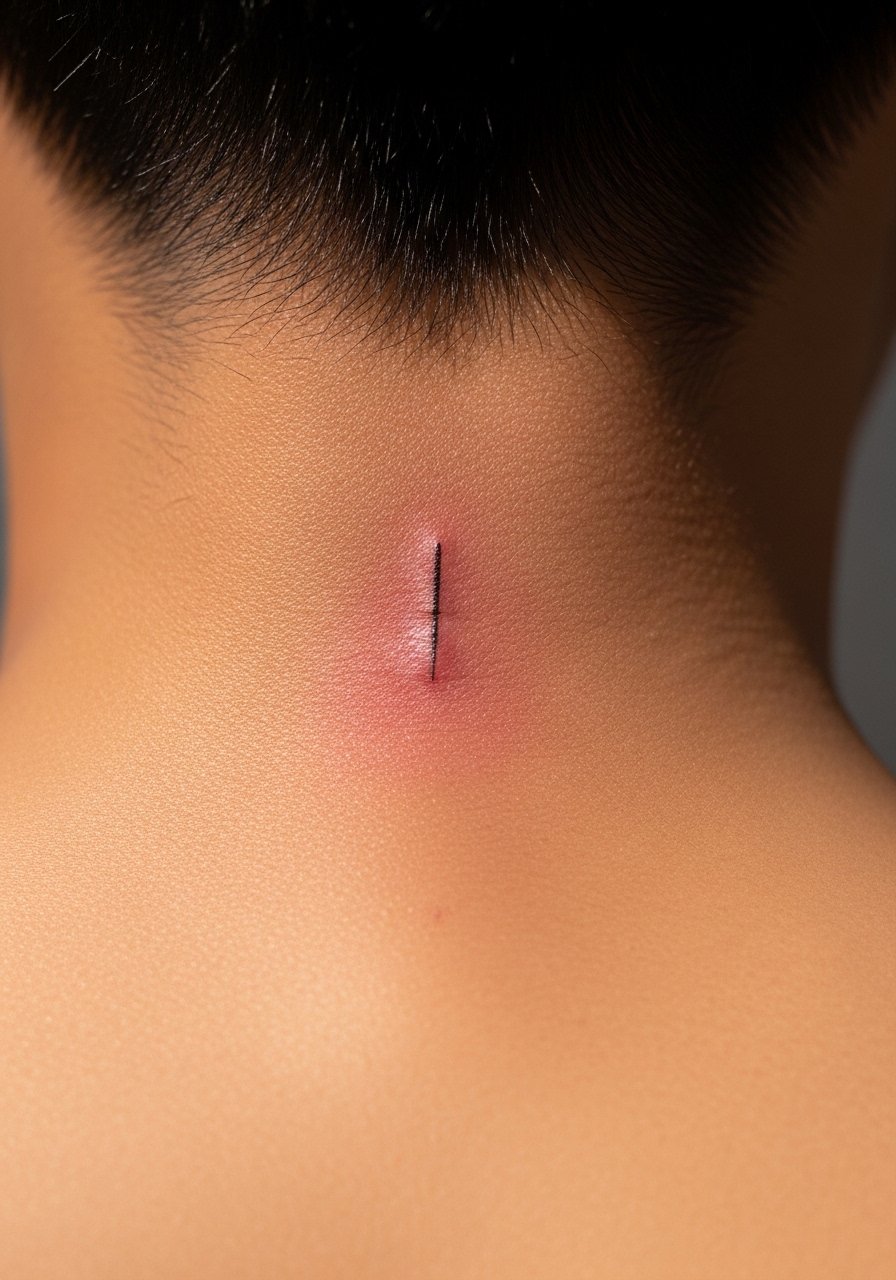
A single-needle line at the nape reads like a hairline and ages cleanly if the needle work is sparing. It is coverable with hair for work and visible in an updo. Session time is short and swelling minimal. Keep hair tied loosely for the first week and sleep on a clean pillowcase. Bring fragrance-free gentle soap for aftercare and a soft hair tie. The subtle detail that saves these is asking for the line to have micro-breaks, a spacing trick that prevents ink pooling along a straight stroke.
Mistake to Avoid: Wearing tight hair clips that press on the fresh line and cause ink displacement.
If any of these looks worth trying, here are the products I reach for when I plan minimalist pieces.
Minimal Aftercare & Supplies For Tiny Ink
Aftercare Basics:
- Fragrance-free gentle soap (~$6-12), for gentle cleaning without residue.
- Healing salve (~$9-15), a thin layer at night keeps scabs soft.
- Non-stick gauze (~$7-12), useful for first-day protection.
Protection & Sleep:
- Silk pillowcase (~$18-35), cuts friction while you sleep.
- Sunscreen stick (~$8-15), tiny tattoos need sun protection after healing.
Extras:
- Breathable ankle sleeve (~$8-14), protects ankle pieces during activity.
- Medical tape (~$5-10), keeps gauze in place without residue.
8. Negative-Space Barcode On Inner Arm
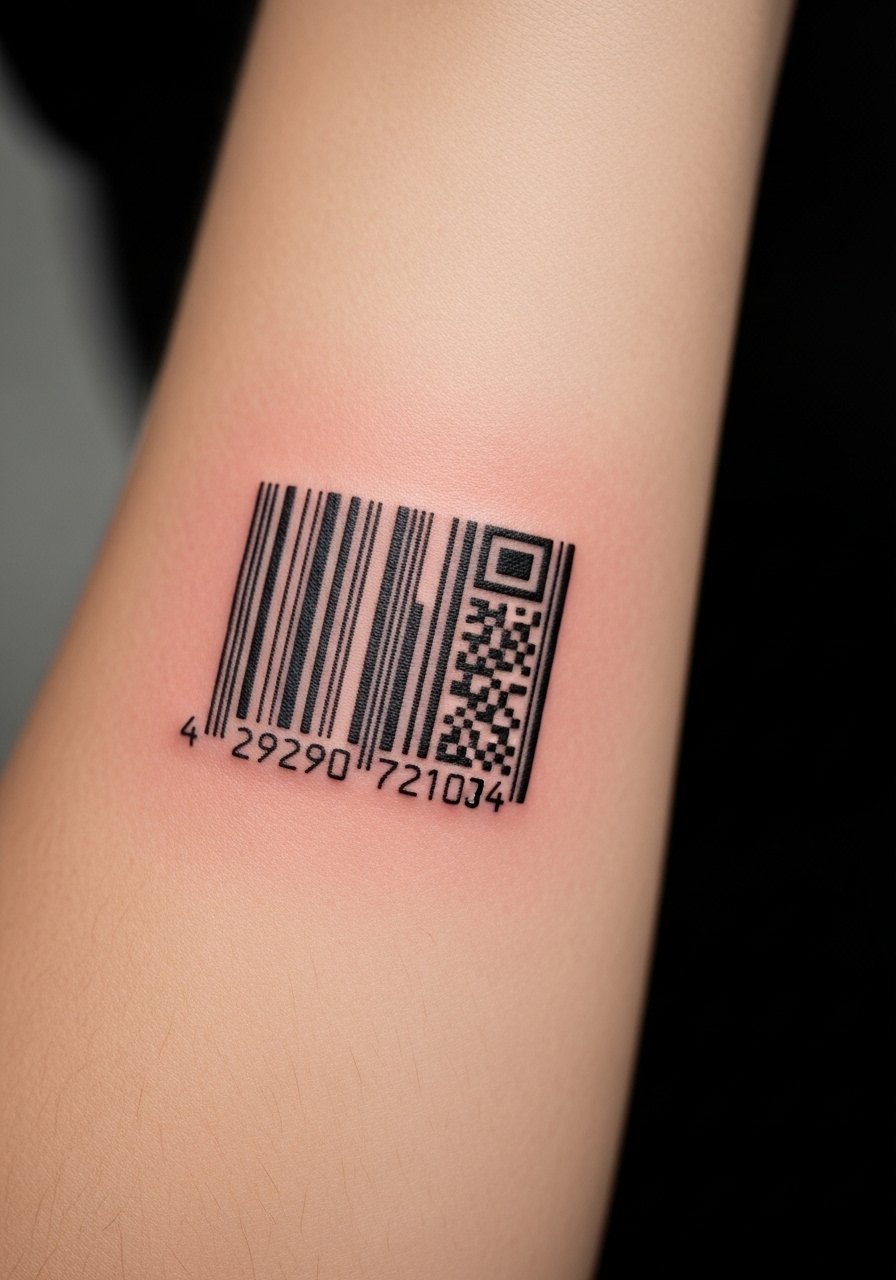
Negative-space barcode pieces look modern because they let skin be part of the design. They heal faster when the black bars are limited to one or two passes and the gaps are intentionally wide, so the skin between remains undisturbed. This idea works for people who want a bold pattern that still reads clean and tidy. Use a sunscreen stick for long-term protection and a thin healing wax immediately post-scion, like healing salve. The small technical note I learned is to ask the artist to raster the edges slightly, which prevents crisp box corners from feathering as skin settles.
Mistake to Avoid: Demanding fully saturated blackout bars with multiple overlapping passes, which increases scabbing and loss of crispness.
9. Minimal Black Ankle Band
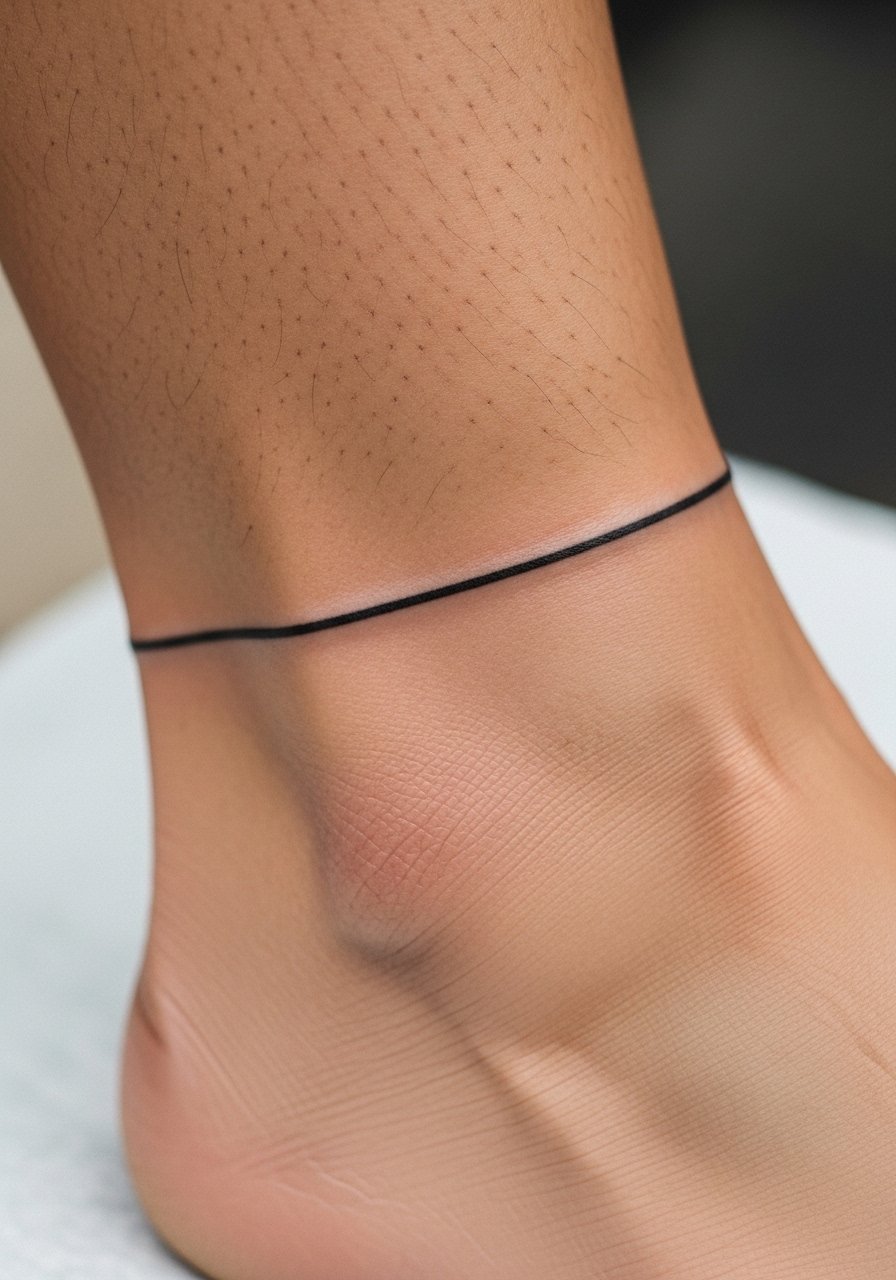
A thin black band around the ankle reads like jewelry and is a straightforward session, usually under 30 minutes. It is easy to hide with socks or shoes. For healing, small waterproof adhesive bandages can keep sweat out in the first 48 hours and reduce irritation during walks. I pack waterproof adhesive bandage for activity days and a tube of healing salve. Design-wise, have the artist leave a tiny gap instead of a perfectly closed loop if you want the band to age without forming a visible thick line.
Mistake to Avoid: Asking for a perfectly solid, thick band that will scar up and look heavier over time.
Tiny Ink Habits For Cleaner Heals
Thin layers beat one heavy layer. Applying a pea-sized amount of healing salve keeps the skin supple without clogging pores.
Grab a silk pillowcase. Sleeping on silk reduces friction and helps tiny lines stay crisp through the first two weeks.
Keep sunscreen on hand. Once healed, a small sunscreen stick on exposed minimal tattoos makes a major difference in color retention.
Most people overclean. Wash gently with fragrance-free gentle soap twice a day and let air finish the job rather than excessive rubbing.